
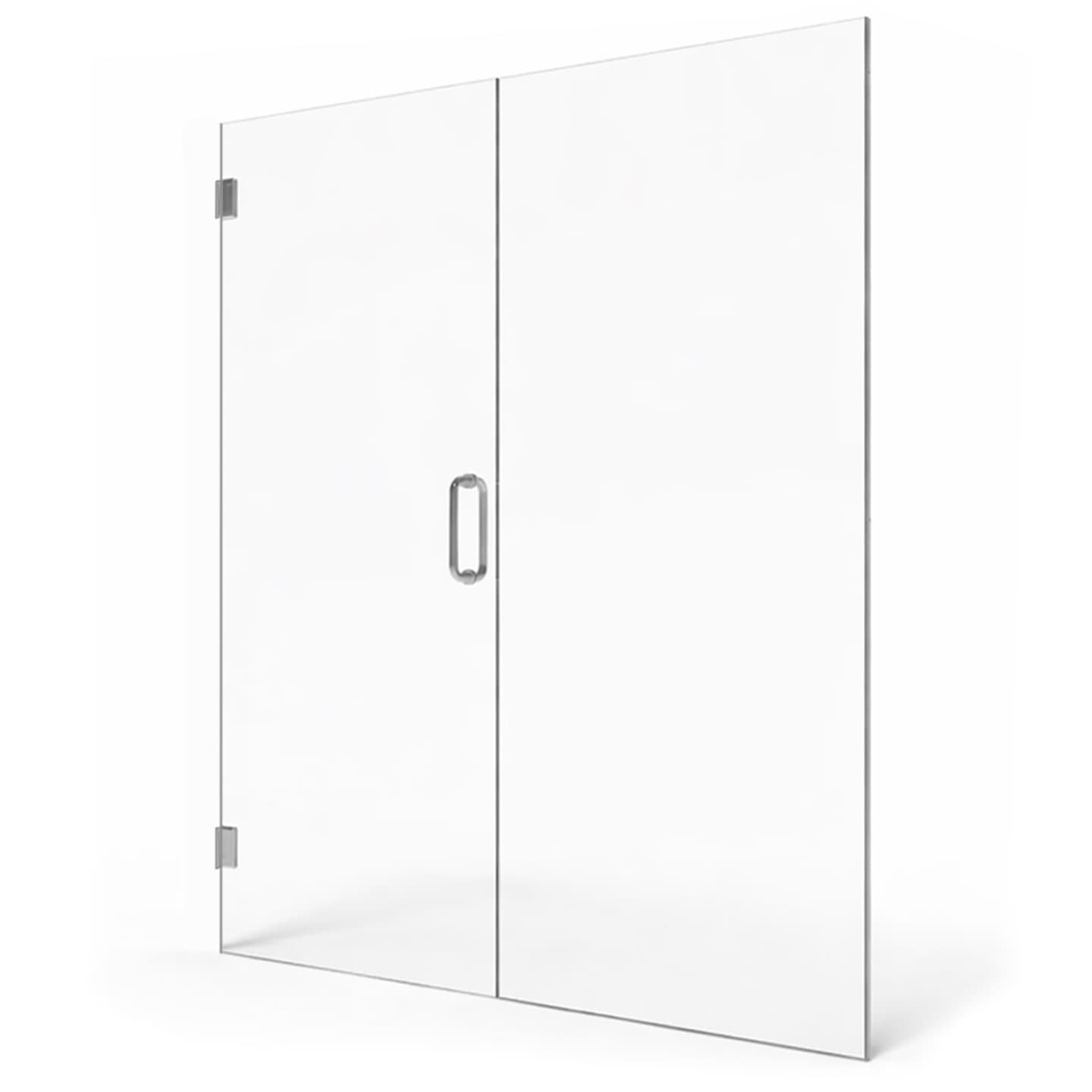

No, not all shower glass systems require drilling through tile in the same way, but many custom enclosures need at least some drilled attachment points. Hinges, clamps, wall channels, support bars, and other hardware may need to be mechanically fastened to a tiled wall, curb, or surrounding structure. The exact drilling requirements depend on the shower layout, glass system, hardware, and construction behind the finished surface. A professional should determine the attachment method after evaluating the completed shower.
Why is tile drilling often necessary?
Shower glass is heavy, and operating doors place repeated loads on their attachment points. A hinged door, for example, creates leverage every time it opens and closes. Mechanical fasteners allow the hardware to transfer those forces into suitable backing or another appropriate part of the structure rather than asking tile or sealant to support the glass by itself.
Fixed panels also need to remain aligned and stable. Depending on the design, they may be secured with wall channels, clamps, support bars, or a combination of hardware and approved glazing materials. Some of those methods require drilled holes; others may reduce the number or location of penetrations. Sealant alone should not automatically be assumed to provide adequate structural support.
Which shower glass components may require drilled holes?
Drilling requirements vary considerably between enclosures. Common components that may involve drilling include:
- Wall-mounted hinges for swinging shower doors
- Glass clamps holding fixed panels at walls or curbs
- U-channels or wall profiles used to secure glass edges
- Header or support-bar brackets
- Handles or towel bars mounted through the glass, with these holes made during glass fabrication rather than at the tile
- Guides, stops, tracks, or brackets used by some sliding systems
A frameless enclosure can still require drilling. “Frameless” describes the visual and structural style of the glass system; it does not mean that the enclosure floats without hardware or attachment points. Frameless doors typically rely on carefully positioned hinges, clamps, channels, or support components.
Can a shower be designed with less tile drilling?
Sometimes. A stationary splash guard may use fewer attachment points than a large enclosure with a swinging door and multiple panels. Certain channel-based or support-bar configurations may also change where holes are placed. However, a low-drill or no-drill concept must be compatible with the opening, glass size, expected loads, and the construction around the shower.
Avoid choosing hardware solely to eliminate drilling. The first priority is a secure enclosure that fits the space and manages normal shower spray appropriately. Door clearance, curb geometry, wall alignment, showerhead direction, and nearby fixtures can all affect the best configuration. For example, a sliding system may work well in a wider opening where a swinging door would interfere with a toilet, vanity, or walkway, but the sliding hardware may still need secure attachment.
Does drilling through tile cause leaks?
A drilled hole does not automatically cause a leak, but it deserves careful preparation. Tile and grout form the visible finished surface, while the shower’s water-management assembly is generally located behind or beneath them. A hardware hole can create a pathway into that assembly if it is poorly located, improperly drilled, or inadequately sealed.
Good installation involves more than applying a bead of sealant around the finished hardware. The installer must confirm the layout, use the proper drilling technique for the tile, prepare the opening, install the appropriate anchor or fastener, and seal the attachment point. The correct approach depends on the tile, substrate, available backing, hardware, and glass system.
How does Shower Doors of Sarasota protect drilled points?
Shower Doors of Sarasota uses its DoubleSil installation method at applicable drilled shower-glass hardware attachment points. DoubleSil is a layered sealing and anchoring process that incorporates protection within the drilled opening before the anchor and fastener are fully installed, in addition to the visible exterior seal around the hardware.
DoubleSil is included with applicable shower-door installations performed by SDoS; it is not an optional upgrade. It is an added precaution designed to help reduce the risk of moisture entering behind tile at drilled hardware locations. It cannot guarantee against every possible source of water intrusion, and it does not make a frameless enclosure completely waterproof. Frameless systems have functional gaps around doors and panels.
Can drilling crack newly installed tile?
Drilling finished tile requires suitable tools, accurate layout, and controlled technique. Tile type, thickness, edge distance, grout-joint location, and what lies behind the tile can all affect the work. Cracks are not an expected result of proper installation, but tile is a finished material and must be handled carefully.
Planning before tile installation can help. If the likely glass configuration is known, the remodeling team may be able to provide appropriate structural backing where hinges, channels, or support hardware are expected. Final hardware positions still depend on field measurements after the finished surfaces are complete, so early planning should leave reasonable flexibility rather than relying on one narrowly defined point.
When should the shower be measured for glass?
The shower should generally be measured after tile, curbs, thresholds, and other surfaces affecting the glass dimensions are finished. Shower Doors of Sarasota prefers to measure once the tile and waterproofing are fully cured, then fabricate and install the enclosure. Measuring finished conditions allows the glass and hardware to account for actual wall angles, curb slopes, and opening dimensions rather than plans alone.
During measurement and planning, the proposed attachment method and hardware locations can be evaluated for the specific shower. Homeowners in Sarasota, Bradenton, Lakewood Ranch, Venice, and surrounding Suncoast communities can request a free project quote at /quote.
Key Takeaways
- Many custom shower enclosures require at least some drilled attachment points.
- Drilling depends on the layout, hardware, wall construction, and glass system.
- Frameless does not mean hardware-free or completely waterproof.
- Proper preparation, anchoring, fastening, and sealing are essential at drilled openings.
- Final glass measurements should generally follow completion and curing of tile and waterproofing.
Ready to Transform Your Bathroom?
Contact us for a free consultation on custom frameless shower doors, enclosures, and mirrors for your Sarasota home.
Frequently Asked Questions
Related Services
Suncoast Team
Sarasota's Trusted Shower Door Experts