
A one-piece sill generally handles surface water better than a tiled shower curb because its continuous top has fewer joints where moisture, soap residue, and minerals can collect. However, the sill itself is not the shower’s primary waterproofing. Either option can perform reliably when the curb is waterproofed beneath the finished surface, pitched slightly toward the shower, properly sealed at transitions, and coordinated with the shower-glass hardware.
What is the difference between a sill and a tiled curb?
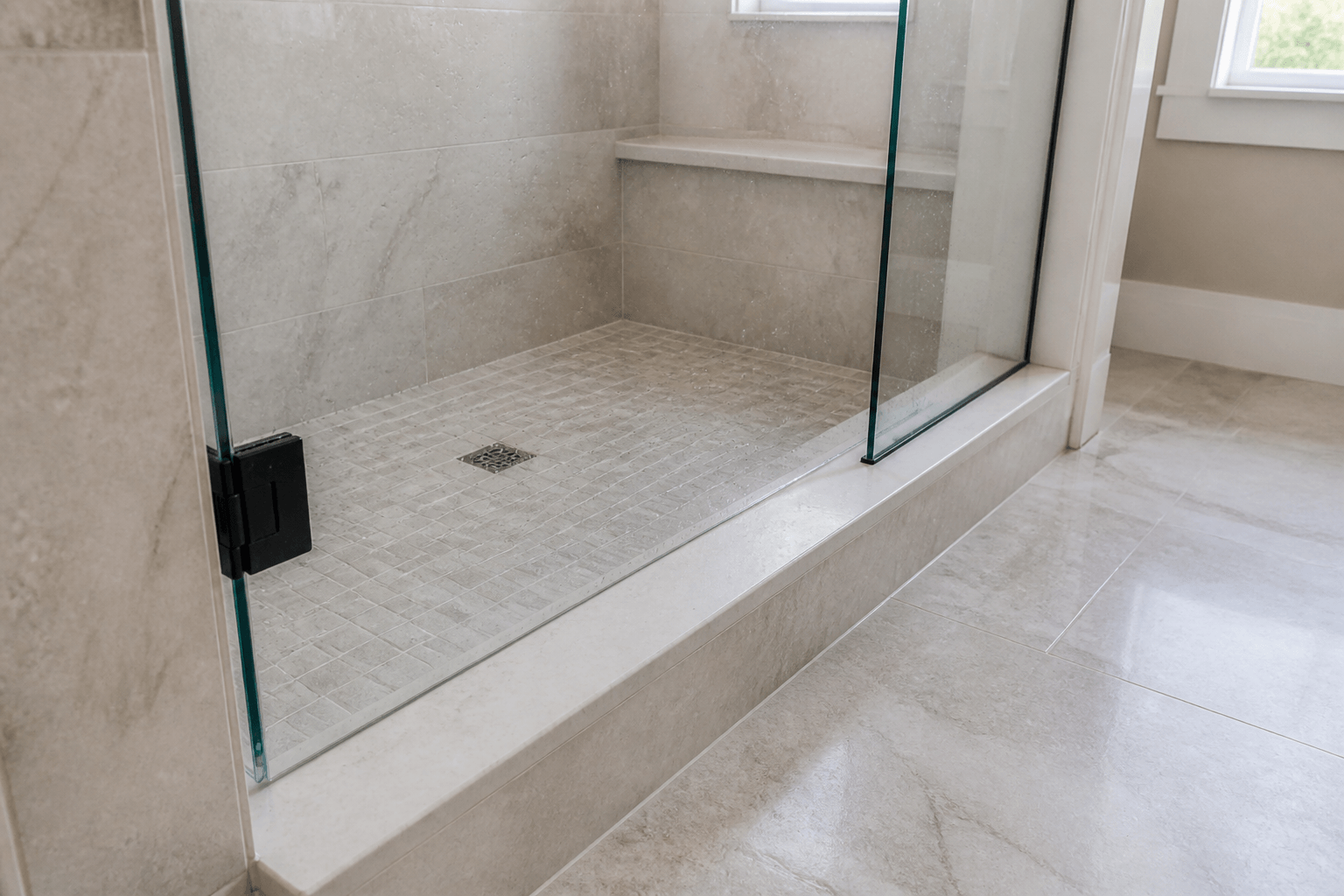
In this comparison, a one-piece sill is a continuous cap made from stone, engineered stone, solid-surface material, or another suitable slab product. It sits on top of the constructed and waterproofed curb. A tiled curb uses individual tiles on the top and sides, with grout joints between the pieces.
Neither finish creates the curb’s complete waterproofing system by itself. Water management should begin below the visible surface with a correctly installed shower pan or waterproofing membrane. The finished sill or tile then provides a durable, cleanable surface that directs most water back into the shower.
Why does a one-piece sill usually manage water more easily?
The main advantage is fewer joints. A solid sill typically has seams at its ends and where it meets adjacent surfaces, but it does not have multiple grout lines across the curb top. That creates a smoother path for water to drain toward the shower and leaves fewer low spots where water can linger.
- A continuous top surface with no intermediate grout joints
- Simpler daily wiping and squeegeeing
- Less space for soap residue and hard-water minerals to collect
- Fewer grout lines that may discolor or require periodic maintenance
- A clean, level-looking base for glass, channels, or other enclosure components
This can be especially useful on the Florida Suncoast. Frequent shower use, humidity, and mineral-rich water can make grout lines and corners harder to keep clean. A smooth sill does not prevent water spots, but it generally reduces the number of places where deposits can accumulate.
Can a tiled shower curb handle water properly?
Yes. A tiled curb can handle water well when its underlying waterproofing is continuous and its top surface has a consistent inward pitch. Tiled curbs are often chosen because they continue the bathroom’s tile pattern and can create a coordinated, built-in appearance.
The tradeoff is that tile introduces more joints and installation details. Small tiles may create several grout lines across the curb. Large-format tile can reduce that number, although the installer still needs to form clean transitions at the curb edges and walls. Grout should not be treated as the primary waterproof barrier; water resistance must come from the complete assembly below it.
- Grout joints that hold water because the curb lacks a consistent inward pitch
- Uneven tile edges that create small puddling areas
- Cracked or deteriorated grout at changes of plane
- Failed sealant where the curb meets the walls or glass
- Fastener penetrations that were not properly prepared and sealed
Slope matters more than the finish material
A one-piece sill installed flat—or worse, sloped toward the bathroom—can perform poorly. The curb top should have a slight, continuous pitch toward the shower so water naturally returns to the drain area instead of sitting against the glass or flowing onto the bathroom floor.
The pitch should be planned during curb construction, not improvised with a heavy bead of sealant after the glass is installed. The finished surface also needs to remain stable. Movement in the curb assembly can crack grout, separate sealant joints, or disturb connections between materials.
Before accepting a newly finished curb, look at it from several angles and place a small amount of water on the surface. Water should move inward rather than toward the bathroom. A few droplets may remain because of surface tension, but visible outward drainage or a persistent puddle deserves attention before the enclosure is measured.
How does the curb affect shower-glass installation?
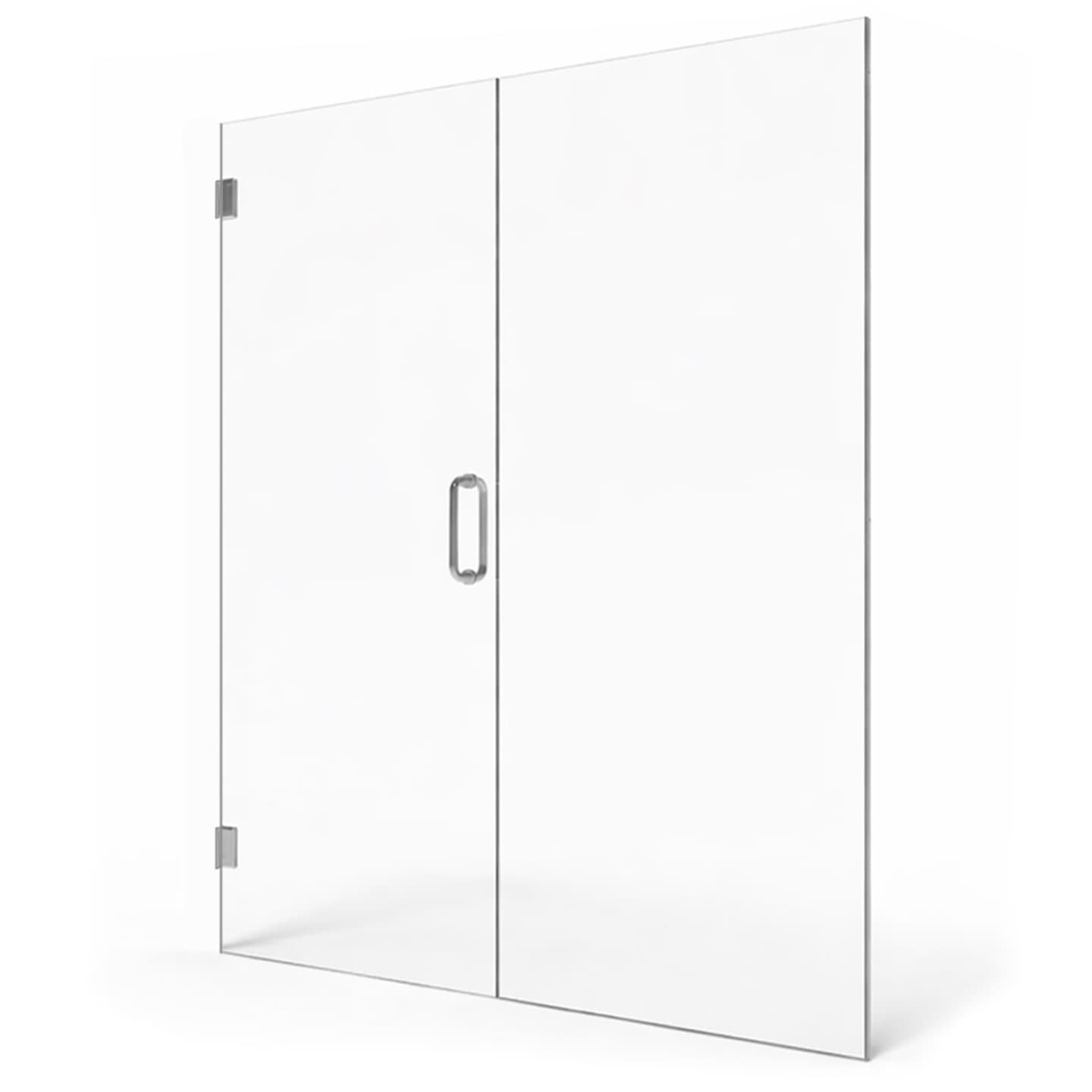
The curb’s width, slope, flatness, and material all affect where the glass can sit and how the enclosure can be attached. Sliding systems, swinging doors, stationary panels, and splash guards have different hardware and support requirements. Drilling needs also vary according to the layout, wall construction, hardware, and selected glass system.
Drilled openings deserve careful attention because they create attachment points that may be exposed to water. Shower Doors of Sarasota uses its DoubleSil layered sealing and anchoring process at applicable drilled hardware attachment points. This adds protection within the drilled opening before the anchor and fastener are fully installed, along with the visible exterior seal. It is an added precaution, not a guarantee against every possible source of water intrusion, and no frameless enclosure is completely waterproof.
Glass planning should happen before the curb is built, even though final measurement generally takes place after tile, the curb, thresholds, and other finished surfaces affecting the glass dimensions are complete and fully cured. Early coordination helps confirm that the curb will be wide enough for the proposed glass position and compatible with the planned door swing or sliding track.
Which curb is easier to maintain?
A one-piece sill is usually easier to maintain because it can be wiped in one pass and has fewer joints. The material still matters: some natural stones may need sealing or material-specific cleaners, while engineered or solid-surface products may have different care instructions. Always follow the sill manufacturer’s recommendations and avoid abrasive tools that could dull the finish.
A tiled curb requires attention to both the tile and grout. Keep joints clean, watch for cracking or separation, and inspect flexible sealant at transitions. In either case, regularly removing standing water and using a bathroom exhaust fan can reduce lingering moisture, soap film, and mineral deposits.
Which option should you choose?
Choose a one-piece sill if your priorities are simpler cleaning, fewer joints, and straightforward surface drainage. Choose a tiled curb if matching the surrounding tile is a major design goal and you are comfortable with additional grout maintenance. The quality of the waterproofing, slope, transitions, and glass-installation details matters more than the visible finish alone.
For homeowners in Sarasota, Bradenton, Lakewood Ranch, Venice, and nearby Suncoast communities, it is helpful to discuss the curb and enclosure together before construction is finalized. Shower Doors of Sarasota can review the completed opening and proposed glass layout; free quotes are available through the online tool at /quote.
Key Takeaways
- A one-piece sill usually sheds water more simply because it has fewer joints.
- Neither tile nor a solid sill replaces the waterproofing system beneath the curb.
- The curb top should have a consistent inward pitch toward the shower.
- Tiled curbs can perform well but usually require more grout maintenance.
- Coordinate the curb dimensions and glass layout before construction is finalized.
- No frameless shower enclosure should be described as completely waterproof.
Ready to Transform Your Bathroom?
Contact us for a free consultation on custom frameless shower doors, enclosures, and mirrors for your Sarasota home.
Frequently Asked Questions
Related Services
Suncoast Team
Sarasota's Trusted Shower Door Experts