
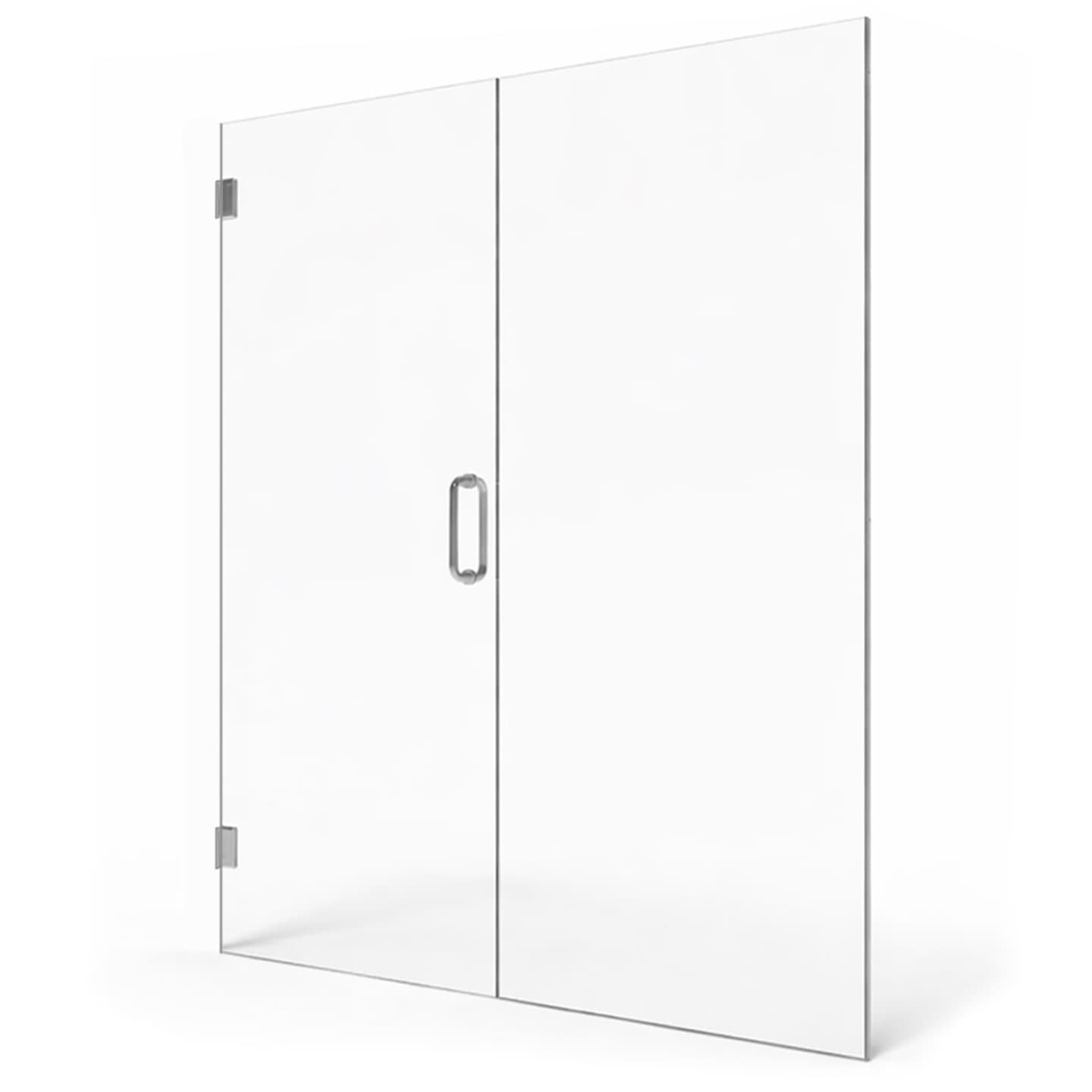
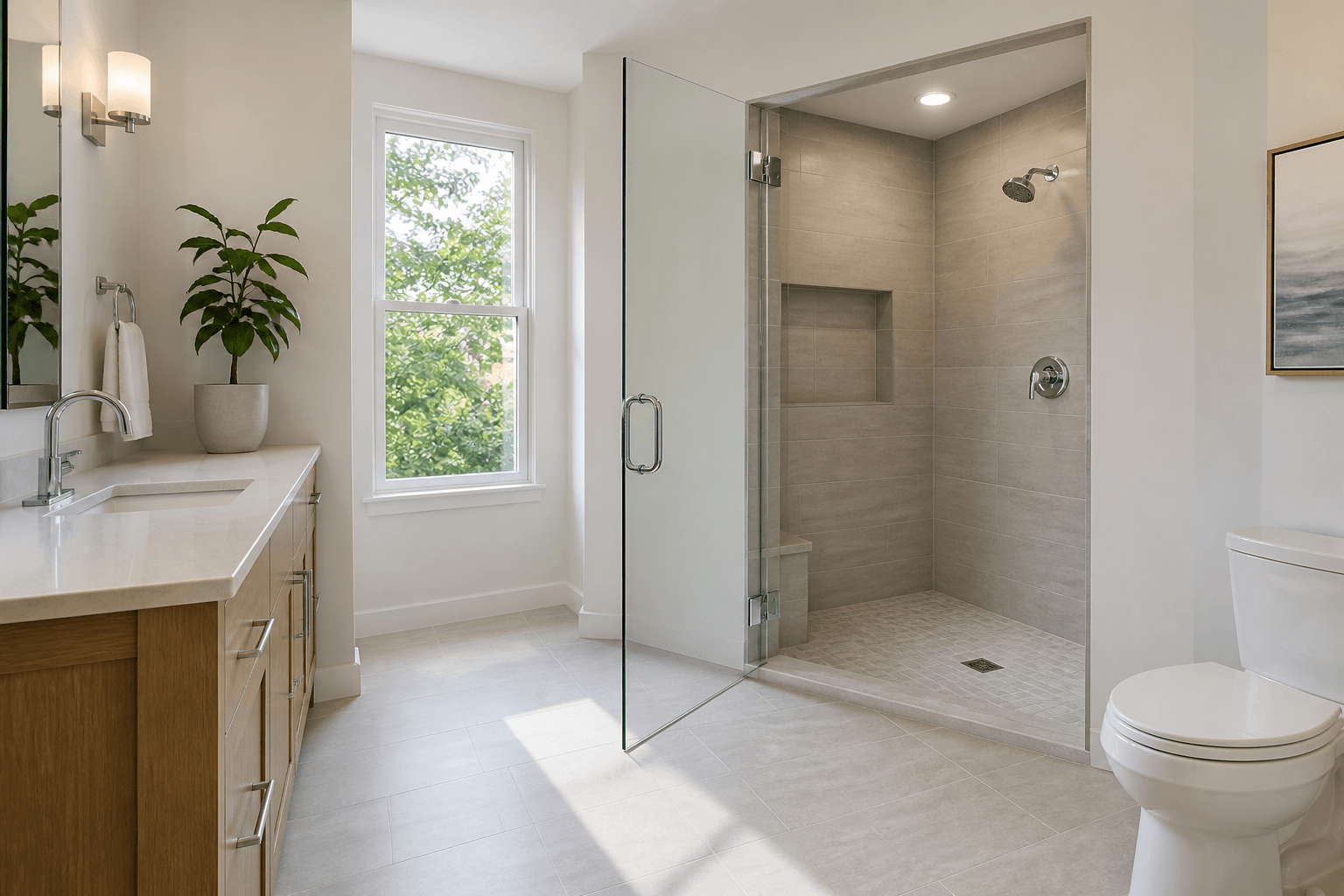
A hinged shower door should open outward into the bathroom for safe exit and code compliance. Some hinges allow the door to swing both outward and inward, but the door must not be limited to an inward-only swing. Whether the hinges belong on the left or right depends on the bathroom layout: the door needs a clear outward path, convenient access to the shower controls, and enough separation from toilets, vanities, towel bars, and other glass panels.
Why must a shower door open outward?
An outward-opening door provides a dependable exit from the shower. If someone slips or becomes unable to move, their body could block a door that opens only inward. With an outward swing, another person can open the door without pushing it into the shower compartment.
Building requirements generally call for hinged shower doors to open outward. Exact requirements should always be confirmed for the applicable project and jurisdiction, especially during a permitted bathroom remodel. The practical rule for homeowners is straightforward: never plan a shower door that can open only toward the shower interior.
Can a hinged shower door swing both ways?
Yes, depending on the hinge system, glass layout, and nearby obstructions. A dual-acting door can open outward for entry and emergency access, then swing inward after use so water dripping from the glass falls inside the shower. This can be convenient, but inward movement is optional—not a substitute for the required outward swing.
An inward swing also needs adequate room. The door cannot strike a shower bench, niche projection, grab bar, handheld shower, fixed panel, or plumbing fixture. It should not interfere with the person standing inside or make the controls difficult to reach. Small showers often lack enough interior clearance for a useful inward swing.
Should the hinges go on the left or right?
There is no universally correct hinge side. The best side is the one that creates a natural entry while keeping the outward swing clear. During planning, imagine standing outside the shower and opening the door through its complete arc—not just a few inches.
- Fixture clearance: The open door should not hit a toilet, vanity, faucet, freestanding tub, towel bar, or bathroom entry door.
- Walking space: The door should not block the main path through the bathroom or trap someone in a narrow space between fixtures.
- Shower controls: Ideally, you should be able to crack the door open and turn on the water without stepping beneath the showerhead.
- Showerhead position: Direct spray should not point toward the door opening or the gap along the door edge.
- Curb and wall geometry: Out-of-square walls, sloped curbs, and adjacent fixed panels can affect hinge placement and door operation.
- User needs: Consider which hand will naturally reach the handle and whether anyone in the household has mobility limitations.
Do not rely solely on labels such as “left-hand” or “right-hand” when discussing a custom enclosure. Handing terminology can vary based on the viewing position. It is clearer to identify the hinge wall and show the swing arc on a drawing.
How much clearance does an outward swing need?
The entire width of the door travels into the bathroom as it opens, so the clear area must cover the full swing arc. A door may appear to fit while closed but collide with a vanity corner or toilet after opening halfway. Handles and towel bars mounted on the glass also project beyond the panel and need to be included in the clearance check.
Floor conditions matter too. Bath mats, raised transitions, and thick rugs can interfere with the bottom sweep or edge of the door. On the Florida Suncoast, wet tile can remain slick in a humid bathroom, so the open door should not force users to step sideways around a fixture or onto an awkward landing area.
Which swing direction controls water best?
Door swing alone does not determine whether water stays inside the shower. Showerhead direction, curb slope, drainage, door gaps, seals, and the placement of fixed panels all play a role. Frameless shower enclosures have functional gaps and should not be described as completely waterproof.
A door that opens outward may drip onto the bathroom floor immediately after a shower. Allowing a dual-acting door to rest inward can reduce those drips, provided the interior layout permits it. A bath mat can catch minor water, but it should not obstruct the door. More importantly, the showerhead should be aimed away from the opening, and the enclosure should be designed so direct spray does not target door gaps.
What if there is no room for a swinging door?
Do not force a hinged door into a layout without safe outward clearance. A sliding shower door may be better for a wide opening, tub enclosure, or bathroom where a toilet or vanity occupies the swing area. Sliding panels remain within the enclosure footprint, so they do not need open floor space for a door arc.
A stationary panel or splash guard may also work for a properly designed walk-in shower. This approach removes the moving door, but panel size, showerhead placement, entry width, and drainage must be planned together to manage splashing. In a compact bathroom, changing the glass configuration is usually more practical than accepting a door that collides with another fixture.
When should the swing direction be finalized?
Plan the likely door location during the bathroom design, but finalize it after the tile, curb, thresholds, and other finished surfaces affecting the glass dimensions are complete. Custom glass is measured from the actual finished opening because walls and curbs are rarely perfectly square. Shower Doors of Sarasota likes to measure once the tile and waterproofing are fully cured, then fabricate and install the enclosure.
Before ordering, review the hinge wall, outward swing arc, inward clearance if applicable, handle placement, showerhead direction, and access to the controls. Sarasota, Bradenton, Lakewood Ranch, Venice, and nearby Suncoast homeowners can request a free custom shower-glass quote at /quote.
Key Takeaways
- A hinged shower door must be able to open outward into the bathroom.
- Dual-acting hinges may also allow an inward swing when the shower has enough clearance.
- Choose the hinge side by checking fixtures, walking paths, controls, and the full door arc.
- Do not force a hinged door into a tight layout; consider a sliding door or stationary panel.
- Door gaps, showerhead direction, curb slope, and seals affect water containment more than swing direction alone.
- Finalize custom glass dimensions after tile and other finished surfaces are complete.
Ready to Transform Your Bathroom?
Contact us for a free consultation on custom frameless shower doors, enclosures, and mirrors for your Sarasota home.
Frequently Asked Questions
Related Services
Suncoast Team
Sarasota's Trusted Shower Door Experts