
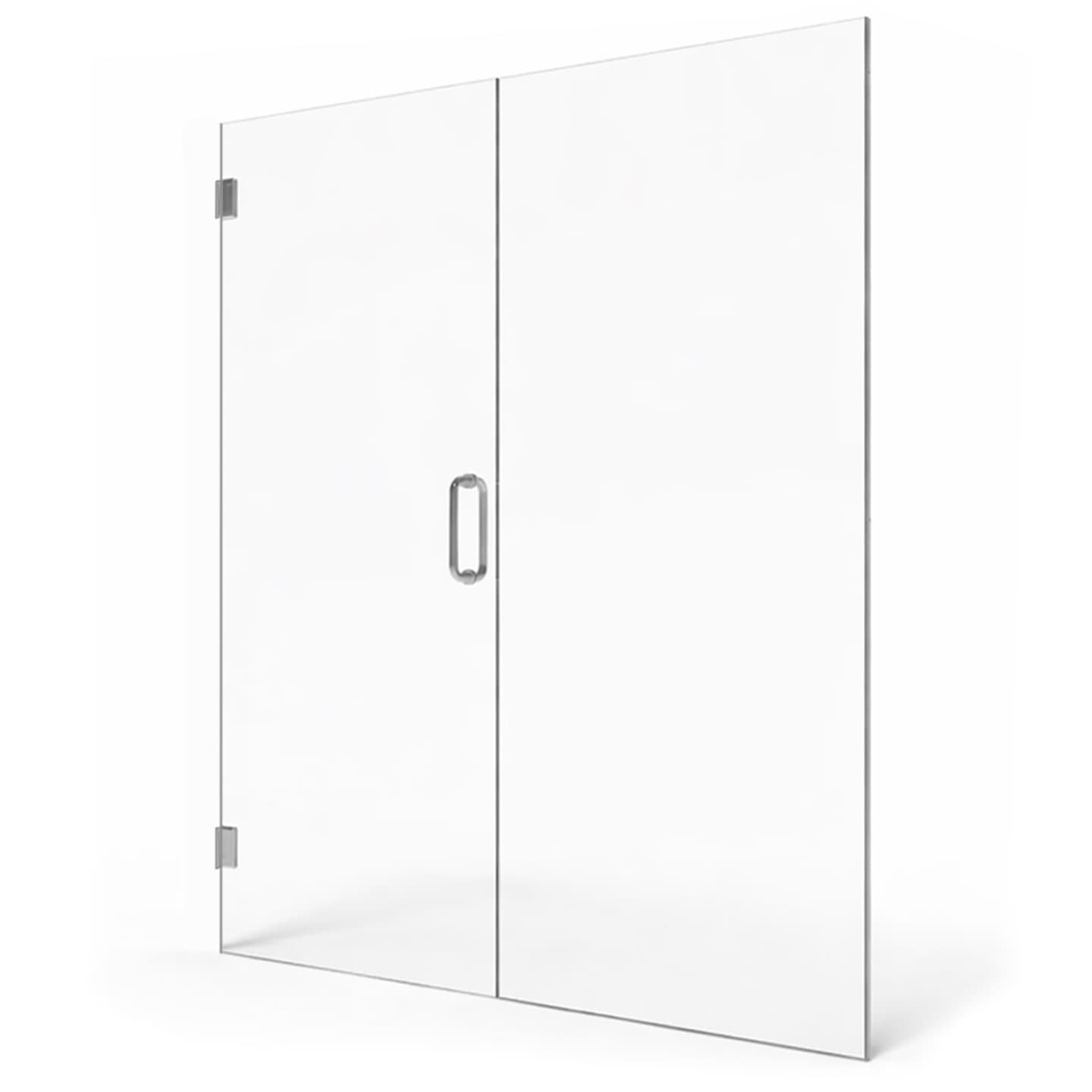
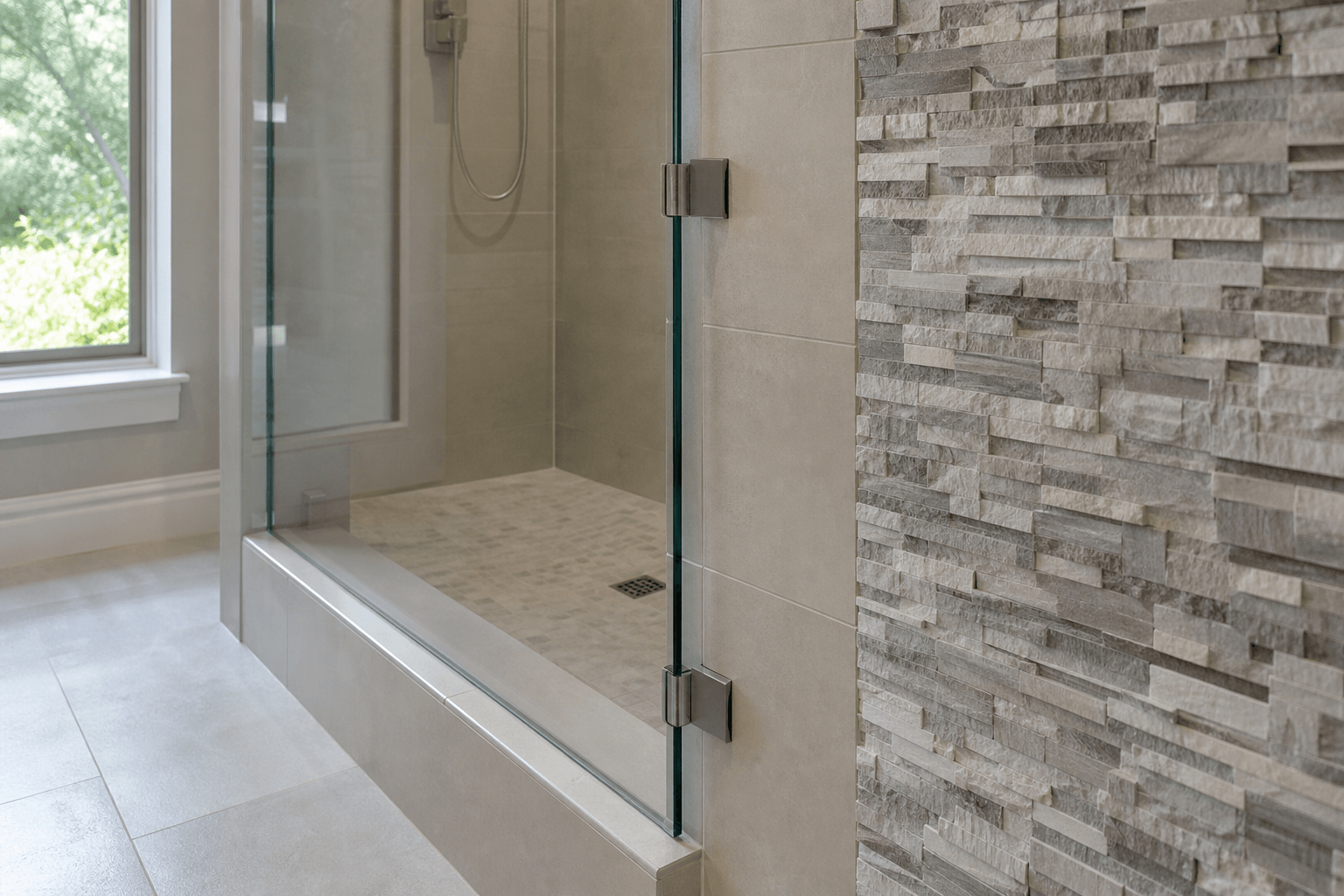
Yes, mosaic or heavily textured tile can complicate shower-glass installation, but it does not necessarily prevent it. The main concerns are uneven mounting surfaces, grout joints, difficult drilling, inconsistent seal contact, and limited space for hardware. The best results come from planning flat mounting zones before tile is installed and measuring the glass only after the tile, curb, thresholds, and other finished surfaces are complete and fully cured.
Why tile texture matters to shower hardware
Shower-glass hinges, clamps, wall channels, and support brackets are designed to sit against a reasonably flat, stable surface. Large-format tile usually provides broad areas where hardware can make consistent contact. Small mosaics create frequent grout joints, while split-face stone, pebble tile, deeply fluted tile, and other dimensional materials may have pronounced high and low points.
If hardware bridges those high and low points, it may not sit evenly against the wall. Tightening hardware against an irregular surface can also place concentrated pressure on raised tile edges. Installers must evaluate the tile, substrate, proposed hardware location, and enclosure design rather than treating every finished wall the same way.
- Hinge or clamp plates that cannot sit flush against the tile
- Fastener locations landing near tile edges or narrow mosaic pieces
- Drill bits moving across curved, glossy, or irregular surfaces
- Voids behind individual mosaic pieces or natural stone
- Uneven gaps between the glass and wall
- Silicone joints that must follow a rough or deeply recessed surface
- Door seals that cannot make consistent contact with textured tile
Can installers drill through mosaic tile?
Mosaic tile can often be drilled, but the process requires careful layout and the correct tools and technique. A proposed hole may fall through a tile piece, along its edge, or near a grout joint. Small pieces can be more vulnerable to cracking or loosening, particularly if they are not fully supported by setting material behind them.
Grout itself should not be treated as structural support for shower hardware. The fastener and anchoring method must be appropriate for the wall construction and glass system behind the finished surface. Moving a hole simply to avoid a grout joint is not always possible because hinge and clamp positions affect the way the glass is supported.
Every drilled opening through finished shower tile also deserves careful sealing. Shower Doors of Sarasota uses its DoubleSil layered sealing and anchoring process at applicable drilled hardware attachment points. It adds protection within the drilled opening before the anchor and fastener are fully installed, along with the visible exterior seal. This is an added precaution, not a guarantee against every possible source of water intrusion.
What problems can heavily textured tile cause?
Texture affects more than drilling. A fixed glass panel positioned beside stacked stone or pronounced relief tile may have a wide, uneven joint because straight glass cannot follow every ridge and recess. Tempered glass also cannot be trimmed or drilled in the field after tempering, so accurate measurements and an appropriate allowance for irregular surfaces are essential.
Texture can also affect water containment. Frameless enclosures have functional gaps around doors and panels and should not be described as completely waterproof. If a door closes against a rough tiled wall, a sweep or seal may touch the high points while leaving openings at the low points. Water can escape more easily through those inconsistent gaps, especially when a showerhead sprays toward the door.
- Pebble or river-rock mosaics
- Split-face stone and stacked-stone veneers
- Deeply fluted or three-dimensional ceramic tile
- Small glass mosaics with many grout joints
- Irregular handmade tile with variable edges
- Raised decorative borders installed where hinges or channels must sit
How should the tile layout be planned?
The simplest solution is to keep the glass mounting path flat. Before tiling, identify where the door jambs, fixed panels, hinges, clamps, or channels are likely to meet the walls. A flat tile strip, solid-surface return, stone jamb, or smooth border can provide a cleaner hardware connection without eliminating a mosaic or textured feature from the rest of the shower.
- Use textured tile as a central accent rather than directly beneath hardware
- Create a flat vertical border where the glass will meet the wall
- Keep raised trim pieces away from the door-closing line
- Discuss likely hardware locations before tile installation begins
- Confirm that the wall construction provides suitable support for the selected glass system
- Make the curb or threshold surface smooth, stable, and properly sloped toward the shower
- Complete the tile, curb, bench, and thresholds before final glass measurement
Wall flatness, plumb, and squareness still matter even when the tile itself is smooth. A decorative surface can make existing wall irregularities more noticeable. Because custom glass is fabricated to the finished opening, early coordination between the homeowner, tile installer, contractor, and glass professional can prevent awkward hardware placement or oversized perimeter gaps.
Would a wall channel make installation easier?
A wall channel may cover small variations and provide a continuous attachment line, but it is not a universal fix for deeply uneven tile. Hinges, clamps, and channels each have different space and support requirements. The right choice depends on the opening, door movement, wall construction, desired appearance, and degree of texture.
A fixed splash guard or stationary panel may also reduce some door-alignment concerns, although its wall connection still needs to be evaluated. Sliding doors can avoid the floor clearance required by a swinging door, but they introduce their own track and mounting considerations. The enclosure type should be chosen for the whole layout, not solely as a workaround for the tile.
When should shower glass be measured?
Final measurement should generally happen after all surfaces affecting the glass dimensions are finished. Shower Doors of Sarasota likes to measure once the tile and waterproofing are fully cured, then fabricate and install the enclosure. Measuring too early can miss changes caused by tile thickness, mortar buildup, decorative borders, curb caps, or wall corrections.
At measurement, point out any loose pieces, hollow-sounding tile, concealed plumbing, waterproofing concerns, or planned accessories. The glass professional can then evaluate the mounting surfaces and explain where drilling or hardware may be required. If you are planning a shower with mosaic, pebble, or heavily textured tile in Sarasota or the surrounding Suncoast, a free quote is available at /quote.
Key Takeaways
- Mosaic and textured tile can work with shower glass, but hardware needs stable, reasonably flat mounting areas.
- Frequent grout joints and raised surfaces make drilling, sealing, and door alignment more challenging.
- Keep deeply textured accents away from hinge, clamp, channel, and door-seal locations when possible.
- Tempered glass cannot be field-cut to follow an irregular wall, so final measurements are critical.
- Measure after the tile, curb, thresholds, and other finished surfaces are complete and cured.
- No frameless enclosure is completely waterproof; tile texture can make water containment more difficult.
Ready to Transform Your Bathroom?
Contact us for a free consultation on custom frameless shower doors, enclosures, and mirrors for your Sarasota home.
Frequently Asked Questions
Related Services
Suncoast Team
Sarasota's Trusted Shower Door Experts