
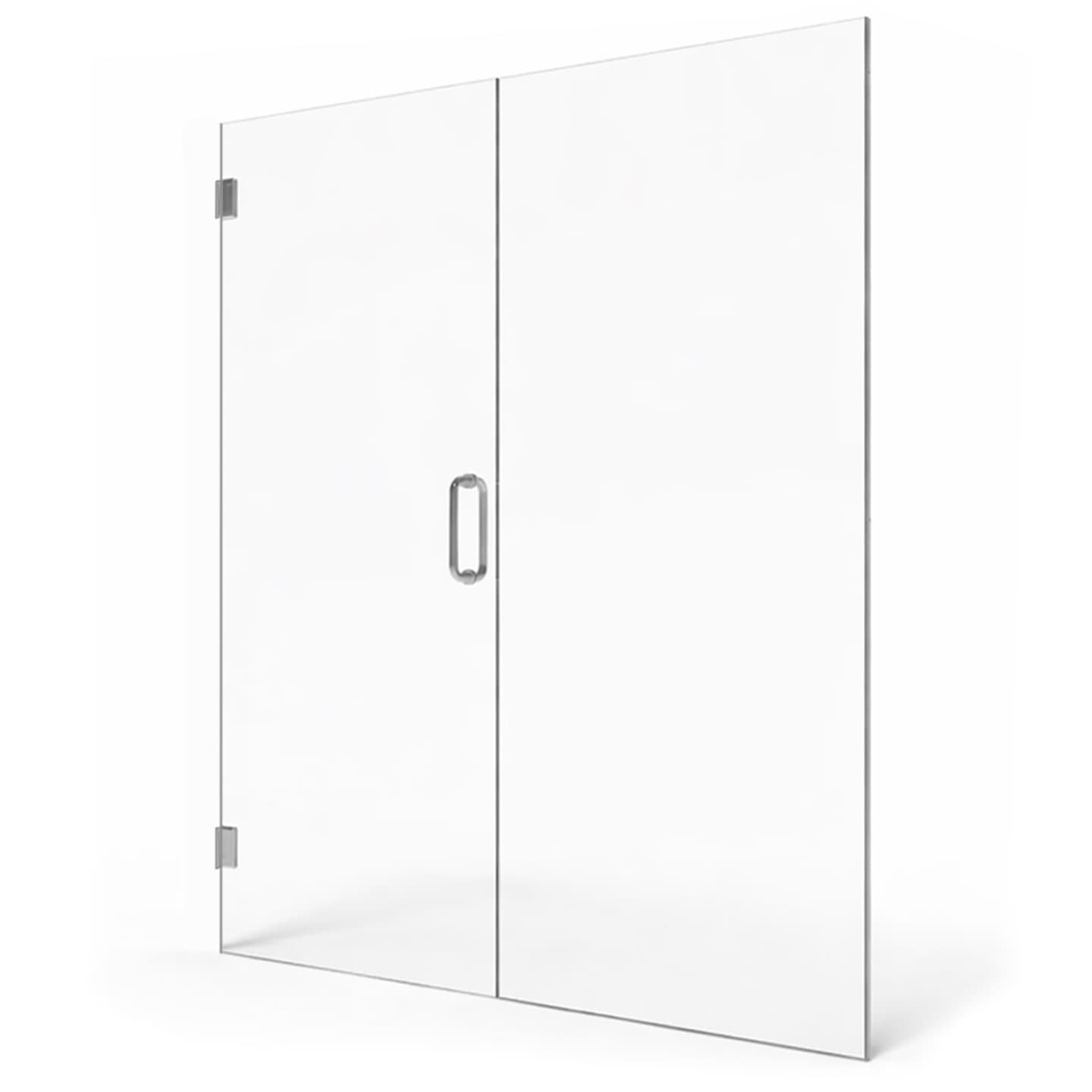
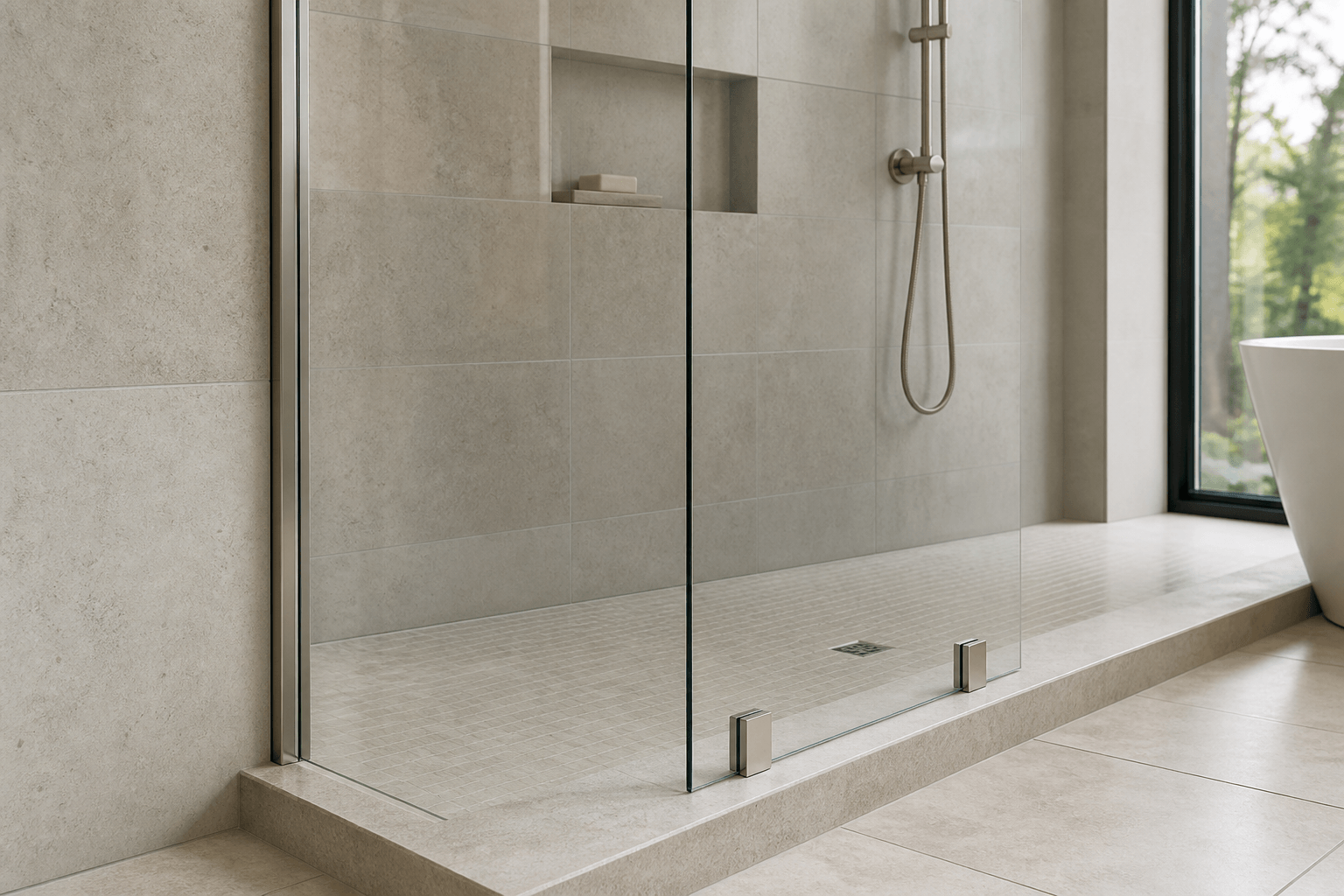
Neither U-channel nor glass clamps are automatically better for every fixed shower panel. U-channel is often the practical choice when continuous edge support, water containment, and tolerance for small tile variations matter most. Glass clamps are usually preferred for a cleaner, more minimal look that leaves more of the glass edge exposed. A properly designed panel can be secure with either method; the right choice depends on the panel’s dimensions, glass thickness, wall construction, curb or floor conditions, and the amount of bracing the layout requires.
What is the difference between U-channel and glass clamps?
U-channel is a narrow metal track that captures the edge of a fixed glass panel. It may run vertically along a wall, horizontally along a curb or shower floor, or both. The glass sits inside the channel, and the connection is finished with the appropriate setting materials and sealant. Because the metal runs continuously along the edge, it creates a defined frame line even though the overall enclosure may still be described as frameless.
Glass clamps are individual pieces of hardware placed at selected points around the panel. Depending on the hardware and design, the glass may need corresponding notches or holes fabricated before tempering. Clamps leave most of the perimeter exposed, producing a lighter visual effect. The open areas between the glass and tile are typically detailed with clear sealant where water containment is needed.
Where does U-channel work best?
U-channel works well when the homeowner wants a restrained frameless appearance but values continuous support and a straightforward transition between glass and tile. It is commonly used around stationary panels, splash guards, and enclosures where a long glass edge meets a wall or curb.
- The panel needs continuous support along one or more edges.
- Small variations in the tile line would be visually distracting with exposed glass.
- Water containment along the bottom of the panel is a high priority.
- The slim metal line coordinates well with the shower hardware.
- The layout calls for a simpler glass edge without multiple clamp locations.
Channel can visually soften minor inconsistencies where tile meets glass, but it is not a cure for walls that are substantially out of plumb or curbs that are improperly built. Custom glass must still be measured to the finished opening, and the mounting surface must be suitable for the planned hardware.
When are glass clamps the better choice?
Clamps are a strong design choice when the goal is to show as much uninterrupted glass and tile as possible. Instead of a continuous metal strip, the eye sees a few small hardware points. This can be especially attractive with feature tile, book-matched stone, or low-iron glass selected for more neutral color clarity.
- A minimal hardware appearance is the main design goal.
- The homeowner wants the glass edges to remain visible.
- The walls and curb are flat, accurately built, and properly prepared for hardware.
- The clamp finish is intended to coordinate with hinges, handles, or plumbing fixtures.
- The panel dimensions and support plan are appropriate for point-mounted hardware.
Clamps do not make a fixed panel structurally inferior when the system is properly designed. However, panel width, height, thickness, attachment points, and possible bracing must be considered together. A large or unusually positioned panel may require a support bar, header, ceiling connection, or another stabilizing detail regardless of whether its lower edge uses clamps or channel.
Which option is easier to clean?
Both options are manageable, but they create different cleaning details. U-channel has a continuous metal-to-glass seam where mineral residue and soap film may collect. Clamps expose more of the glass perimeter, but each clamp creates corners and edges that need to be wiped individually. In Sarasota-area homes with hard-water spotting and persistent humidity, regular drying generally matters more than the choice between these two mounting styles.
A squeegee after showering and a soft cloth around the hardware help limit buildup. Avoid abrasive pads and harsh products that can damage hardware finishes or sealant. For homeowners concerned about ongoing mineral and soap buildup, EnduroShield can be applied to any SDoS glass type and reduces water spots, soap scum, and mineral buildup by up to 90%; it still requires routine cleaning.
Does one contain water better?
A bottom U-channel can provide a more continuous physical boundary than isolated clamps, but neither mounting method makes a frameless enclosure completely waterproof. Frameless systems have functional gaps, and water performance also depends on the showerhead direction, curb slope, panel length, opening location, and how the seams are sealed.
For a fixed panel mounted with clamps, clear sealant can often close the stationary glass-to-tile joint while preserving the minimal appearance. Channel also requires careful sealing at transitions and endpoints. If water containment is a concern, the entire shower layout should be reviewed rather than choosing hardware based on appearance alone. A short splash panel facing a strong body spray, for example, may allow water to escape regardless of how its glass edge is mounted.
What installation details should homeowners ask about?
The shower glass should generally be measured after tile, curbs, thresholds, and other finished surfaces affecting the dimensions are complete. Shower Doors of Sarasota prefers to measure after the tile and waterproofing are fully cured, then fabricate the enclosure to the actual opening.
- Which surfaces will receive hardware and whether drilling is required.
- Whether the wall framing or other backing is appropriate for the attachment plan.
- How the panel will be stabilized at its top and outer edge.
- Where sealant will be visible after installation.
- How the curb or shower floor slope affects the glass placement.
- Whether the proposed hardware accommodates the finished wall conditions.
Drilled attachment points deserve particular attention because they may be exposed to moisture. Shower Doors of Sarasota includes its DoubleSil layered sealing and anchoring process at applicable drilled shower-glass hardware attachment points. It adds protection within the drilled opening before the anchor and fastener are fully installed, in addition to the visible exterior seal. This is an added precaution, not a guarantee against every possible source of water intrusion.
How should you make the final choice?
Choose U-channel if you prefer continuous support, a defined metal border, and a detail that can visually conceal small tile-line variations. Choose clamps if your priority is the most open appearance and your finished surfaces and panel design are well suited to point-mounted hardware. The decision should be made after reviewing the actual opening—not from a showroom sample alone—because support requirements and hardware locations can change with the dimensions and construction of the shower.
For a fixed panel in Sarasota, Bradenton, Lakewood Ranch, Venice, or the surrounding Suncoast, Shower Doors of Sarasota can review the finished layout and recommend an appropriate attachment method. A free quote is available through the online tool at /quote.
Key Takeaways
- U-channel offers continuous edge support and a more defined metal border.
- Glass clamps expose more glass and create a lighter, minimal appearance.
- Either method can be secure when properly designed for the panel and substrate.
- Bottom channel may aid water containment, but no frameless enclosure is completely waterproof.
- Panel size, backing, tile condition, curb slope, and bracing matter more than appearance alone.
Ready to Transform Your Bathroom?
Contact us for a free consultation on custom frameless shower doors, enclosures, and mirrors for your Sarasota home.
Frequently Asked Questions
Related Services
Suncoast Team
Sarasota's Trusted Shower Door Experts