

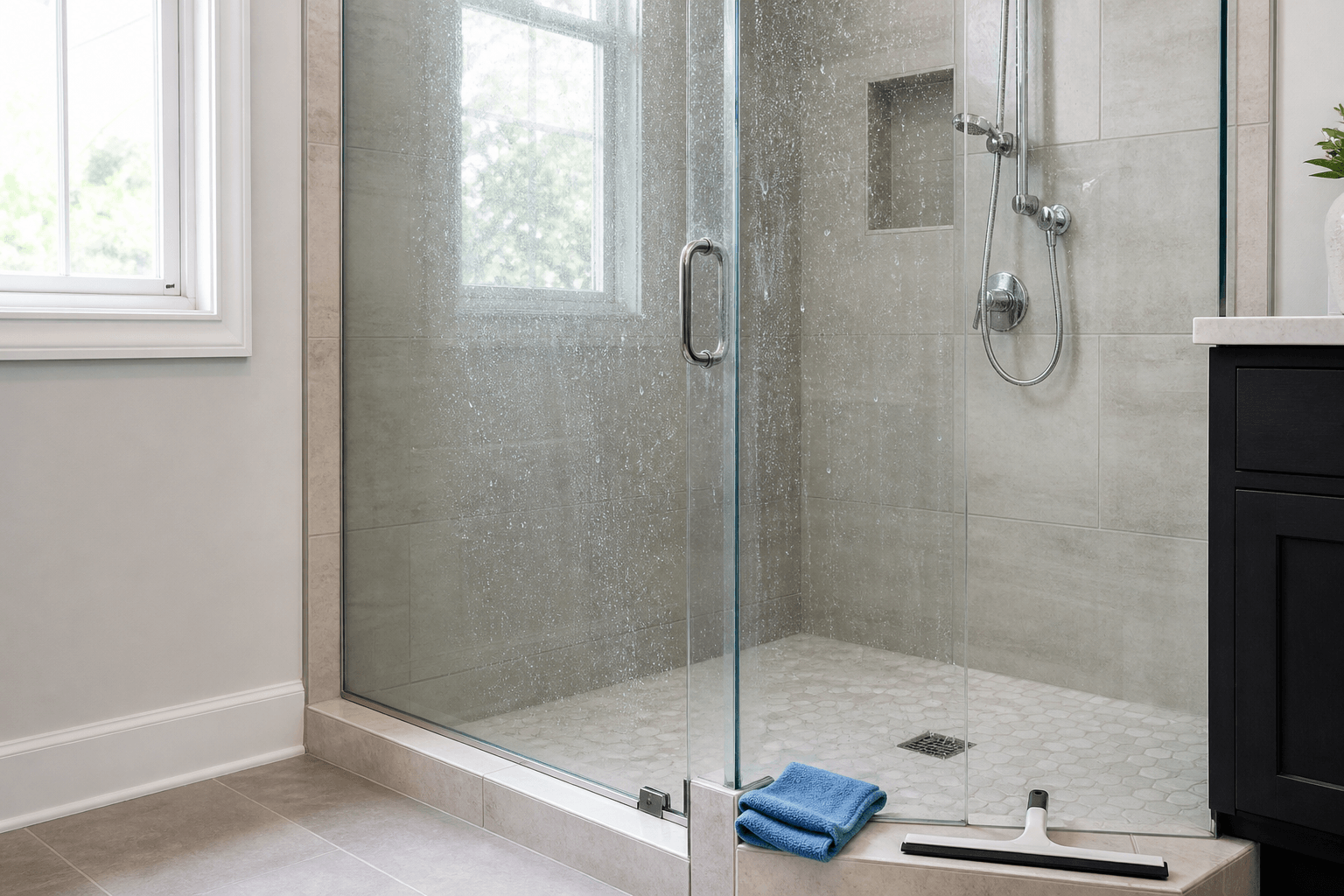
Shower glass can still develop water spots after cleaning because tap water leaves dissolved minerals behind as it dries. Cleaning may also leave soap, cleaner, or towel residue on the surface, making spots visible again once the glass is dry. If mineral deposits have remained for a long time, they can become difficult to remove and may eventually etch the glass, meaning the cloudy marks are no longer just sitting on the surface.
What causes water spots on shower glass?
Most shower-glass spots begin with water droplets. As each droplet evaporates, minerals such as calcium and magnesium remain on the glass. This is especially noticeable in homes with hard water. Repeated wet-and-dry cycles build layers of mineral residue, which may look white, chalky, cloudy, or slightly iridescent.
- Hard-water minerals left after droplets evaporate
- Soap scum formed by soap, body oils, and minerals
- Shampoo, conditioner, and other bath-product residue
- Cleaner that was applied too heavily or not rinsed completely
- Lint, fabric softener, or oils transferred by a cleaning cloth
- Old mineral deposits that have begun to affect the glass surface
Why do spots reappear right after cleaning?
A pane may look clean while it is wet but show spots as it dries. Water temporarily fills the uneven edges of deposits and makes the surface appear clearer. Once the moisture evaporates, the remaining minerals or film become visible again. This often means the cleaning method removed loose dirt but did not dissolve or lift the underlying buildup.
The rinse water itself can also create new spots. If hard tap water is left to air-dry after cleaning, it deposits another fine layer of minerals. Florida humidity may slow evaporation, but it does not prevent mineral residue. Drying the glass completely with a clean squeegee and microfiber cloth is therefore just as important as washing it.
Is the problem mineral buildup or permanent etching?
Fresh mineral residue sits on top of the glass and can usually be removed with a suitable cleaning product and gentle agitation. Etching is different: prolonged contact with mineral deposits and harsh conditions can alter the surface itself. Etched glass may remain cloudy or spotted even after thorough cleaning because the mark is now surface damage rather than removable dirt.
- If the mark changes or fades while being cleaned, it is probably surface residue.
- If the glass feels rough, mineral buildup may still be attached.
- If repeated appropriate cleaning produces no improvement, the surface may be etched.
- If haze is concentrated where droplets routinely dry, long-term water exposure is a likely contributor.
Avoid trying to force off stubborn deposits with abrasive powders, scouring pads, or improvised blades. These can scratch glass, damage decorative surfaces, or affect nearby hardware. Before using a cleaner, check its label and the care instructions for the glass, hardware, tile, and stone in the shower.
How should you clean spotted shower glass?
Start with the mildest method likely to work. Use a shower-glass cleaner approved for the surrounding materials, apply it according to its directions, and allow the recommended contact time. Gently wipe with a nonabrasive microfiber cloth or pad, rinse thoroughly, then squeegee and dry the edges with a separate clean cloth.
- Clean a small test area first, especially on coated or decorative glass.
- Use clean cloths that have not been washed with fabric softener, which can leave a film.
- Work in manageable sections so cleaner does not dry on the surface.
- Rinse away all loosened residue rather than redistributing it.
- Dry the entire pane, including corners and the area near the bottom seal or curb.
- Repeat a gentle treatment instead of immediately moving to an aggressive abrasive.
Diluted white vinegar is commonly used for mineral deposits on ordinary glass, but acidic products can damage some natural stone, grout, finishes, and hardware. Do not use vinegar unless it is compatible with every surface it may contact. Never mix vinegar or other acids with bleach, and never combine cleaning products unless their manufacturers specifically direct you to do so.
How can you prevent new water spots?
Prevention is easier than removing established buildup. After the last shower of the day, use a squeegee to remove droplets from the glass. Wipe remaining water from edges, hardware, and the bottom of the enclosure with a dry microfiber cloth. Keeping the bathroom ventilated helps the shower dry, although ventilation alone will not remove minerals from droplets left on the glass.
- Squeegeeing after regular use
- Wiping persistent droplets from glass edges and hardware
- Cleaning on a consistent schedule before deposits harden
- Using only nonabrasive, material-compatible products
- Rinsing bath-product overspray from the enclosure
- Keeping dedicated, clean microfiber cloths for the shower
Can a protective coating stop water spots?
A protective coating can make shower glass easier to clean and reduce how strongly contaminants bond to the surface, but it does not eliminate routine care. Shower Doors of Sarasota offers EnduroShield, a permanent protective coating that can be applied to any glass type and reduces water spots, soap scum, and mineral buildup by up to 90%. Water should still be removed regularly, and the coating’s care instructions should be followed.
When should you ask a glass professional for help?
Consider professional guidance when haze remains after careful cleaning, the glass may be etched, you are unsure whether the enclosure has a coating, or the marks appear inside laminated areas or around damaged hardware. A professional can help determine whether the issue is removable buildup, surface damage, or a condition that calls for replacement. Sarasota-area homeowners planning new shower glass can request a free quote from Shower Doors of Sarasota at /quote and ask about glass choices and protective coatings.
Key Takeaways
- Water spots form when droplets evaporate and leave minerals behind.
- Glass may look clean while wet but reveal residue as it dries.
- Hard rinse water and incomplete drying can immediately create new spots.
- Long-standing deposits may etch the glass and become impossible to clean away.
- A squeegee, clean microfiber cloth, and regular gentle cleaning help prevent buildup.
- Protective coatings reduce maintenance but do not make glass maintenance-free.
Ready to Transform Your Bathroom?
Contact us for a free consultation on custom frameless shower doors, enclosures, and mirrors for your Sarasota home.
Frequently Asked Questions
Related Services
Suncoast Team
Sarasota's Trusted Shower Door Experts