

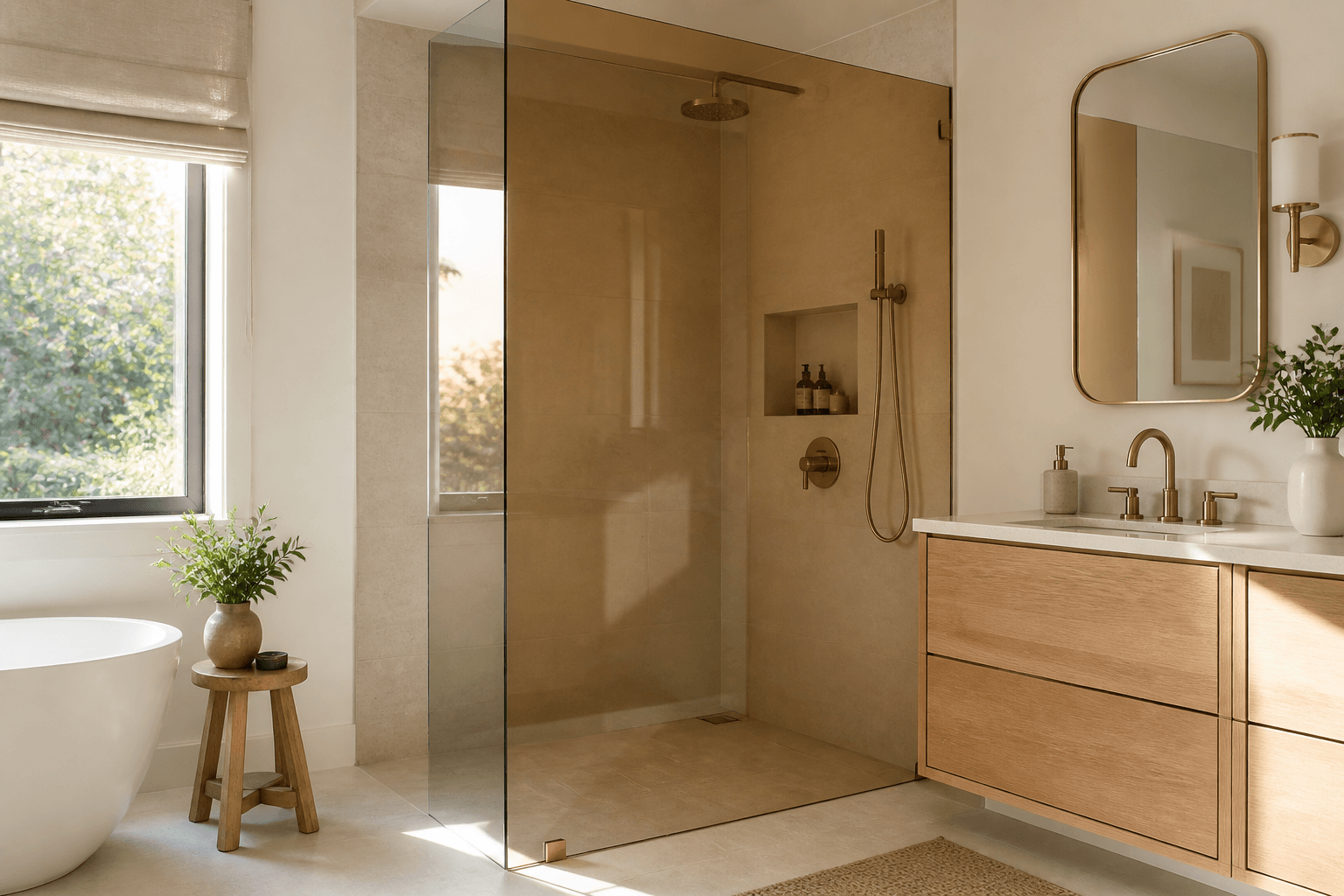
Gray or bronze shower glass will reduce light transmission compared with clear glass, but it will not necessarily make your bathroom too dark. In a bright room with good natural or artificial lighting, tinted glass can add privacy and visual depth without making the shower feel gloomy. Darkness becomes more of a concern when the shower already has dark tile, limited lighting, a deep enclosure, or no nearby window.
How Gray and Bronze Glass Affect a Bathroom
Tinted shower glass changes both the amount and the color of light passing through the enclosure. It remains transparent, so it does not create the solid visual barrier of a wall or opaque panel, but the view through it appears softer and darker than it would through clear glass.
Gray glass has a sleek, neutral tone that softens brightness and works naturally with cool whites, charcoal tile, marble, concrete-look finishes, and many black or chrome fixtures. Bronze glass introduces a warmer cast that pairs well with cream, beige, brown, terracotta, wood cabinetry, and warmer metallic finishes.
Shower Doors of Sarasota offers both gray and bronze glass in 3/8-inch thickness. Each has consistent color throughout the glass and provides more privacy than standard clear glass while allowing the shower interior to remain visible.
What Makes Tinted Shower Glass Feel Too Dark?
The glass is only one part of the lighting equation. A tinted enclosure is more likely to feel dark when several light-reducing elements are combined. A bathroom with a small window, dark wall tile, dark flooring, and a shower positioned away from the main light source will respond very differently from a bathroom with white tile and large windows.
- The shower has no dedicated light and sits outside the main ceiling fixture’s beam.
- Dark or heavily patterned tile covers most of the shower walls.
- The enclosure is deep, narrow, or located in an alcove that receives little daylight.
- A large tinted panel stands between the room’s main light source and the shower interior.
- The bathroom uses low-output or strongly directional lighting.
- The vanity, flooring, ceiling, and walls are also dark, leaving few surfaces to reflect light.
Florida Suncoast bathrooms often receive strong daylight, especially in homes with larger windows or light coastal color palettes. In those spaces, gray or bronze glass may help soften glare while adding contrast. Interior bathrooms, condominium baths, and showers placed deep within a floor plan require more careful lighting consideration.
Does the Size of the Enclosure Matter?
Yes. A single bronze or gray splash panel generally has less effect on overall room brightness than a large enclosure with several tinted panels. The panel’s location also matters: glass placed directly in front of a window or light fixture will filter more of the light entering the rest of the bathroom.
A larger bathroom can usually absorb a dark visual element more comfortably because there is more open space and often more reflected light. In a compact bathroom, tinted glass can still work, but light walls, a bright ceiling, and a well-lit shower help prevent the enclosure from feeling visually heavy.
Which Tint Works Better With Your Tile?
Gray glass is usually the more neutral choice for cool or contemporary palettes. It can connect black hardware, gray veining, and cool-toned porcelain without introducing another color. However, using gray glass with charcoal tile and black fixtures can create a deliberately dramatic enclosure, so adequate shower lighting is important.
Bronze glass brings warmth. It can complement sandy stone, beige tile, wood-look finishes, and bronze or brass-colored details. Against bright white or cool gray tile, the warm cast will be more noticeable. That contrast can be attractive, but homeowners expecting the tile to look exactly the same through the glass may prefer a clear option.
Tinted glass alters how finishes appear when viewed through it. This matters if the shower contains decorative tile, natural stone, or carefully matched grout colors. Look at the complete palette together rather than selecting the glass from a photo viewed on a phone or computer screen.
How Can You Keep a Tinted Shower Bright?
- Use light or reflective tile inside the shower, especially on walls facing the room.
- Include adequate lighting inside or immediately outside the enclosure. Fixtures in wet locations must be suitable for that use and installed according to applicable electrical requirements.
- Avoid placing the largest tinted panel directly between a window and the rest of the bathroom when the layout offers another option.
- Use mirrors to reflect available light, but position them based on practical sightlines rather than relying on them to correct a poorly lit shower.
- Keep ceilings and at least some surrounding surfaces light to improve reflection.
- Consider limiting tinted glass to a panel or selected portion of the enclosure instead of surrounding the entire shower, where the layout allows.
Lighting should be planned before the glass is measured, particularly during a full renovation. Shower glass is generally measured after the tile, curb, thresholds, and other finished surfaces affecting its dimensions are complete. By that stage, changing fixture locations or tile colors can be difficult.
Will Tinted Glass Provide Complete Privacy?
No. Gray and bronze glass add privacy by reducing light transmission and softening the view, but they remain transparent. The amount visible through the glass changes with viewing distance, bathroom lighting, and whether the shower is brighter than the surrounding room. If privacy is the main goal, frosted or textured options such as rain or reeded glass may deserve consideration.
Frosted, rain, and reeded glass also allow light through, but they obscure the view differently. Shower Doors of Sarasota places the etched or textured surface on the exterior while keeping the interior surface smooth for easier cleaning. That distinction can be useful in bathrooms where privacy matters more than preserving a clear view of the tile.
How Should You Make the Final Choice?
Evaluate the tint in lighting similar to your actual bathroom. View it next to the tile, grout, vanity finish, and hardware during both daylight and evening conditions when possible. Pay attention not only to whether the glass looks attractive, but also to whether the shower interior remains comfortably lit and whether tile colors still appear the way you expect.
For bright bathrooms, gray or bronze glass can add character without sacrificing a comfortable sense of openness. For darker bathrooms, the tint may still work if lighting and surrounding finishes are adjusted thoughtfully. Sarasota, Bradenton, Lakewood Ranch, Venice, and other Suncoast homeowners can request a free custom shower-glass quote from Shower Doors of Sarasota at /quote.
Key Takeaways
- Gray and bronze glass reduce light transmission but do not automatically make a bathroom too dark.
- Dark tile, limited lighting, deep alcoves, and large tinted panels increase the risk of a dim shower.
- Gray suits cooler, neutral palettes; bronze complements warmer finishes.
- Tinted glass adds privacy but remains transparent.
- Evaluate the glass with your actual tile and under daytime and evening lighting.
Ready to Transform Your Bathroom?
Contact us for a free consultation on custom frameless shower doors, enclosures, and mirrors for your Sarasota home.
Frequently Asked Questions
Suncoast Team
Sarasota's Trusted Shower Door Experts