
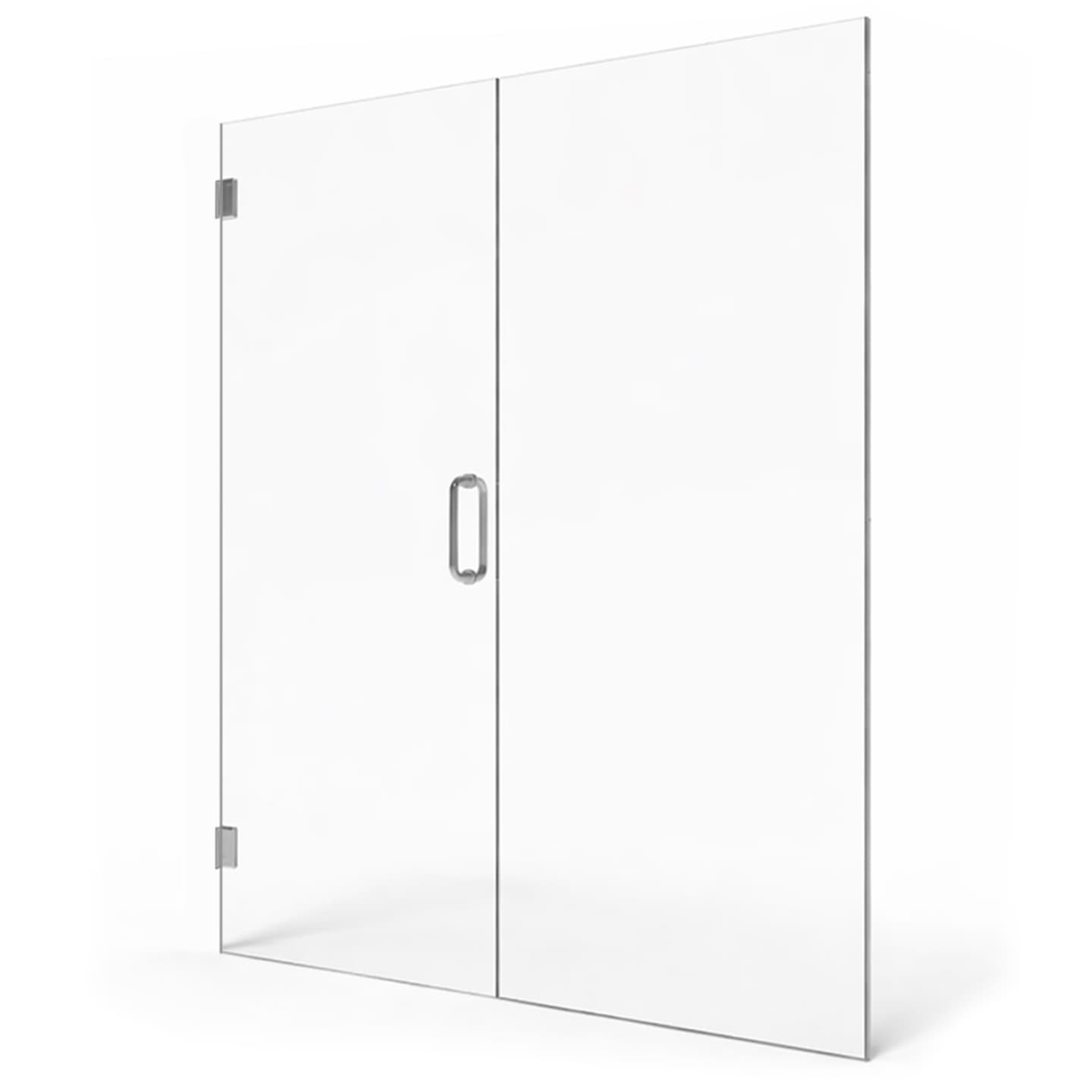
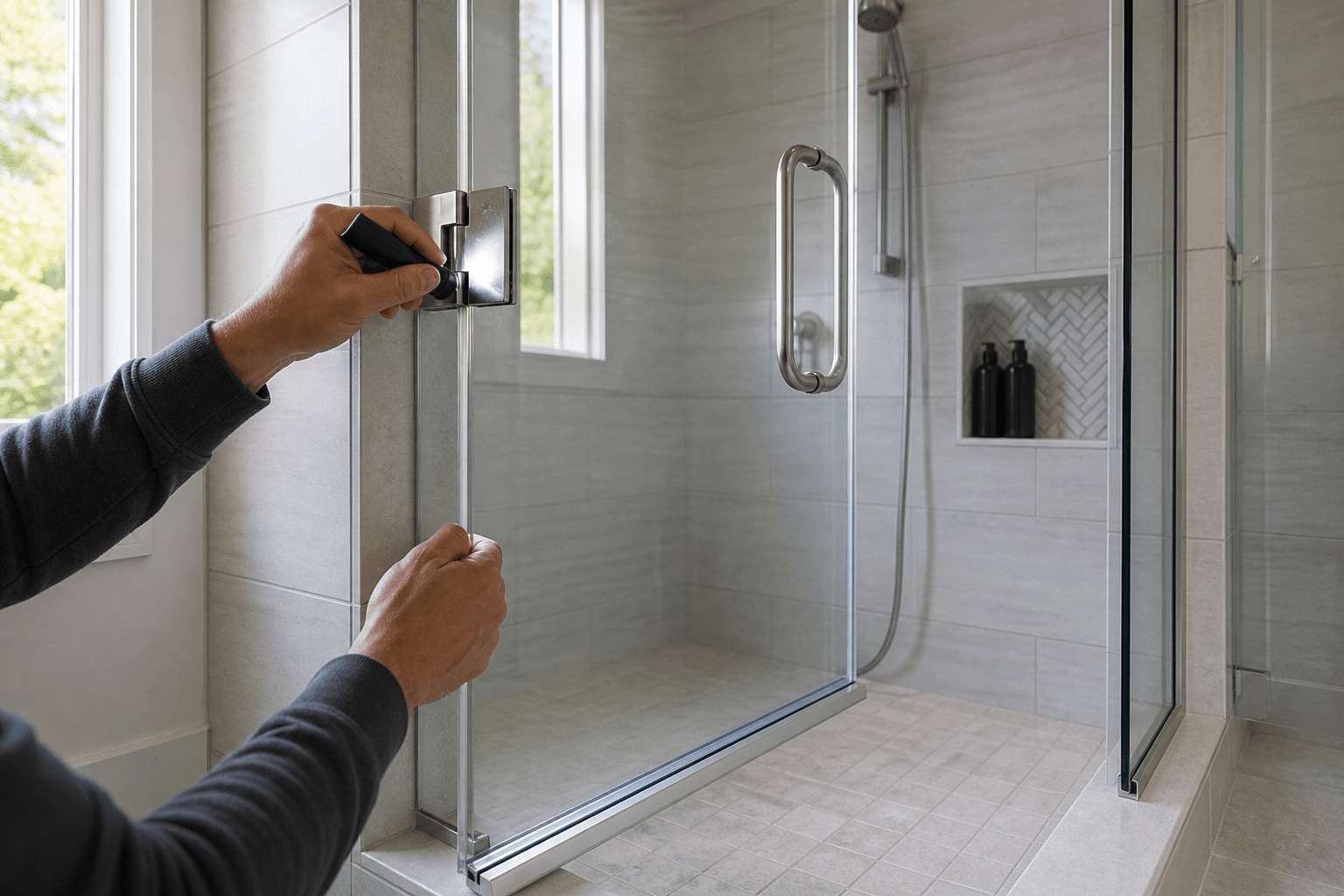
During an annual shower-glass hardware inspection, homeowners should check hinges, clamps, channels, handles, rollers, guides, sweeps, gaskets, and visible sealant for looseness, movement, corrosion, wear, or damage. Also examine the glass for chips or cracks, confirm that a door moves smoothly without touching tile or metal, and look for cracked tile or moisture signs near attachment points. The inspection should be visual and gentle: do not remove hardware, tighten structural fasteners, or attempt to realign tempered glass yourself. Stop using the enclosure and call a glass professional if the glass is cracked, a panel shifts, or a door drags or binds.
Prepare the shower before inspecting it
Clean the glass and hardware first so mineral deposits and soap residue do not hide a problem. Follow the hardware or glass-care instructions if available. Avoid abrasive pads and harsh chemicals, which may damage metal finishes, vinyl components, protective glass coatings, or sealant. After cleaning, dry the enclosure and inspect it in bright light.
- Remove bottles, mats, and other items that block the curb or lower hardware.
- Use a flashlight to examine corners, glass edges, and wall attachment points.
- Open and close the door slowly; do not shake, lift, or push hard on the glass.
- Note any condition that has changed since the previous inspection.
What should you check on hinges, clamps, and channels?
Structural hardware holds the glass in position, so visible movement deserves attention. Watch the fittings while the door operates normally. Decorative covers may conceal fasteners; do not pry them off. Structural screws and clamps must be tightened correctly and evenly, and overtightening can place harmful stress on tempered glass.
- A hinge, clamp, or wall channel that visibly shifts during normal door movement.
- Backplates pulling away from tile or gaps developing behind hardware.
- A door that has begun to sag, scrape, bind, or close differently than before.
- Loose handles or knobs, especially if they rotate or move against the glass.
- Missing, displaced, cracked, or compressed gaskets between metal and glass.
- Rust-colored staining, bubbling finishes, greenish residue, pitting, or flaking metal.
- Unusual clicking, popping, grinding, or metal-on-glass sounds.
How do you inspect the glass safely?
Examine every accessible edge and corner because damage there can be more concerning than an ordinary surface mark. Pay particular attention near hinges, clamps, handles, and other cutouts. Never tap the glass or run a bare hand along a damaged edge. Tempered glass should not be drilled, cut, or modified after tempering.
- Cracks of any size. Stop using the shower if you find one.
- Chips along exposed edges or corners. Avoid touching them and request professional evaluation.
- Glass touching tile, stone, a metal fastener, or another glass panel during operation.
- New scratches near hardware that could indicate rubbing or misalignment.
- A fixed panel that visibly shifts at its base or attachment points during ordinary use.
Are the seals and attachment areas still in good condition?
Inspect sweeps, seals, and visible sealant after the shower is dry. Frameless enclosures have functional gaps and should not be described as completely waterproof, but a new leak pattern can indicate a worn sweep, changed door alignment, deteriorated sealant, or a shower spray directed toward an opening. Do not simply cover a recurring leak with more caulk without identifying its source.
- The bottom sweep for tears, brittleness, distortion, mineral buildup, or sections pulling away.
- Vertical vinyl seals for splits, gaps, or poor contact when the door closes.
- Existing sealant around channels and hardware for separation, cracking, or missing sections.
- Tile and grout near drilled attachments for cracks or new discoloration.
- Adjacent walls, baseboards, or ceilings below the shower for swelling, staining, peeling paint, or persistent musty odors.
- The curb or threshold for standing water caused by debris or an obstructed drainage path.
Hardware installed through tile creates drilled attachment points that require careful sealing and anchoring. Homeowners can inspect the exposed connection but should not disassemble it to examine the drilled opening. Shower Doors of Sarasota uses the DoubleSil™ method at applicable drilled hardware points, adding protection within the opening as well as at the visible exterior seal. It is an added precaution, not a guarantee against every source of water intrusion.
What needs attention on a sliding shower door?
Sliding systems add rollers, guides, tracks, and stops to the checklist. Move each panel through its normal range without forcing it. The panels should remain controlled and should not wobble excessively, jump, strike one another, or contact hard surfaces outside their intended stops.
- Rollers move smoothly without grinding, sticking, or visible wobbling.
- The bottom guide remains secure and keeps the panels properly separated.
- Stops and bumpers remain present, aligned, and undamaged.
- Tracks are free of hair, soap residue, and mineral debris.
- Panels do not collide with handles, walls, or each other.
- No lubricant is added unless the system manufacturer specifically recommends it.
When should you stop using the shower?
Some maintenance issues, such as a dirty track or replaceable sweep, are not emergencies. Structural movement or glass damage is different. Avoid operating the enclosure until it is professionally evaluated if normal use could cause the glass to strike a hard surface, pull away from its supports, or place added stress on a damaged edge.
- Any crack or significant edge damage in the glass.
- Loose, shifting, or separating hinges, clamps, channels, or fixed panels.
- A swinging door that suddenly sags, drags, binds, or contacts tile or metal.
- A sliding panel that leaves its guide, wobbles heavily, or does not remain controlled.
- Cracked tile around a fastener or hardware pulling away from the wall.
- Persistent leakage near drilled hardware or signs of moisture damage outside the shower.
- Advanced corrosion, broken hardware, or a missing protective gasket.
How often should shower hardware be checked?
A detailed inspection once a year is a practical baseline, but homeowners should remain alert throughout the year. Perform a quick check whenever the door begins sounding or moving differently. Sarasota-area humidity, coastal salt exposure, and hard-water deposits can make routine cleaning and early corrosion detection especially important. Drying hardware after use and keeping tracks and sweeps clean also makes changes easier to spot. If an inspection indicates that glass or hardware may need replacement, Shower Doors of Sarasota offers free quotes through the online tool at /quote.
Key Takeaways
- Inspect all hinges, clamps, channels, handles, rollers, guides, sweeps, and seals at least annually.
- Stop using the enclosure if glass is cracked, a panel shifts, or a door contacts tile or metal.
- Do not remove hardware or tighten structural fasteners without professional guidance.
- Treat new leaks as a symptom to investigate rather than simply adding more caulk.
- Clean and dry hardware regularly so corrosion, movement, and damaged components are easier to spot.
Ready to Transform Your Bathroom?
Contact us for a free consultation on custom frameless shower doors, enclosures, and mirrors for your Sarasota home.
Frequently Asked Questions
Related Services
Suncoast Team
Sarasota's Trusted Shower Door Experts