
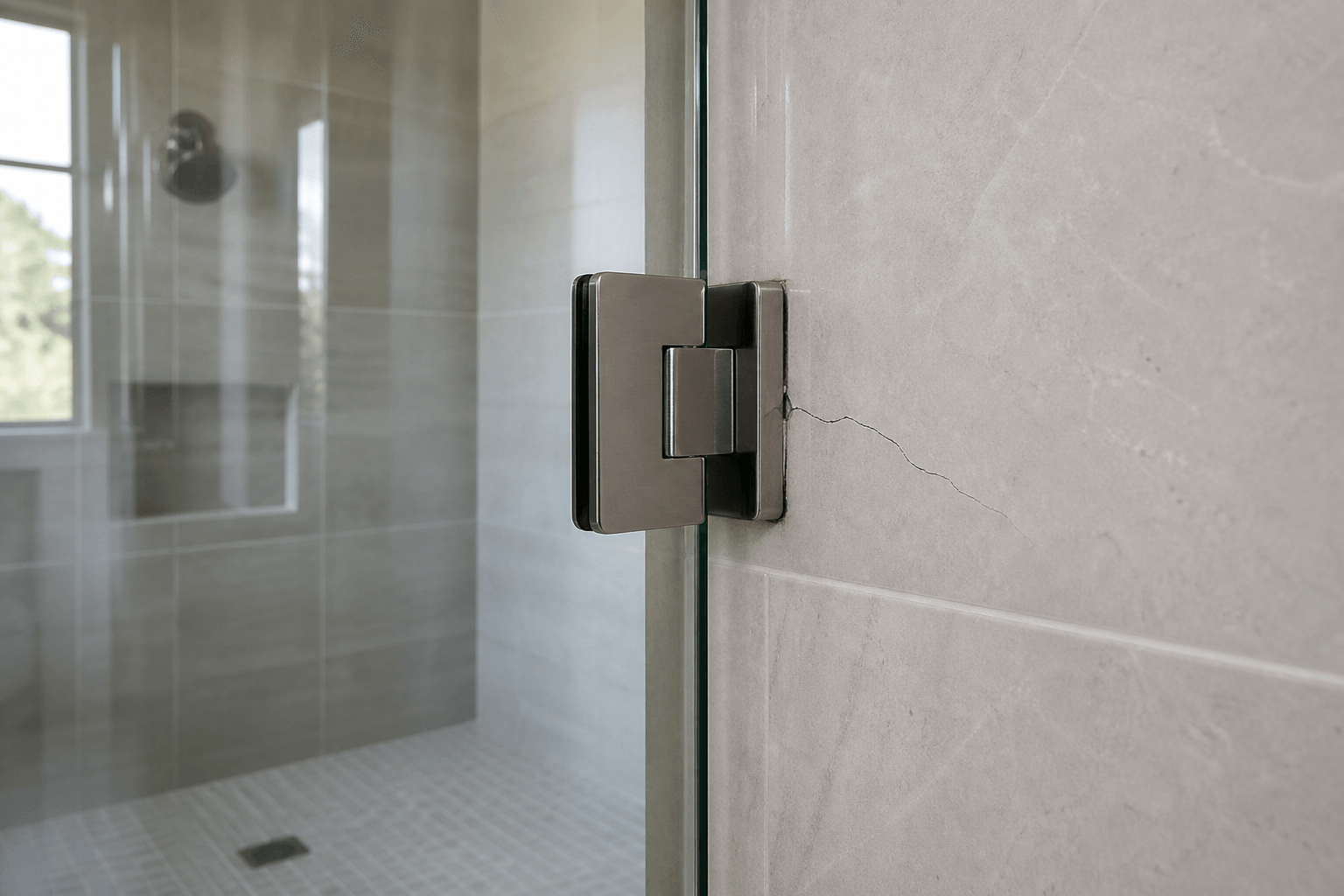
If tile cracks near a shower-glass attachment point, stop using the door if the glass or hardware moves, keep people away from the enclosure, photograph the damage, and contact a shower-glass professional for an inspection. Do not loosen hinges, remove clamps, inject sealant into the crack, or attempt to replace the tile while the glass remains supported by that hardware. A small surface crack may be cosmetic, but a widening crack, loose fastener, displaced tile, or moving glass needs prompt professional attention.
First, check whether the glass is stable
Look at the enclosure without pushing, pulling, or testing the hardware. The immediate question is not simply whether the tile is damaged; it is whether the attachment supporting or stabilizing the tempered glass may have moved. Shower panels and doors are heavy, and tempered glass is particularly vulnerable when an edge or corner is damaged.
- The door, panel, hinge, clamp, channel, or handle moves unexpectedly.
- The door begins rubbing, sagging, binding, or closing differently.
- The crack is widening, branching, or passing directly through a drilled attachment point.
- A section of tile is lifting away from the wall or sounds loose without being tapped.
- The glass edge appears chipped or is making contact with tile or metal.
- You hear popping or cracking when the door moves.
- There are sharp tile fragments or signs that a fastener is pulling outward.
If the hardware remains firm and the crack appears to be a short hairline in the tile glaze, the situation may not be an emergency. Avoid operating the door unnecessarily until it has been reviewed, however. A photograph alone cannot show what is happening behind the tile or inside the drilled opening.
What can cause tile to crack near shower hardware?
A crack near a hinge or clamp does not automatically prove that the installer drilled incorrectly. Tile can crack for several reasons, and the crack may become visible immediately or long after installation. The location, direction, and timing of the crack all help identify the likely cause.
- Stress created while drilling through a hard, brittle, or previously weakened tile.
- A void or incomplete mortar coverage behind the tile, leaving part of it unsupported.
- Normal building or substrate movement transferring stress through the tiled wall.
- A fastener or piece of hardware placing excessive pressure on the tile.
- Impact from a door, object, cleaning tool, or nearby construction work.
- A crack that began in the substrate or tile before the shower glass was installed.
- Movement caused by an attachment that is no longer secure.
Do not assume the crack is harmless because it is small. Conversely, do not assume the shower must be completely rebuilt. The correct response depends on whether only the tile surface is affected, whether the attachment is secure, and whether the substrate or waterproofing behind the finish has also been damaged.
Should you seal the crack yourself?
Caulk, grout, epoxy, or clear sealant applied over the face of the tile is not a substitute for an inspection. A surface patch can hide changes in the crack and make it harder to determine whether the tile is moving. It also does not correct a loose anchor, unsupported tile, damaged substrate, or compromised waterproofing.
Do not tighten or loosen a visible screw as a quick fix. Shower-glass hardware is installed with specific clearances and pressure points. Changing the fastener tension without supporting the glass can increase stress on the tile or glass. Removing a hinge or clamp can also release a panel or door unexpectedly.
Does cracked tile mean water is getting into the wall?
Not necessarily. Tile and grout form the visible shower surface, while the waterproofing system behind them is the main defense against moisture. A crack in the tile does not by itself confirm that the underlying waterproofing has failed. However, a crack that crosses a drilled opening deserves careful evaluation because hardware attachment points may be exposed to water.
- Discoloration, swelling, or softness on the opposite side of the wall.
- Loose baseboards or flooring outside the shower.
- Persistent musty odors that were not present before.
- Paint bubbling or drywall staining near or below the attachment.
- Sealant separating around the hardware or water appearing where it normally does not.
These symptoms do not identify the source on their own. Water can escape through functional gaps in a frameless enclosure, travel along a curb, enter around plumbing, or come from another building component. If moisture is suspected, a qualified glass professional, tile contractor, plumber, or waterproofing specialist may need to coordinate the investigation.
How is cracked tile near an attachment repaired?
The repair plan should begin with the glass, because the affected hardware may be carrying or stabilizing it. A shower-glass professional can assess the enclosure, determine whether it must be temporarily removed, and identify whether the existing attachment location can be reused. A tile professional can then evaluate the tile bond, substrate, and waterproofing as needed.
- Monitoring a stable cosmetic glaze crack that does not affect the attachment.
- Professionally removing the door or panel so the damaged tile can be replaced safely.
- Replacing loose or poorly bonded tile and correcting the supporting surface.
- Repairing waterproofing or substrate damage before installing replacement tile.
- Repositioning or reinstalling hardware if the original attachment is unsuitable.
- Replacing damaged glass if an edge or corner has been compromised.
Do not let tile work proceed around load-bearing shower hardware unless the glass has been evaluated and safely supported or removed. Likewise, the replacement tile and setting materials should be fully cured before the enclosure is remeasured or reinstalled. Shower Doors of Sarasota generally measures after tile, curbs, thresholds, and other surfaces affecting glass dimensions are complete and after tile and waterproofing are fully cured.
How can attachment-point risks be reduced?
Careful planning begins before drilling. Hardware locations should account for the shower layout, wall construction, glass system, and finished tile. Proper tools, careful layout, suitable anchoring, and sealing are all important because drilled openings create potential exposure points.
For applicable installations, Shower Doors of Sarasota includes DoubleSil, a layered sealing and anchoring process at drilled shower-glass hardware attachment points. It incorporates protection inside the drilled opening before the anchor and fastener are fully installed, in addition to the visible exterior seal. This is an added precaution, not a guarantee against every source of water intrusion, and it does not make a frameless enclosure completely waterproof.
Homeowners can also reduce unnecessary stress by avoiding slamming or forcing the door, not hanging heavy objects from handles or glass, and addressing changes in alignment promptly. If you find a crack near an attachment in Sarasota, Bradenton, Lakewood Ranch, Venice, or another nearby Suncoast community, document it and arrange a professional assessment before attempting a cosmetic repair. Shower Doors of Sarasota offers free quotes through the online tool at /quote.
Key Takeaways
- Stop using the enclosure if the glass, hardware, or damaged tile moves.
- Do not loosen hardware, tighten screws, or replace tile while the glass is unsupported.
- A tile crack does not automatically mean the waterproofing has failed.
- Watch for widening cracks, door misalignment, chipped glass edges, and moisture symptoms.
- Glass and tile professionals may need to coordinate removal, investigation, and repair.
Ready to Transform Your Bathroom?
Contact us for a free consultation on custom frameless shower doors, enclosures, and mirrors for your Sarasota home.
Frequently Asked Questions
Related Services
Suncoast Team
Sarasota's Trusted Shower Door Experts