
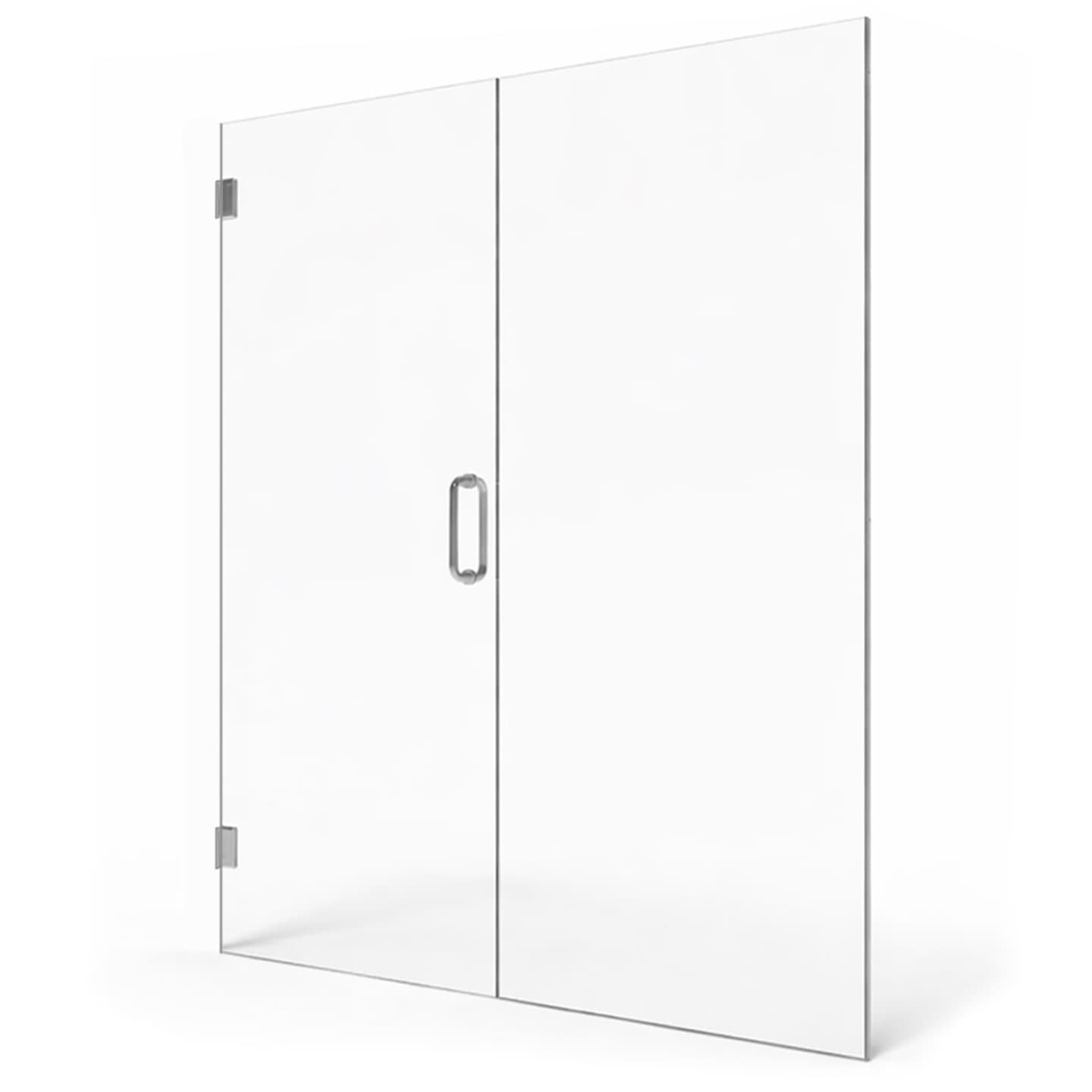
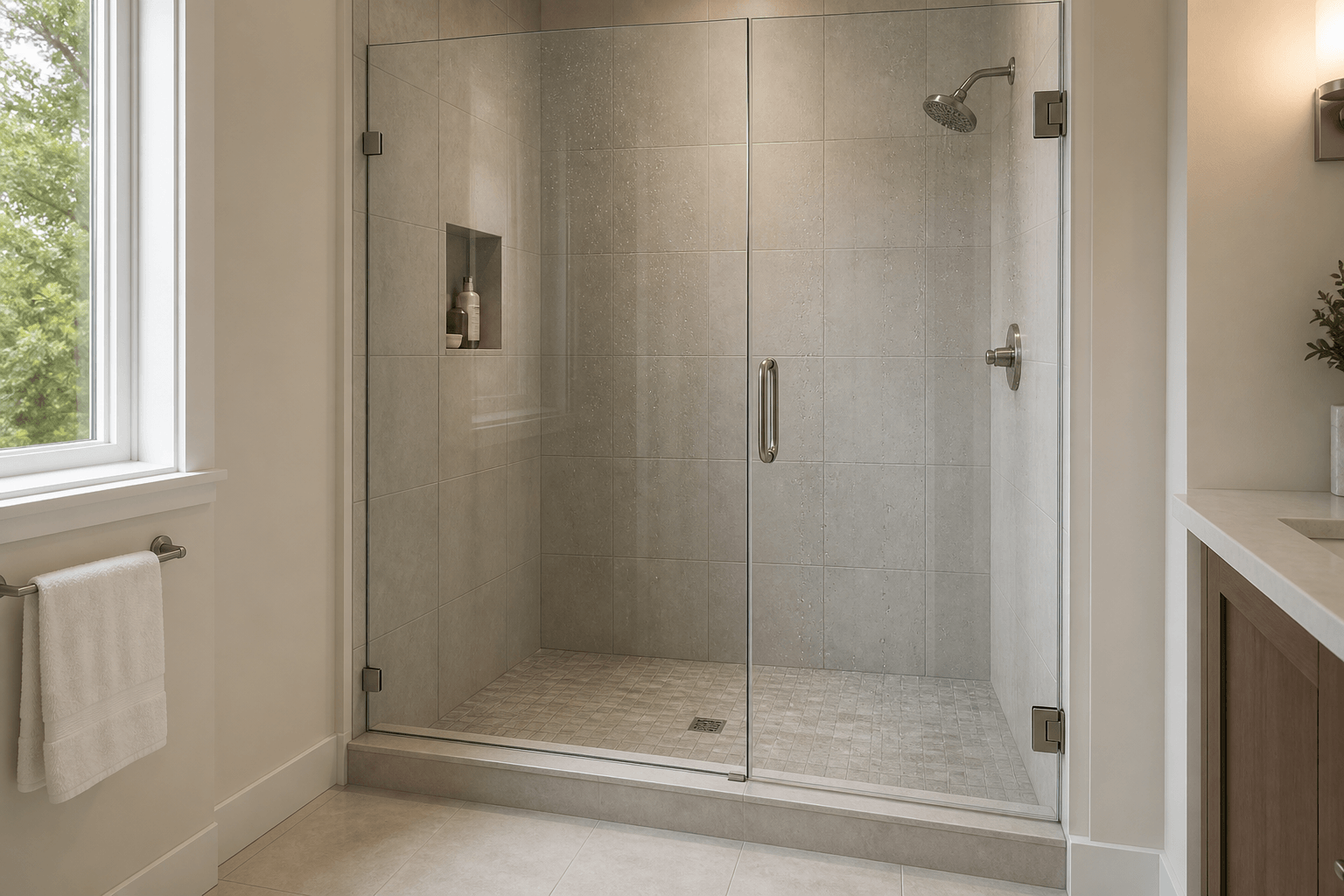
No, a frameless shower enclosure cannot be completely waterproof. Frameless systems need small functional gaps around doors, hinges, and adjoining glass panels so the components can move without rubbing. A well-designed and professionally installed enclosure should contain normal shower spray, but water can escape if it is directed toward an opening, collects on an improperly sloped surface, or is allowed to reach vulnerable attachment points.
Why aren’t frameless shower doors fully waterproof?
A frameless enclosure uses thick tempered safety glass and minimal hardware instead of a continuous metal frame. The cleaner appearance comes with unavoidable spaces between some components. A swinging door needs clearance along its edges and bottom. Hinges interrupt the glass-to-wall connection, and adjoining panels may have narrow joints. These openings do not necessarily indicate poor workmanship; they allow the enclosure to function safely.
Clear seals, sweeps, or vinyl gaskets can improve water containment in selected locations, but they do not turn the enclosure into a sealed aquarium. Water under pressure may pass through a door gap or around a gasket, especially when a handheld sprayer or body jet is aimed directly at it.
What determines how well the enclosure contains water?
Water containment depends on the entire shower layout, not only the glass. The direction of the showerhead, the location of the door, the size of fixed panels, and the slope of finished surfaces all matter. These details should be considered before glass is fabricated because custom panels and doors are made to fit the completed opening.
- Showerhead direction: Fixed showerheads should generally aim toward a tiled wall or fixed panel rather than toward the door opening.
- Door location: Placing the door outside the showerhead’s direct spray path reduces the chance of leakage through functional gaps.
- Curb and threshold slope: Horizontal surfaces inside the enclosure should direct water back toward the shower and drain, not toward the bathroom floor.
- Fixed-panel coverage: A properly sized panel can intercept spray in walk-in or partially enclosed showers.
- Door clearance: A swinging door needs enough space to operate without hitting a vanity, toilet, towel bar, or nearby wall.
- Drainage: The shower floor must move water toward the drain rather than allowing it to pool near the entrance.
- User habits: A handheld sprayer aimed at a hinge, door edge, or open entry can force water outside almost any enclosure.
How do drilled hardware points affect water protection?
Hinges, clamps, channels, and other shower-glass hardware may require holes through finished tile. Because these attachment points can be exposed to water, careful drilling, anchoring, fastening, and sealing are important. Simply applying a visible bead of sealant around the finished hardware does not address the inside of the drilled opening.
Shower Doors of Sarasota uses its DoubleSil installation method at applicable drilled shower-glass hardware attachment points. DoubleSil incorporates protection within the drilled opening before the anchor and fastener are fully installed, in addition to the visible exterior seal. This layered process is an added precaution designed to help reduce the risk of moisture entering behind the tile at those locations.
DoubleSil does not make a frameless enclosure completely waterproof, and no installation method can guarantee protection against every possible source of water intrusion or damage. It specifically addresses applicable drilled hardware points; it cannot correct problems such as poor surface slope, failed waterproofing behind tile, plumbing leaks, or spray directed through a door gap.
Can seals and sweeps stop every leak?
Door sweeps and clear seals can help control routine splashing. A bottom sweep may redirect water from the door back into the shower, while a vertical seal may reduce spray through the gap between a door and panel. Their effectiveness depends on the enclosure design, the size of the gap, and the direction and force of the water.
These components also need occasional inspection. Soap residue and mineral deposits can keep a sweep from sitting properly, while an aged or damaged seal may become stiff, loose, or discolored. Replacement can improve containment, but adding seals everywhere is not always desirable or appropriate because the glass still needs safe operating clearance.
Are doorless showers more likely to let water escape?
A doorless shower intentionally has an open entry, so its ability to contain spray depends heavily on shower depth, panel size, showerhead placement, and floor drainage. A stationary glass panel or splash guard can block much of the direct spray without adding a moving door, but it cannot prevent all water from reaching the open entrance.
Doorless layouts work best when there is enough room to separate the showerhead from the entry. In a compact bathroom, a hinged or sliding door may provide better practical containment. Sliding shower doors can also suit wider openings or tub enclosures where there is not enough room for an outward-swinging door.
How can homeowners reduce water outside the shower?
- Avoid aiming handheld showerheads or adjustable body sprays at the door seams, hinges, or open entry.
- Keep door sweeps and seals free of soap residue and mineral buildup.
- Wipe up recurring water promptly and identify where it is crossing the enclosure rather than assuming the glass itself is leaking.
- Inspect visible sealant for separation, cracking, or missing sections; do not remove or add sealant without understanding the enclosure’s intended drainage paths.
- Use the bathroom exhaust fan to manage Florida humidity, but remember that ventilation controls moisture in the air rather than water escaping onto the floor.
- If planning a remodel, finalize showerhead placement, curb design, and finished tile surfaces before the glass is measured.
When should custom shower glass be measured?
Shower glass should generally be measured after the tile, curb, thresholds, and other finished surfaces that affect the glass dimensions are complete. Shower Doors of Sarasota prefers to measure after tile and waterproofing are fully cured, then fabricate and install the enclosure. This allows the glass and hardware plan to reflect the actual finished opening rather than preliminary framing dimensions.
For homeowners in Sarasota, Bradenton, Lakewood Ranch, Venice, and surrounding Suncoast communities, the goal should be realistic: strong water containment, safe operation, and hardware details suited to the finished shower. A free quote for a custom enclosure is available through Shower Doors of Sarasota at /quote.
Key Takeaways
- Frameless shower enclosures contain normal spray but are not completely waterproof.
- Functional gaps are necessary around moving doors, hinges, and some panel connections.
- Showerhead direction, door placement, surface slope, and drainage strongly affect water containment.
- Seals and sweeps help reduce splashing but cannot stop water directed at an opening under pressure.
- DoubleSil adds layered protection at applicable drilled hardware points but does not waterproof the entire enclosure.
- Measure custom glass after tile, curbs, thresholds, and other relevant finished surfaces are complete and cured.
Ready to Transform Your Bathroom?
Contact us for a free consultation on custom frameless shower doors, enclosures, and mirrors for your Sarasota home.
Frequently Asked Questions
Related Services
Suncoast Team
Sarasota's Trusted Shower Door Experts