
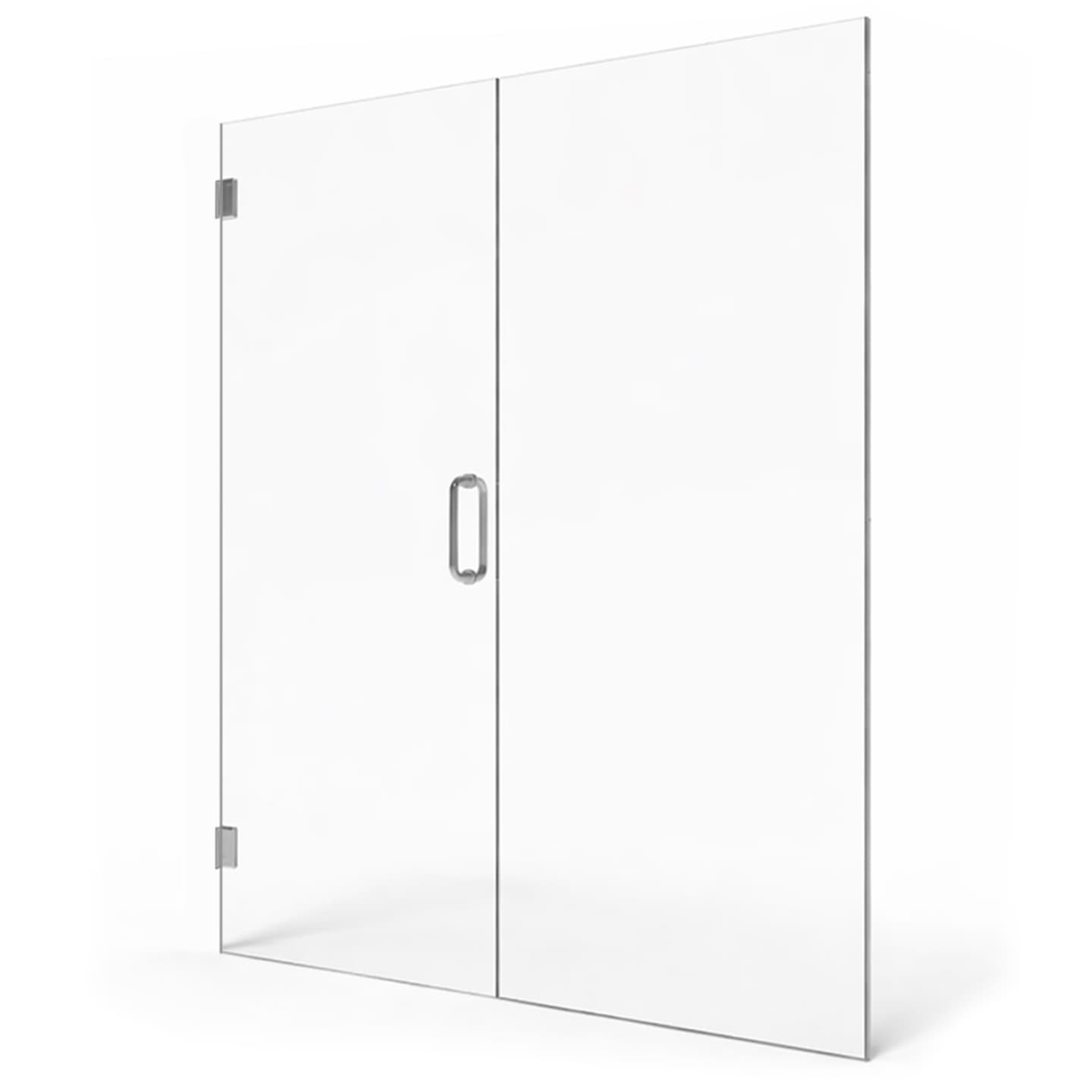
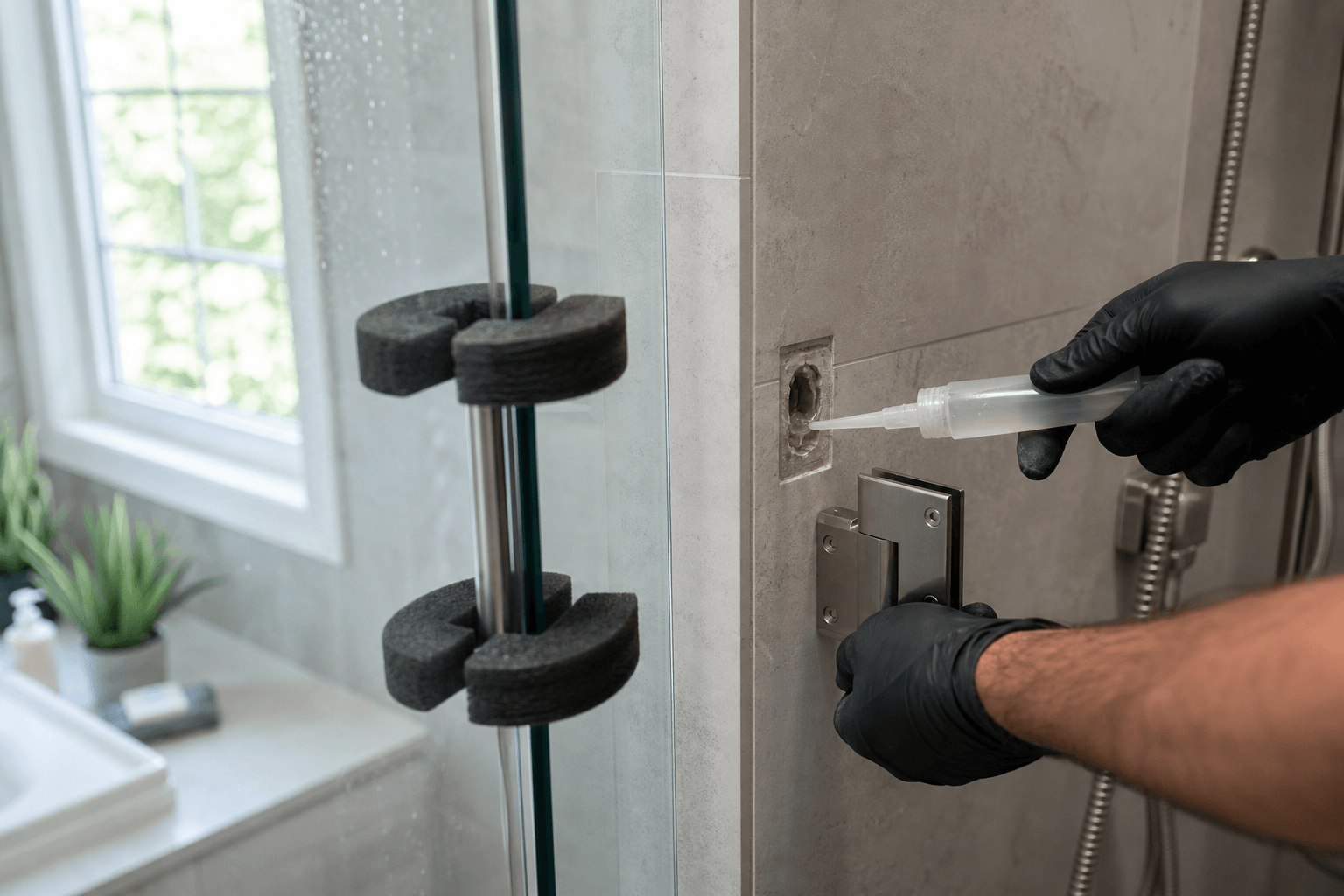
DoubleSil is fundamentally an installation-stage method. It protects applicable drilled hardware attachment points from within the opening before the anchor and fastener are fully installed, followed by an exterior seal. On an existing shower enclosure, DoubleSil could only be considered if the relevant hardware were safely removed so the drilled openings could be accessed, evaluated, treated, and reassembled. Applying silicone around installed hardware is exterior resealing, not the complete DoubleSil process.
Why is DoubleSil normally applied during installation?
Shower-door hinges, clamps, channels, and other hardware may need to be fastened through finished tile. Every drilled opening becomes a point that deserves careful preparation because it may be exposed to water during normal shower use. DoubleSil uses a layered approach at these applicable attachment points rather than relying only on the visible bead around the outside of the hardware.
- Access and prepare the drilled opening before hardware covers it.
- Incorporate protection within the opening before installing the anchor and fastener.
- Secure the hardware using the attachment method selected for the enclosure and wall construction.
- Finish the visible hardware-to-tile connection with exterior sealant.
Once an enclosure is assembled, the internal portion of each attachment point is no longer readily accessible. That is why DoubleSil cannot simply be brushed, injected, or caulked onto the outside of a completed installation and still be described as the same process.
Can an existing enclosure be taken apart and treated?
Possibly, but that is a project-specific question rather than a routine add-on. A professional would first need to determine whether the glass and hardware can be removed and reinstalled safely, whether the drilled openings remain suitable for reuse, and whether there are signs of damaged tile, loose hardware, corrosion, or moisture-related problems. In some cases, addressing an existing enclosure may involve more work than homeowners expect because the glass must remain properly supported throughout the process.
- The enclosure type and how its panels, hinges, clamps, or channels are attached.
- The condition of the tile surrounding each drilled location.
- Whether hardware is loose, damaged, corroded, or difficult to remove without affecting the glass.
- The accessibility and apparent condition of the existing attachment points.
- Whether the problem is actually at drilled hardware or comes from another part of the shower.
Shower Doors of Sarasota includes DoubleSil with applicable shower-door installations, but an existing enclosure needs an individual evaluation. Homeowners can use the free quote tool at /quote and provide details about the enclosure, its age, the suspected problem, and any visible damage. Photos of the hardware and surrounding tile can also help explain the concern, although an in-person inspection may still be necessary.
Why isn’t exterior recaulk the same as DoubleSil?
Exterior sealant covers the visible joint where hardware meets tile. It can be an important finishing layer, but it does not automatically reach or protect the full drilled opening behind the hardware. DoubleSil adds protection inside the applicable opening before the anchor and fastener are fully installed. Recaulking may address a deteriorated exterior joint, but it should not be represented as adding DoubleSil to an enclosure that was already assembled without it.
This distinction is also important during repairs. Smearing fresh silicone over dirty, wet, loose, or failing sealant can hide the joint without correcting the underlying condition. Florida humidity and frequent shower use can make it harder for damp areas to dry, while hard-water residue may obscure cracks or separation in old sealant. The area should be properly assessed before deciding what work is appropriate.
Is water near the shower always caused by drilled hardware?
No. Water near a shower enclosure can come from several places, and visible water does not prove that moisture is entering behind tile at a hardware attachment point. Frameless enclosures have functional gaps around doors and panels, so they should not be described as completely waterproof. Splash direction, door alignment, seals, curb geometry, plumbing, grout or tile conditions, and exterior sealant joints may all need to be considered.
- Where the water first appears and whether it happens during every shower.
- Whether spray is directed toward a door gap, hinge, clamp, or wall channel.
- Whether any hardware moves, shifts, or makes noise when the door operates.
- Whether sealant is cracked, separated, discolored, or missing near the suspected area.
- Whether tile is cracked or the surrounding wall, baseboard, or flooring shows swelling or staining.
What should you do if you suspect a hardware leak?
Avoid removing hinges, clamps, channels, or glass panels yourself. Tempered shower glass is heavy, and improper support or contact with a vulnerable edge can create a serious safety risk. Do not continue operating a door if the hardware is loose, the glass contacts tile or another panel, or you notice cracked tile around an attachment point.
- Photograph the suspected area when it is dry and again when water appears.
- Note which showerhead or body spray was running and where it was aimed.
- Check for obvious exterior sealant separation without pulling on the hardware.
- Limit use if glass, hardware, tile, or nearby finishes appear unstable or damaged.
- Arrange a professional evaluation instead of covering the area with more silicone.
Does DoubleSil make a shower completely waterproof?
No. DoubleSil is an added installation precaution designed to help reduce the risk of moisture entering behind tile at applicable drilled hardware attachment points. It does not eliminate functional gaps in a frameless enclosure, correct unrelated waterproofing or plumbing defects, or guarantee against every possible source of water intrusion. Its role is specific: adding layered protection where shower-glass hardware must be attached through tile.
Planning ahead for new or replacement shower glass
The best time to incorporate DoubleSil is during an applicable new shower-door installation, when the installer has direct access to each drilled opening. Shower glass should generally be measured after the tile, curb, thresholds, and other finished surfaces affecting glass dimensions are complete. Shower Doors of Sarasota prefers to measure once the tile and waterproofing are fully cured, then fabricate and install the enclosure. That sequence supports accurate measurements and allows attachment details to be planned before the glass is installed.
Key Takeaways
- DoubleSil is primarily applied while shower-glass hardware is being installed.
- Exterior recaulk alone does not reproduce the internal protection used by DoubleSil.
- An existing enclosure may require hardware removal and professional evaluation before internal attachment points can be treated.
- DoubleSil helps protect applicable drilled locations but does not make a frameless shower completely waterproof.
- Do not remove shower glass or structural hardware as a DIY repair.
Ready to Transform Your Bathroom?
Contact us for a free consultation on custom frameless shower doors, enclosures, and mirrors for your Sarasota home.
Frequently Asked Questions
Related Services
Suncoast Team
Sarasota's Trusted Shower Door Experts