
Exterior silicone is an important part of sealing shower-glass hardware, but it is not the most comprehensive way to protect a drilled attachment point. A layered method also places protection within the drilled opening before the anchor and fastener are fully installed. This helps reduce the risk of moisture entering behind the tile at hinges, clamps, channels, and other applicable hardware locations. It does not make the enclosure completely waterproof or replace the shower’s underlying waterproofing system.
Why do drilled attachment points need special attention?
Shower-glass hardware often must be fastened through finished tile and into an appropriate supporting surface. Each required hole creates a path through the tile finish. Because the attachment may be exposed to spray, runoff, condensation, and routine cleaning, careful drilling, preparation, anchoring, fastening, and sealing all matter.
The concern is not simply whether water is visible around the face of a hinge or clamp. Moisture can follow small spaces between hardware, fasteners, anchors, tile, and the drilled opening. Florida’s humid conditions can also make it especially important to avoid giving trapped moisture an unnecessary place to collect.
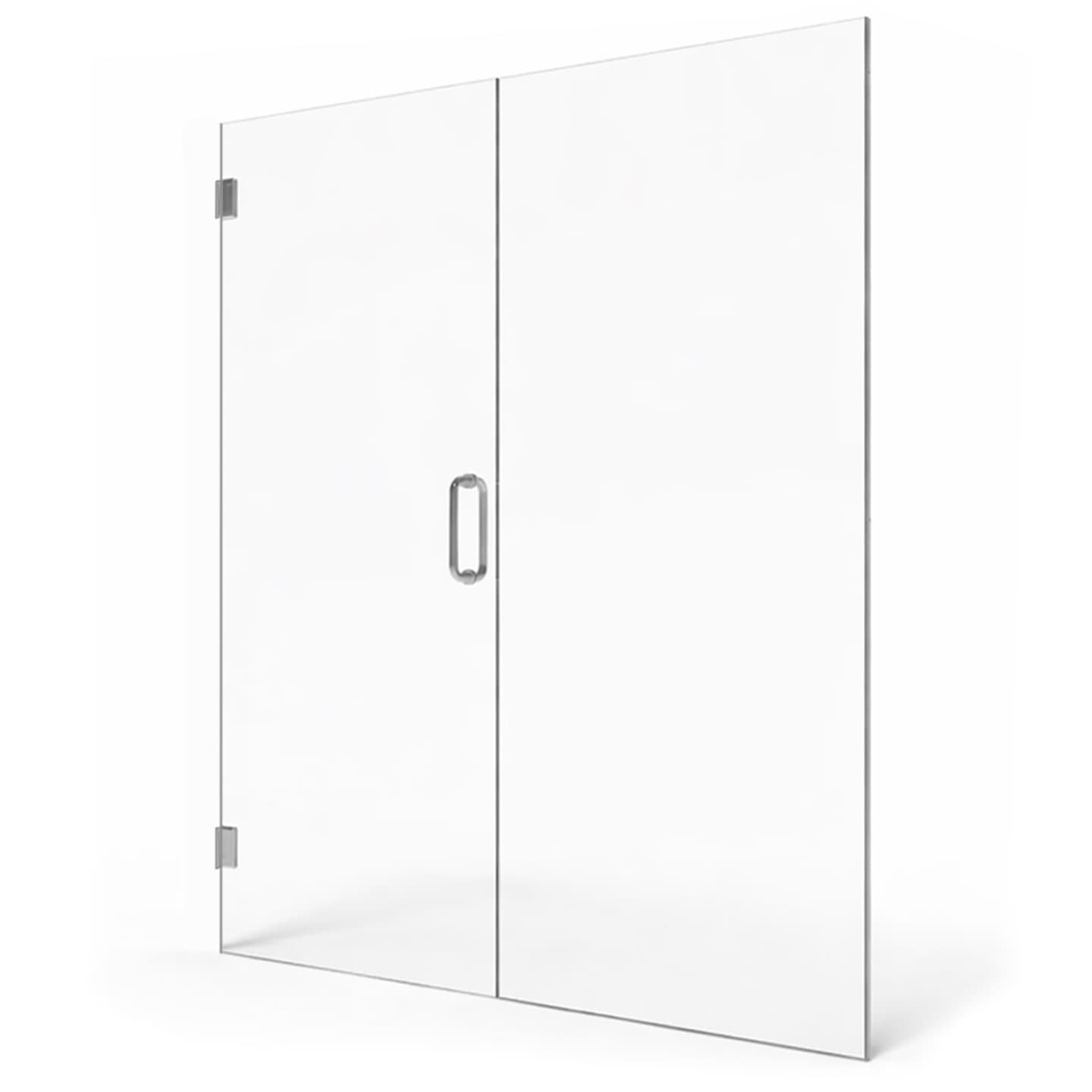
- Hinges for swinging shower doors
- Clamps supporting stationary glass panels
- Wall channels or other panel-support hardware
- Handles, support components, or accessories, depending on the system
- Hardware used for certain tub and shower configurations
Why isn’t exterior silicone always enough?
Exterior silicone seals the visible hardware-to-tile connection and provides a finished perimeter around the installed component. That visible seal is useful, but it primarily addresses the outside edge. If the installation relies only on that surface bead, the drilled opening beneath the hardware does not receive the same direct attention.
Exterior silicone can also be affected over time by movement, cleaning practices, residue, age, and adhesion to the surrounding surfaces. A bead that looks intact from a standing position may have a small separation that is difficult to notice. Hardware can cover part of the seal, making the condition of the underlying opening impossible to evaluate without disturbing the installation.
- Whether sealant reached the drilled opening
- Whether the opening was clean and properly prepared
- Whether protection surrounds the anchor or fastener
- Whether a hidden gap exists behind the hardware
- Whether the exterior bead remains fully bonded over time
What does a layered sealing approach change?
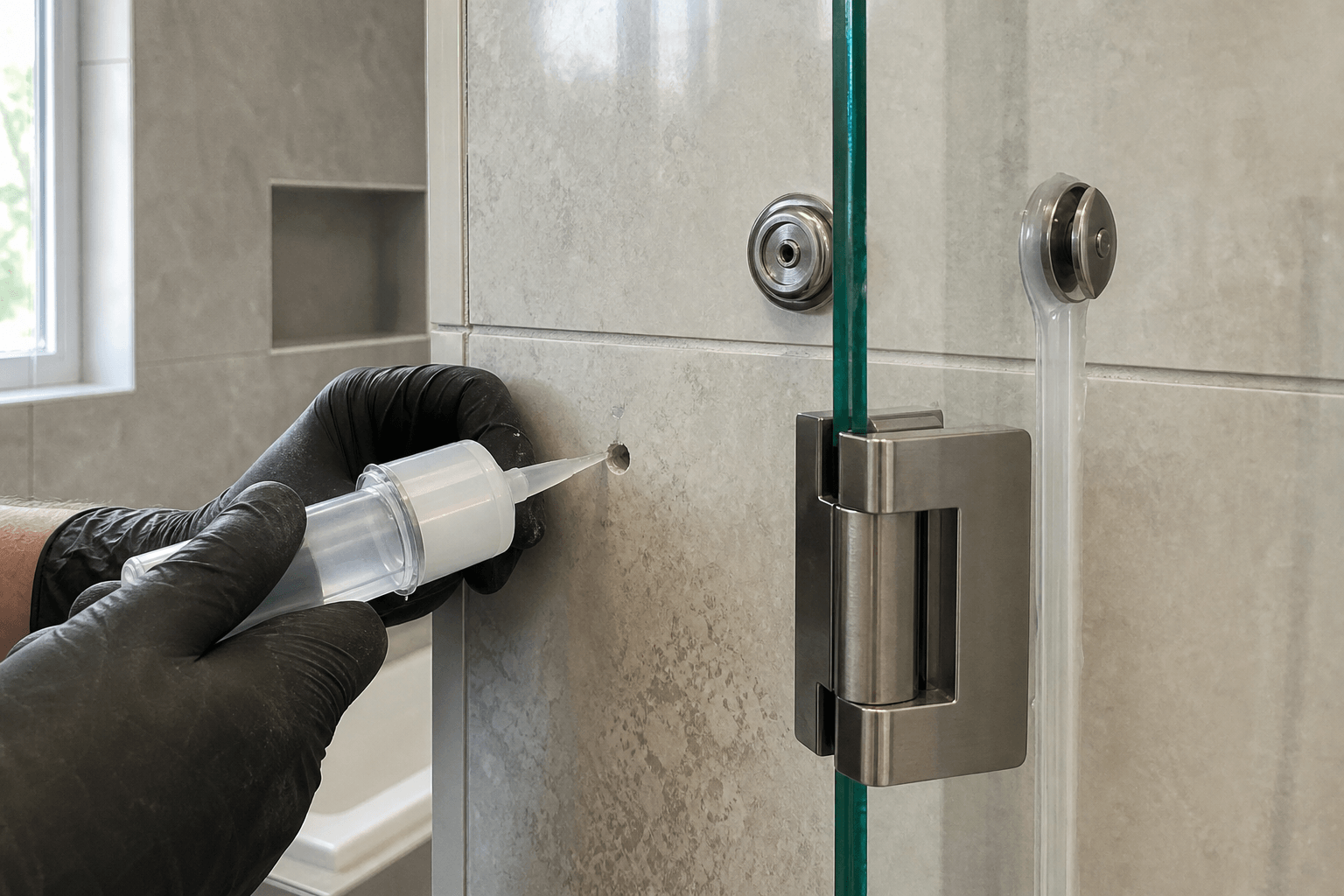
A layered approach addresses both the drilled opening and the visible exterior connection. Shower Doors of Sarasota uses its DoubleSil installation method at applicable drilled shower-glass hardware attachment points. The process incorporates protection within the opening before the anchor and fastener are fully installed, followed by the visible exterior seal around the hardware.
The practical difference is that the installation does not rely only on the bead a homeowner can see. Protection is incorporated where the tile was penetrated as well as at the hardware-to-tile surface. DoubleSil is included with applicable shower-door installations performed by Shower Doors of Sarasota; it is not an optional upgrade.
Does layered sealing make a frameless shower waterproof?
No. No frameless shower enclosure should be described as completely waterproof. Frameless systems need functional gaps around doors and panels so components can move without glass contacting glass, tile, or hardware. Depending on the layout and the direction of the shower spray, small amounts of water may escape through those gaps.
DoubleSil has a narrower purpose: it is an added precaution at applicable drilled hardware attachment points. No installation method can guarantee against every possible source of water intrusion or damage. It also cannot correct problems with the waterproofing behind the tile, curb construction, wall slope, floor drainage, or water being directed toward an enclosure opening.
What should homeowners ask before installation?
Good shower-glass planning begins before anyone drills the tile. The installer should evaluate the layout, glass system, hardware locations, wall construction, door clearance, and likely direction of water spray. Not every glass system requires the same drilling or attachment method, so the plan should be specific to the enclosure rather than based on a standard number of holes.
- Where will hinges, clamps, and channels be attached?
- Which components require drilling through finished tile?
- How are the drilled openings prepared and sealed?
- Is protection placed inside the opening or only around the hardware exterior?
- Will the door swing have adequate clearance?
- Could the showerhead direct water toward a door gap or open entry?
- Are the tile, curb, thresholds, and waterproofing fully cured and ready for measurement?
Shower glass should generally be measured after the tile, curb, thresholds, and other finished surfaces affecting the glass dimensions are complete. Shower Doors of Sarasota prefers to measure once the tile and waterproofing are fully cured, then fabricate and install the enclosure. Measuring finished conditions helps the glass and hardware locations match the actual opening.
How should exterior silicone be maintained?
Layered protection does not eliminate the need to watch the visible seals. Homeowners should periodically inspect silicone around shower hardware and along other sealed joints. Look for lifting edges, gaps, cracking, discoloration accompanied by separation, or areas that stay wet unusually long. Cleaning away soap residue also makes the seal easier to inspect.
Avoid cutting, peeling, or covering a questionable seal without understanding how the hardware is attached. Applying new silicone over a dirty, wet, or failing bead may hide the problem rather than create a dependable bond. If a seal has separated or water appears near an attachment point, have the condition evaluated before disturbing the hardware—especially where heavy tempered glass is involved.
The practical takeaway for Suncoast showers
Exterior silicone serves a real purpose, but the visible bead is only one part of a careful shower-glass installation. Treating the drilled opening itself creates an additional line of protection at a vulnerable attachment point. Sarasota-area homeowners planning a custom enclosure can request a free quote from Shower Doors of Sarasota at /quote to discuss the layout, proposed hardware locations, and applicable attachment methods.
Key Takeaways
- Exterior silicone seals the visible hardware-to-tile connection but does not directly treat the entire drilled opening.
- A layered method adds protection within the hole before the anchor and fastener are fully installed.
- DoubleSil is included with applicable Shower Doors of Sarasota installations.
- No frameless enclosure or sealing method can guarantee complete waterproofing.
- Underlying shower waterproofing, enclosure layout, spray direction, and seal maintenance still matter.
- Do not disturb hardware supporting tempered glass to investigate or repair silicone without professional guidance.
Ready to Transform Your Bathroom?
Contact us for a free consultation on custom frameless shower doors, enclosures, and mirrors for your Sarasota home.
Frequently Asked Questions
Related Services
Suncoast Team
Sarasota's Trusted Shower Door Experts