
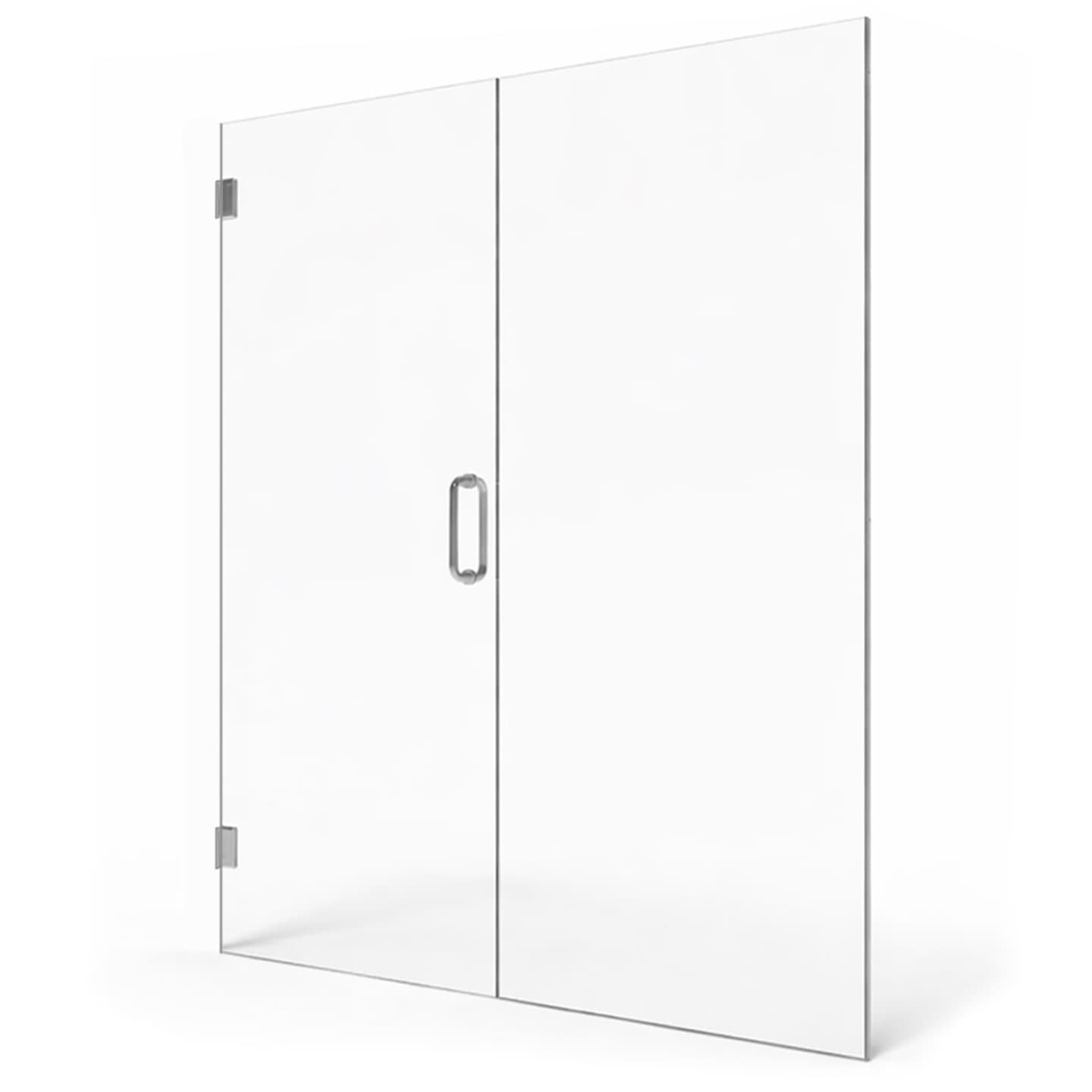
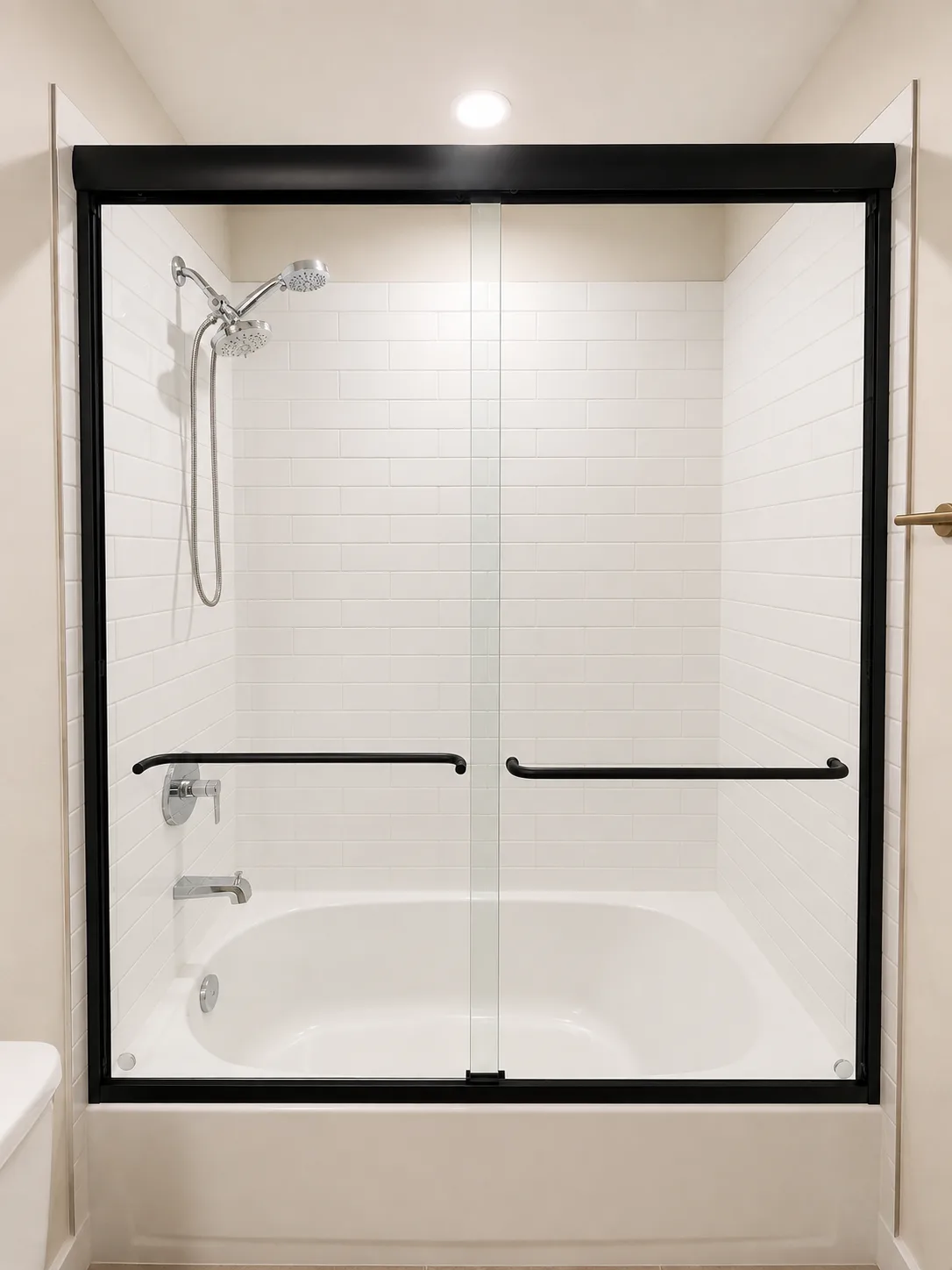
The simplest difference between frameless, semi-frameless, and framed shower doors is how much metal surrounds the glass.
- Frameless shower doors use minimal metal, leaving most glass edges exposed
- Semi-frameless shower doors use metal framing where the enclosure meets the walls, but the exposed glass edges themselves are not wrapped in metal
- Framed shower doors use metal framing around the perimeter and around the edges of the glass panels and doors
None of the three is automatically the right choice for every bathroom. If you want the cleanest, most open glass appearance, frameless is usually the preferred option. If keeping shower water contained is a major priority—especially in a children's bathroom, frequently used guest bathroom, or tub shower—a semi-frameless system can make a lot of sense.
Fully framed systems offer another approach, but Shower Doors of Sarasota does not currently install fully framed shower doors. Our focus is custom frameless glass and our semi-frameless Opal sliding system. Here's how the three compare.
Frameless vs. Semi-Frameless vs. Framed at a Glance
| Feature | Frameless | Semi-Frameless | Framed |
|---|---|---|---|
| Metal around exposed glass edges | Minimal or none | No | Yes |
| Metal along walls/perimeter | Minimal hardware or channels | Yes | Yes |
| Overall appearance | Most open and minimal | Balance of glass and framing | Most visible metal |
| Glass edges | Mostly exposed | Exposed | Wrapped in metal |
| Water containment | Very effective when properly designed and sealed | Generally stronger containment | Depends on system and design |
| Cleaning access | Fewer framed edges and tracks in many configurations | Some additional framing/tracks | More framing and tracks |
| Custom appearance | High | Moderate to high | Depends on system |
| SDoS installs it? | Yes | Yes — Opal | No |
| Best suited for | Design-focused custom showers | Water containment, tubs, guest/kids' baths | Homeowners specifically wanting a fully framed system |
The exact construction varies from one shower-door system to another, but this is a useful way to understand the categories.
What Is a Frameless Shower Door?
A frameless shower enclosure uses heavy tempered glass and relatively minimal hardware rather than surrounding every piece of glass with a metal frame. The exposed edges of the glass remain visible. Depending on the design, the glass may be supported by:
- Wall-mounted hinges
- Pivot hinges
- Glass clamps
- Low-profile channels
- Sliding hardware
- Support components required by the enclosure
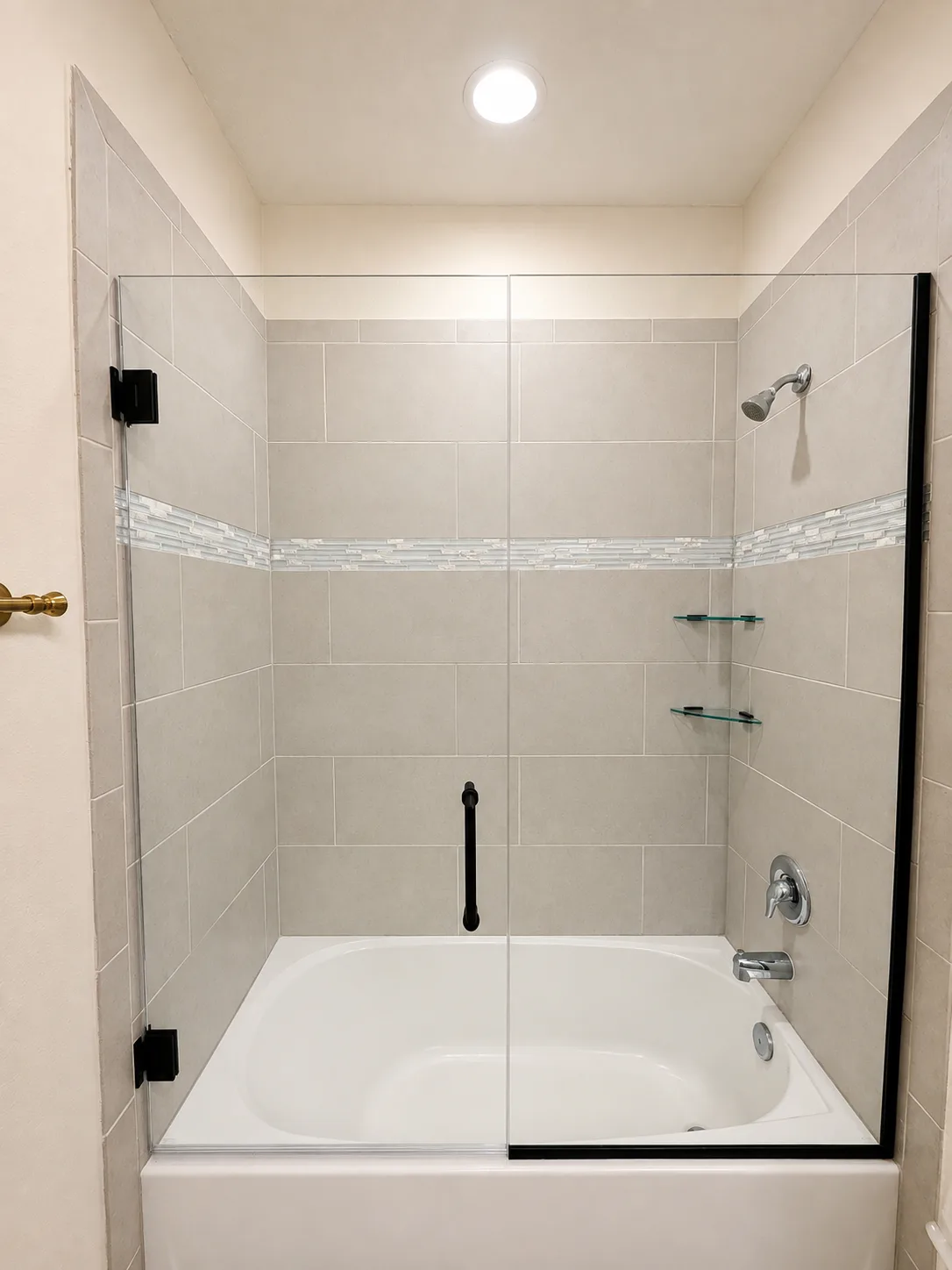
"Frameless" does not mean the shower has absolutely no metal. A swinging shower door still requires hinges. A fixed panel has to be secured. A sliding door needs operating hardware. The difference is that the metal does not form a large frame around every edge of the glass. That gives frameless enclosures the open appearance many homeowners are looking for.
Why Do Homeowners Choose Frameless Glass?
The biggest reason is usually appearance. Without metal wrapping around every glass edge, more of the shower remains visible. That can be particularly appealing when the bathroom has:
- Decorative tile
- Marble or stone
- A shower niche
- Accent walls
- Benches
- Upgraded plumbing fixtures
- Carefully coordinated hardware finishes
Instead of making the enclosure's frame a major visual element, frameless glass allows the shower itself to remain the focal point. Frameless glass also gives us considerable flexibility when designing a custom enclosure around an actual finished shower opening.
A common configuration we install is a frameless swinging door with a fixed side panel, but frameless designs can also include fixed panels and several sliding configurations.
What Is a Semi-Frameless Shower Door?
"Semi-frameless" can sometimes be confusing because different manufacturers use the term somewhat differently. For the systems we work with at Shower Doors of Sarasota, the easiest way to think about it is this: there is metal framing along the areas where the shower enclosure meets the walls, but the exposed glass edges are not wrapped in metal.
You still see clean, exposed glass edges. However, the enclosure uses more perimeter structure than a fully frameless system.
The semi-frameless system offered by SDoS is Opal, a double-sliding shower-door system. This combination gives homeowners some of the clean-glass appearance associated with frameless doors while providing additional structure and excellent water containment.
Is Semi-Frameless Just a Cheaper Version of Frameless?
No. Price is one advantage, but we would not look at semi-frameless as simply a downgraded frameless enclosure. It's a different solution for a different set of priorities.
At SDoS, the Opal semi-frameless system is typically a few hundred dollars less than comparable fully frameless sliding options, depending on the size and conditions of the project. But the bigger reason we recommend it in certain bathrooms is water containment.
For homeowners who care more about keeping water inside the shower than having the absolute minimum amount of visible metal, semi-frameless can actually be the better choice.
Why Does Semi-Frameless Glass Contain Water Better?
Frameless glass needs operating clearances. A swinging door cannot be installed tightly against every surrounding surface because it needs space to open and close. Even when seals are added, there are still small intentional gaps within the enclosure.
Semi-frameless systems use additional framing along the wall-side portions of the enclosure, along with the design of the sliding system, to reduce some of the areas where water might otherwise escape. That can make semi-frameless particularly useful in bathrooms where water containment matters more than achieving the most minimal possible appearance.
No shower enclosure should be treated as an absolute guarantee that water can never escape. Showerhead direction, water pressure, curb or tub design, seals, enclosure layout, and how the shower is used all still matter. But when containment is a major design priority, semi-frameless deserves serious consideration.
Why We Often Recommend Opal for Kids' and Guest Bathrooms
A primary bathroom and a children's bathroom don't always need the same shower enclosure. Adults who use the same shower every day usually know where to point the showerhead and how the enclosure behaves. Kids can be a different story. So can guests who have never used the shower before.
If your kids regularly use the bathroom—or you frequently have family or friends staying at your home—you may care more about minimizing the chance of water getting onto the bathroom floor than you do about eliminating every visible piece of metal. That is where the Opal semi-frameless system can be especially useful. It is a strong option for:
- Children's bathrooms
- Guest bathrooms
- Frequently used secondary bathrooms
- Tub/shower combinations
- Bathrooms where water containment is a major concern
- Homeowners who prefer sliding doors
- Homeowners who want to save some money compared with fully frameless sliding systems
For these applications, semi-frameless isn't a compromise. It may actually be the more practical design.
Why Is Opal Popular Over Bathtubs?
Tub/shower combinations create a different water-management situation from many larger walk-in showers. The showerhead is typically directing water into a relatively compact bathing area, and the glass sits directly on top of the tub. With children or guests using the shower, water containment can become even more important.
Opal uses a double-sliding configuration, allowing access without having a large glass door swing into the bathroom. Its semi-frameless construction also makes it particularly well suited to applications where controlling water is a priority. That combination is why it has become a popular SDoS option for guest bathrooms with tubs.
What Is a Fully Framed Shower Door?
A traditional framed shower enclosure uses significantly more metal. The glass panels are installed inside metal framing, and the glass edges are typically surrounded by that framing. Depending on the system, there may be:
- Vertical wall jambs
- Framing around individual glass panels
- Framing around the shower door
- A lower track
- Upper framing or header components
Instead of seeing an exposed polished glass edge, you generally see metal around it. Fully framed shower doors have been used successfully for many years and may still make sense for homeowners who prefer that construction or are working within a specific budget or bathroom design.
However, Shower Doors of Sarasota does not install fully framed shower doors, so our recommendations are focused on custom frameless enclosures and our Opal semi-frameless system.
Does Frameless Mean No Metal at All?
No. This is one of the most common misconceptions about frameless shower doors. The glass still needs to be attached to something. For example, a frameless swinging enclosure might use:
- Two hinges on the door
- Glass clamps securing a fixed panel
- A handle
- A small channel or other mounting hardware
A frameless slider will have even more operating hardware because the glass needs a mechanism that allows it to travel. What makes the enclosure frameless is that the glass itself isn't surrounded by a traditional full metal frame.
Which Style Looks the Most Modern?
For homeowners whose first priority is a minimal appearance, fully frameless usually provides the cleanest look. You see more glass and less metal. That is especially useful when the shower contains tile or stone you want to showcase.
However, "more frameless" does not automatically mean "better." Some bathrooms are used primarily by children. Some have tubs. Some have water spraying toward vulnerable areas. Some homeowners simply don’t want to worry as much about water escaping the enclosure. A slightly more visible wall frame may be a worthwhile tradeoff if it improves the shower’s everyday function.
Which Style Is Easier to Clean?
Frameless shower doors generally have fewer large metal frame sections where soap residue and mineral deposits can accumulate. The exposed glass edges are also easier to access.
Semi-frameless systems introduce some additional wall framing and sliding components, so there are more areas to clean than on a very simple hinged frameless enclosure. Fully framed systems generally contain the greatest amount of metal framing and may have more tracks, channels, corners, and seams that require attention.
But regardless of style, the largest maintenance issue for most homeowners is still the glass itself. Regularly removing water from the glass after showering can help reduce water spotting and mineral accumulation.
Is Frameless Better for Water Containment?
Not necessarily. This is an area where function and appearance can pull in different directions. A properly designed frameless shower enclosure can manage water very effectively, especially when:
- The showerhead is positioned correctly
- Seals are used where appropriate
- The curb has proper pitch
- The shower floor drains correctly
- The door and fixed panels are positioned intelligently
- Water isn't aimed directly at an operating gap
But frameless glass still requires gaps so doors can operate. Semi-frameless systems can reduce some of those vulnerable areas by incorporating wall-side framing and a more enclosed sliding configuration.
If a homeowner tells us "I want the cleanest possible look," we may lean toward fully frameless. If the homeowner tells us "My kids use this bathroom every day and I really don’t want water getting all over the floor," that can point us toward Opal. The correct recommendation depends on the priority.
Is Semi-Frameless Less Expensive Than Frameless?
For SDoS's sliding-door options, Opal is generally a few hundred dollars less than the fully frameless alternatives, although the final difference depends on the project. We don't publish a specific semi-frameless price because size, glass, hardware, installation conditions, and project complexity can change the final quote. We also don't provide a price comparison for fully framed systems because SDoS does not install them.
Price should be considered, but it usually shouldn't be the only deciding factor. If a semi-frameless enclosure costs less and works better for the way the bathroom is used, that's a strong value. If you strongly prefer the nearly all-glass appearance of a frameless enclosure, the added cost may be worthwhile. For frameless pricing details, see our guide comparing sliding vs. hinged shower doors and our frameless shower door cost guide.
What About 3/8-Inch Glass?
Shower Doors of Sarasota uses 3/8-inch tempered glass as the standard choice for most frameless shower applications. Opal also uses substantial tempered glass while combining it with its semi-frameless sliding design.
Glass thickness shouldn't be confused with whether an enclosure is frameless or semi-frameless. Those terms describe how the enclosure is constructed and framed—not simply how thick the glass is. Likewise, 1/2-inch glass is not automatically better just because it is thicker. The correct glass thickness depends on the design, dimensions, hardware, supporting structure, and application. You can compare available glass types on our glass options page.
Which One Should You Choose?
For most homeowners, we would simplify the decision this way.
Choose frameless when:
- The cleanest, most open appearance is the priority
- You want minimal visible metal
- You want to showcase tile or stone
- You want a highly custom enclosure
- The shower layout allows good water management
- You prefer exposed polished glass edges
Consider semi-frameless Opal when:
- Water containment is a major priority
- Children regularly use the shower
- Guests frequently stay at your home
- You're enclosing a bathtub
- You want a sliding system
- You'd like to save a few hundred dollars compared with fully frameless sliding options
- You don't mind some wall-side metal framing
- You still want the exposed glass edges to remain visible
Consider fully framed when:
- You specifically prefer a traditional fully framed enclosure
- You are comparing systems from a company that offers them
- The additional metal framing fits your design and functional priorities
Because Shower Doors of Sarasota does not install fully framed doors, we would recommend comparing those systems with a contractor that specializes in them if that's the style you specifically want.
Don’t Choose Based Only on the Word "Frameless"
"Frameless" sounds premium, and homeowners sometimes assume that automatically makes it the correct choice. It doesn’t. The best enclosure should balance:
- Bathroom layout
- Shower size
- Water direction
- Who uses the bathroom
- Appearance
- Cleaning
- Budget
- Door operation
- Water-management priorities
For a design-focused primary bathroom, a fully frameless enclosure may be exactly what you want. For a guest bathroom with a tub that gets used by kids, grandchildren, or visitors, Opal may be the smarter choice. That's why we prefer to look at the actual bathroom before making a recommendation.
Our Recommendation
If your priority is the cleanest, most minimal glass appearance, start by looking at frameless options. If your priority is strong water containment, everyday practicality, and value—especially for a guest or children's bathroom—take a serious look at the semi-frameless Opal system.
Don't dismiss semi-frameless because it has slightly more metal. In the right bathroom, that additional structure is exactly what makes the enclosure work better.
Homeowners in Sarasota, Lakewood Ranch, Bradenton, Venice, North Port, Siesta Key, Longboat Key, and surrounding areas can also visit the Shower Doors of Sarasota project gallery to compare real installations before deciding, explore hardware and finish options, or get a free quote to talk through which style fits your bathroom.
Key Takeaways
- The core difference is how much metal surrounds the glass: frameless leaves edges exposed, semi-frameless frames only the wall-side perimeter, and framed wraps every glass edge in metal
- Frameless usually provides the cleanest, most open appearance and is ideal for design-focused custom showers
- Semi-frameless systems like Opal generally provide stronger water containment — a deliberate practical choice for kids' bathrooms, guest baths, and tub showers, not a downgrade
- Opal is typically a few hundred dollars less than comparable fully frameless sliding options
- Shower Doors of Sarasota installs custom frameless enclosures and the semi-frameless Opal system, but not fully framed shower doors
Ready to Transform Your Bathroom?
Contact us for a free consultation on custom frameless shower doors, enclosures, and mirrors for your Sarasota home.
Frequently Asked Questions
Related Services
Shower Doors of Sarasota
Sarasota's Trusted Shower Door Experts