

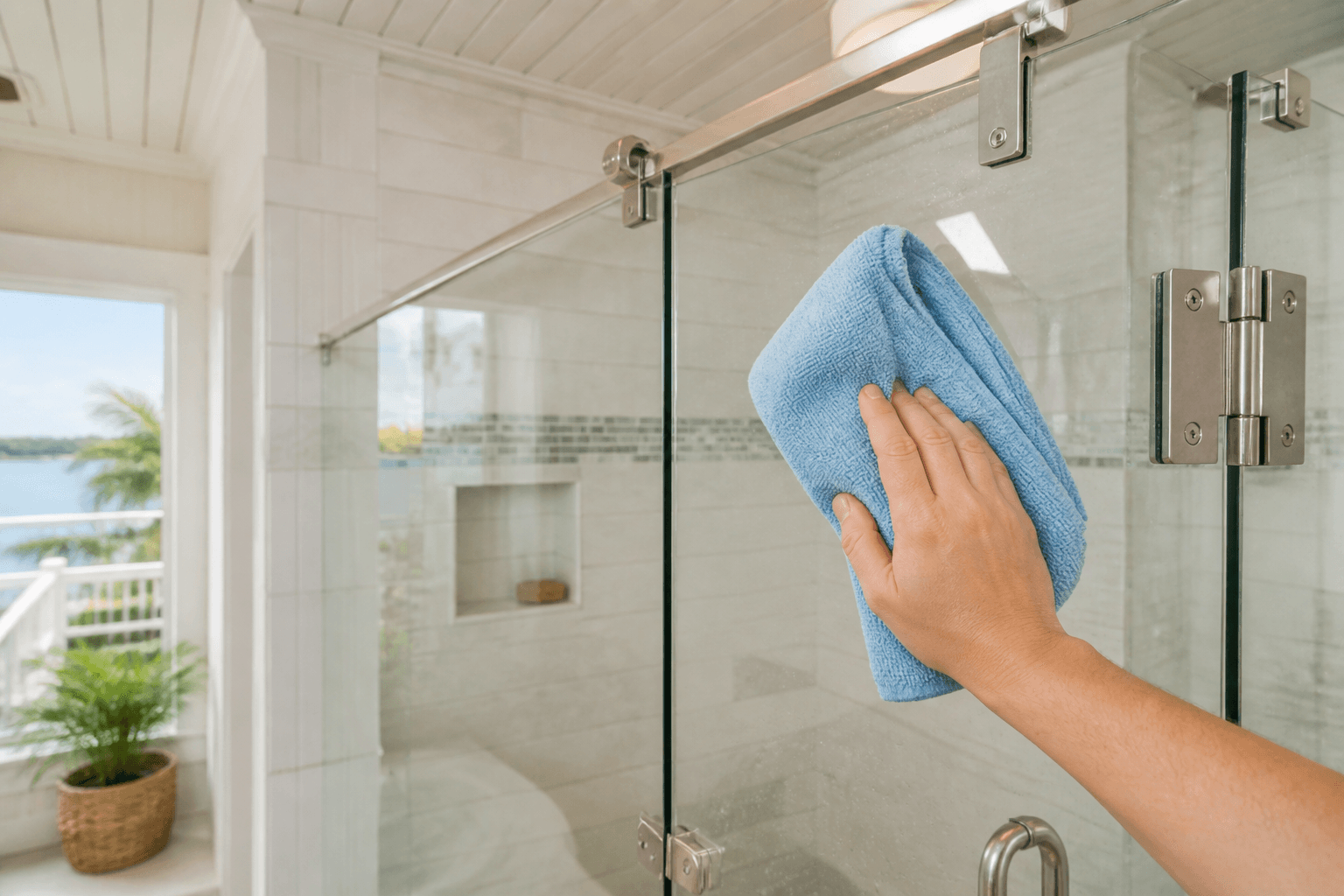
Coastal homeowners should care for shower door hardware by cleaning it regularly with mild soap and fresh water, drying it after cleaning, keeping the bathroom ventilated, and checking hinges, handles, clamps, and tracks for residue or looseness. Avoid abrasive tools and strong chemicals that can damage plated or coated finishes. In Sarasota-area homes, this routine helps limit the combined effects of humidity, airborne salt, soap residue, and mineral-rich water.
Why does coastal shower hardware need extra care?
Shower door hardware is designed for wet environments, but it is not maintenance-free. Florida humidity slows evaporation, while salt carried through open windows, doors, clothing, and beach gear may settle on exposed surfaces. Water droplets can also leave minerals behind as they dry. Over time, this mixture may create dull film, stubborn spotting, discoloration, or corrosion—especially where residue collects around screws, hinge edges, handles, and track corners.
The hardware finish matters too. Polished chrome, brushed finishes, matte finishes, and specialty colors may each have different care limitations. A cleaner that seems harmless on bare stainless steel could affect a plated, painted, or clear-coated surface. Follow the hardware manufacturer's instructions whenever they are available, and test any new cleaner in an inconspicuous place.
Use a gentle routine for weekly cleaning
For routine care, complicated products are usually unnecessary. Start with warm fresh water and a small amount of mild dish soap. Apply the solution with a soft microfiber cloth, wipe the exposed hardware carefully, and use a soft cloth or nonabrasive sponge for narrow areas. Rinse away all soap with fresh water, then dry the hardware completely.
- Wipe hinges, handles, clamps, brackets, headers, and tracks with diluted mild soap.
- Clean around hardware edges where soap and mineral residue tend to collect.
- Rinse with fresh water so cleaner does not dry on the finish.
- Dry with a clean microfiber cloth rather than allowing droplets to evaporate.
- Wash or replace dirty cleaning cloths; trapped grit can scratch a decorative finish.
If your home is very close to the Gulf, frequently open to outdoor air, or used seasonally, inspect the hardware more often. Salt residue can remain even when the surface does not look dirty. A quick fresh-water wipe and thorough drying may be enough between deeper cleanings.
Which cleaning products should you avoid?
Harsh products can attack finishes, leave permanent dull spots, or damage adjacent sealants. Do not assume a product is safe simply because it is marketed for bathrooms. The safest choice is the mildest cleaner that removes the residue, used according to both the cleaner and hardware manufacturers' directions.
- Abrasive powders, scouring pads, steel wool, or stiff metal brushes
- Highly acidic or alkaline cleaners
- Bleach, ammonia, and aggressive mold or mildew removers on the hardware
- Undiluted vinegar or prolonged acidic soaking
- Solvents and products containing unknown chemical blends
- Scrapers or razor blades near coated hardware and sealant joints
Never mix cleaning chemicals. If a stronger bathroom cleaner is needed on nearby tile, prevent overspray from reaching the shower hardware. Rinse accidental contact promptly with fresh water and dry the area. Cleaning products should not be allowed to pool around hinges, fasteners, clamps, or the bottom track.
Control moisture after every shower
Reducing the time hardware stays wet is one of the most useful preventive steps. Run the bathroom exhaust fan during the shower and afterward, following the fan manufacturer's guidance. Leave the bathroom door open when practical so humid air can escape. A squeegee helps remove water from the glass, while a quick pass with a microfiber cloth keeps droplets from sitting on handles and hinge surfaces.
Pay special attention to horizontal ledges, sliding-door tracks, and the lower edges of hardware. These areas hold water longer than vertical surfaces. Keep track drainage paths clear where the system includes them, but do not probe holes or channels with metal tools that could scratch the finish or disturb components.
How should hinges, handles, and sliding tracks be maintained?
Different hardware types collect residue in different places. Hinges should be wiped around their moving edges without forcing cleaner into internal components. Handles need cleaning at their mounting points, where water can sit behind decorative caps. Sliding systems require extra attention along the track and around rollers because hair, soap, and grit can interfere with smooth movement.
- A door that drags, drops, binds, or no longer closes as it normally did
- Loose-feeling handles or visible movement at clamps and brackets
- Grinding, scraping, or clicking from hinges or rollers
- Orange, green, white, or dark residue that returns after cleaning
- Cracked, peeling, blistered, or discolored hardware finishes
- Damaged sweeps or seals that allow more water onto nearby hardware
Do not tighten, realign, or remove shower-glass hardware unless you are qualified to work with tempered glass systems. Overtightening or uneven adjustment can place stress on the glass. Likewise, do not spray household oil or general-purpose lubricant into hinges or rollers unless the hardware manufacturer specifically recommends it; some products attract dirt, stain finishes, or affect nearby seals.
What should seasonal homeowners do before leaving?
Before closing a coastal home for an extended period, clean and dry the shower enclosure thoroughly. Remove standing water and soap residue from tracks, wipe all hardware with fresh water, and leave the enclosure door positioned so air can circulate without placing it under strain. Make sure the bathroom's ventilation and indoor humidity controls are set appropriately for the home.
After returning, inspect the hardware before using the enclosure. Open and close the door gently, look for changes in alignment, and check for new residue or finish damage. If the door feels loose, makes an unfamiliar sound, or contacts another glass panel or hard surface, stop using it until the system can be evaluated.
Know when cleaning is not enough
Water spots and surface residue often improve with careful cleaning, but pitting, flaking, swelling, persistent rust-colored staining, loose hardware, or changing door alignment may signal more than a housekeeping issue. Avoid disguising the problem with polish, caulk, or forceful adjustment. A shower-glass professional can determine whether the hardware needs service or replacement.
Shower Doors of Sarasota serves Sarasota, Bradenton, Lakewood Ranch, Venice, Nokomis, Osprey, North Port, Siesta Key, Longboat Key, and surrounding Suncoast communities. Homeowners planning new custom shower glass can request a free quote through the online tool at /quote.
Key Takeaways
- Clean hardware weekly with mild soap, fresh water, and a soft cloth.
- Rinse and dry hardware instead of letting mineral-rich water evaporate on it.
- Use ventilation to reduce the time hinges, handles, and tracks remain damp.
- Avoid abrasives, harsh chemicals, and unapproved lubricants.
- Have loose, misaligned, damaged, or corroded hardware professionally evaluated.
Ready to Transform Your Bathroom?
Contact us for a free consultation on custom frameless shower doors, enclosures, and mirrors for your Sarasota home.
Frequently Asked Questions
Related Services
Suncoast Team
Sarasota's Trusted Shower Door Experts