
Keep sliding shower door tracks and drain paths clean by removing loose debris, washing the channel with mild dish soap and warm water, gently brushing corners and drain openings, then rinsing and drying the area. Clean visible buildup weekly and inspect drain holes or channels monthly. Avoid abrasive tools, harsh chemicals, and extra caulk over openings designed to return water to the shower.
Why do sliding shower tracks collect so much buildup?
The bottom track of a sliding shower enclosure sits where water, soap, hair, skin oils, and mineral deposits naturally collect. Many tracks also contain channels or small drain openings—sometimes called weep holes—that direct water back toward the shower. If these paths become blocked, water may remain in the track, develop an odor, or spill toward the bathroom side.
Florida Suncoast bathrooms can make the problem more noticeable. Mineral-heavy water may leave crusty deposits, while warm, humid conditions allow damp residue to linger. Regular cleaning is easier and safer than trying to remove a thick layer of hardened scale later.
What supplies should you use?
Start with the mildest cleaning method. Most routine track cleaning does not require a specialized chemical or a stiff brush. Before using any cleaner, check the care instructions for the enclosure, hardware finish, protective glass coating, tile, and stone surrounding the shower.
- Warm water
- A small amount of mild dish soap
- Microfiber cloths or a soft sponge
- A soft toothbrush or narrow nylon detailing brush
- Cotton swabs or a soft pipe cleaner for tight openings
- A plastic scraper or old plastic card for stubborn residue
- A small cup or squeeze bottle for controlled rinsing
- A wet/dry vacuum, if available, for removing loose debris and standing water
Do not use steel wool, razor blades, wire brushes, or metal picks in the track. They can scratch metal, damage finishes, cut seals, or gouge caulk. Abrasive powders can also dull hardware and leave particles in the drainage channel.
How do you clean the track and drain paths step by step?
Open the shower doors enough to reach both sides of the lower track. If the panels overlap, clean one accessible section and then slide the doors to expose the next. Do not remove heavy glass panels unless the enclosure manufacturer’s instructions specifically allow it and you can do so safely; tempered shower glass requires careful handling.
- Remove hair and loose debris. Pick out larger material with a cloth or plastic tool. A wet/dry vacuum is useful for narrow channels.
- Apply warm, soapy water. Let it sit for several minutes to soften soap film, but do not flood the bathroom-side edge of the enclosure.
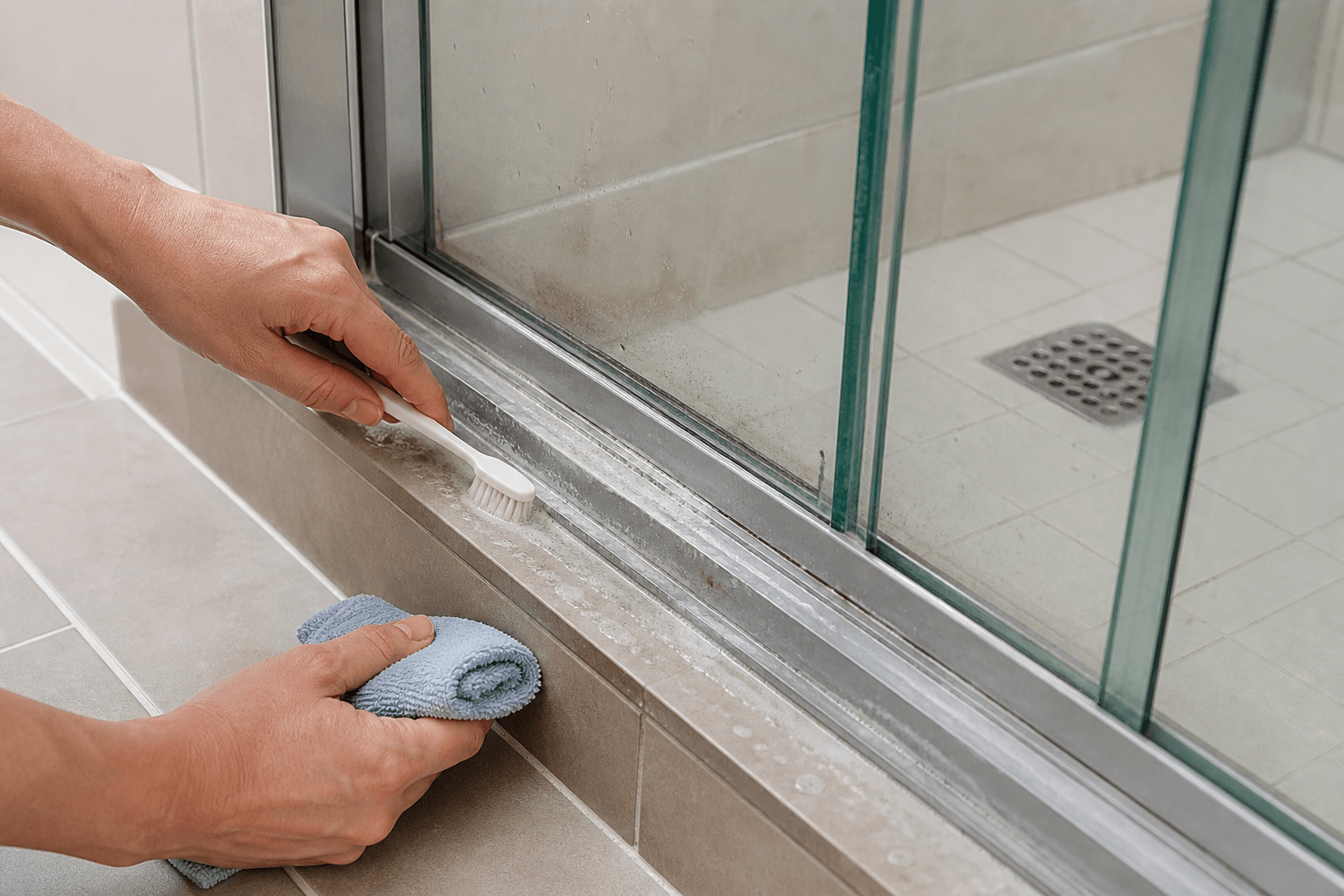
- Brush gently. Use a soft toothbrush along the corners, under the sliding panels where reachable, and around screws or track joints.
- Clear the drain openings. Guide a cotton swab, soft pipe cleaner, or narrow nylon brush through each visible opening. Work gently so you do not damage seals or force debris deeper into the channel.
- Rinse in a controlled direction. Use a small cup or squeeze bottle to send clean water toward the shower interior. Watch whether it travels freely through the channel.
- Dry the track. Wipe away remaining water and leave the doors open long enough for the area to air-dry.
A drain opening should not be enlarged with a drill, knife, or metal pick. If an opening remains blocked after gentle cleaning, or if you cannot determine where it leads, stop and ask a shower-glass professional to inspect the enclosure.
How should you handle mineral deposits?
White or chalky residue is often mineral scale rather than ordinary soap film. Mild dish soap may not dissolve it, but stronger is not always better. Acidic cleaners, including vinegar, can affect natural stone, grout, sealants, and some metal finishes. Never allow an acidic product to run onto marble, travertine, limestone, or another acid-sensitive surface.
Use only a scale remover approved for every nearby material and the shower hardware finish. Apply it with a cloth rather than pouring it into the track, follow its stated dwell time, and rinse thoroughly. Never mix vinegar, bleach, ammonia, or other household cleaners; combining products can create dangerous fumes or reactions.
Are drain holes supposed to be caulked?
No—an opening intentionally designed as a drain or weep path should not be sealed simply because water appears there. Caulking over it can trap water inside the track and redirect it toward the bathroom. However, not every gap is a drain, and caulk placement varies by enclosure design. If you are unsure whether an opening is intentional or whether sealant has failed, have the system evaluated before adding caulk.
Also remember that sliding and frameless shower systems are not completely waterproof. They include functional gaps and work best when water is directed toward the shower interior. Avoid aiming a handheld shower spray at door overlaps, track ends, or other openings.
How often should tracks be cleaned?
Wipe visible water and residue from the track about once a week, then perform a closer cleaning and drainage check monthly. A heavily used household or a shower with persistent mineral deposits may need more frequent attention. The goal is to remove residue before it hardens or blocks the water path.
- After showering, squeegee the glass and wipe standing water from the lower track.
- Run the bathroom exhaust fan and leave the enclosure open when practical so moisture can escape.
- Keep hair and labels from bath products out of the channel.
- Watch for slow drainage, recurring odor, loose seals, or water collecting on the bathroom side.
- Use only cleaners compatible with the glass, protective coating, hardware, tile, grout, and stone.
When is cleaning not enough?
Cleaning will not correct every water-containment problem. Request a professional inspection if water continues escaping after the drain paths are clear, the track is loose, the doors rub or jump, caulk is separating, hardware is corroded, or standing water repeatedly returns. The cause may involve alignment, worn seals, track installation, curb slope, or the direction of the shower spray rather than dirt alone.
Homeowners in Sarasota, Bradenton, Lakewood Ranch, Venice, and nearby Suncoast communities can contact Shower Doors of Sarasota with questions about an existing enclosure. If replacement is needed, request a free quote at /quote and select the option for removing an existing enclosure. SDoS can remove the old enclosure and replace it with a brand-new frameless shower door enclosure.
Key Takeaways
- Use warm water, mild dish soap, and soft nylon tools for routine cleaning.
- Clear visible drain or weep openings monthly without enlarging them.
- Do not caulk over intentional drainage paths.
- Check cleaner compatibility with hardware, coatings, tile, grout, and stone.
- Seek professional help for persistent leaks, loose tracks, damaged seals, or misaligned doors.
Ready to Transform Your Bathroom?
Contact us for a free consultation on custom frameless shower doors, enclosures, and mirrors for your Sarasota home.
Frequently Asked Questions
Related Services
Suncoast Team
Sarasota's Trusted Shower Door Experts