
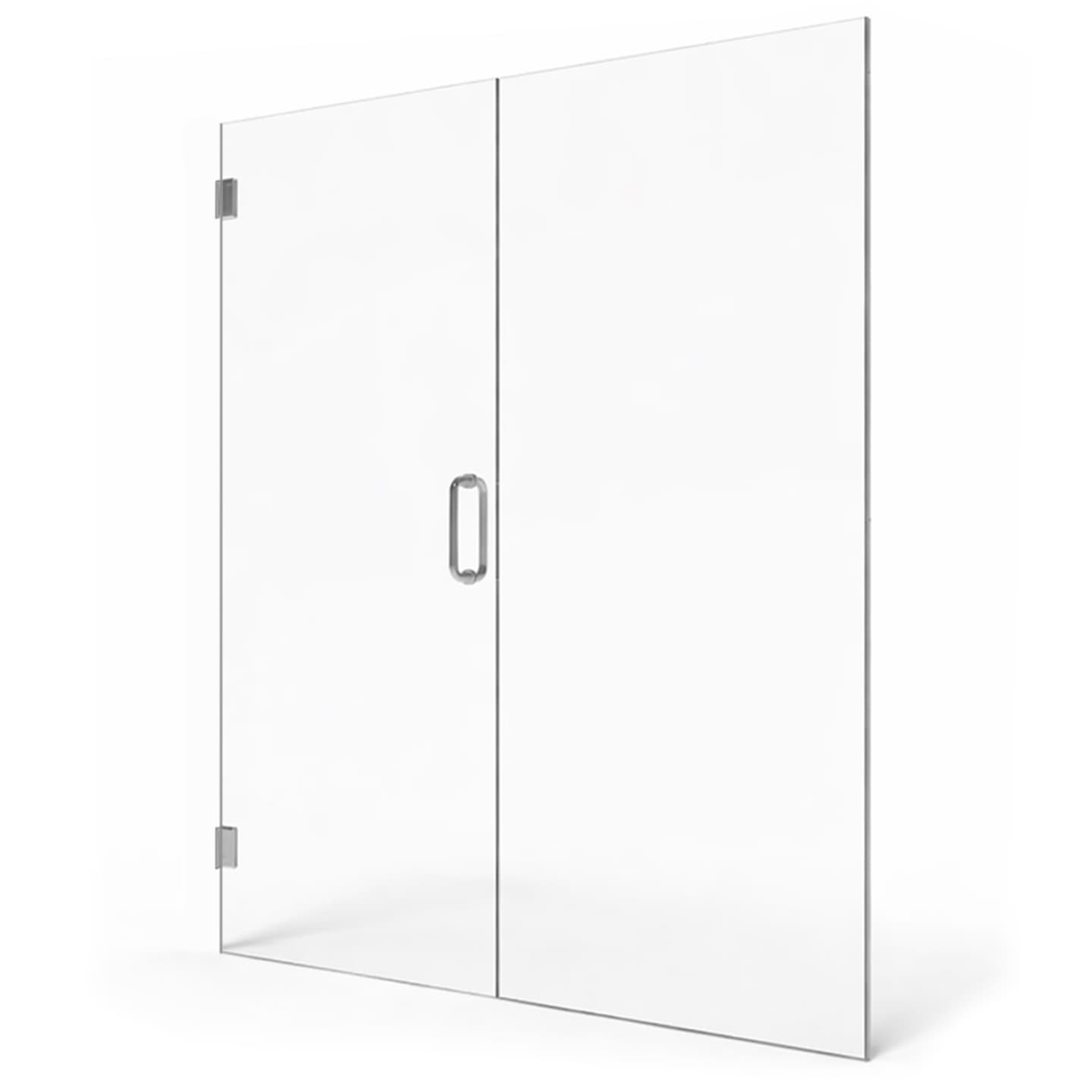
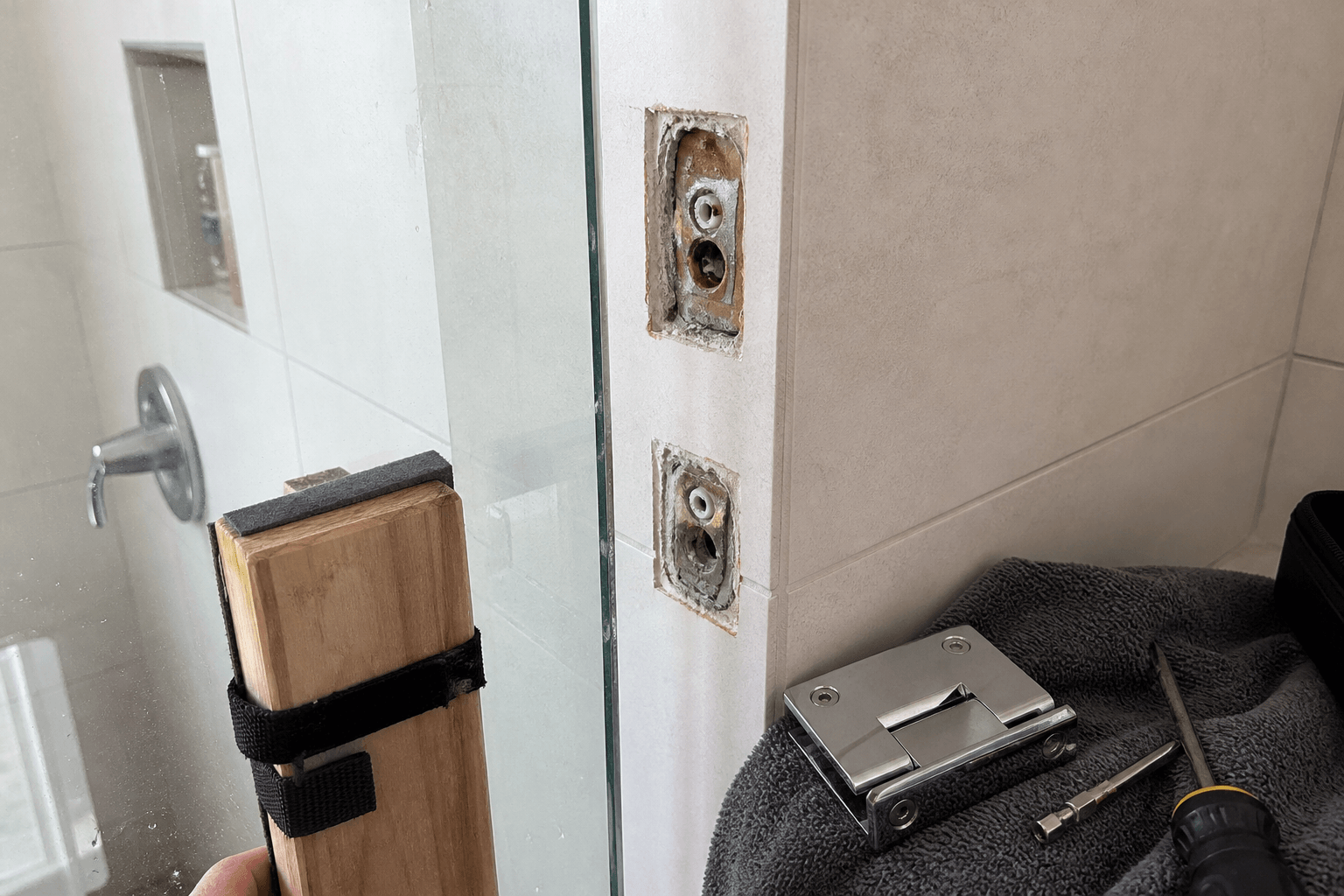
When shower hardware is replaced, a DoubleSil-protected attachment point should not automatically be considered intact. Removing a fastener, anchor, hinge, clamp, or channel can disturb both the visible exterior seal and the protection within the drilled opening. Before replacement hardware is installed, the attachment point should be inspected to determine whether the existing hole can be reused, whether the anchor must be replaced, and how the layered sealing and anchoring protection will be restored.
What DoubleSil Protects
DoubleSil is a layered sealing and anchoring process used at applicable shower-glass hardware attachment points drilled through tile. It incorporates protection within the drilled opening before the anchor and fastener are fully installed, along with the visible exterior seal where the hardware meets the tile. Shower Doors of Sarasota includes DoubleSil with applicable shower-door installations.
This extra attention matters because a drilled opening creates a possible path behind the finished tile surface. DoubleSil is designed to help reduce the risk of moisture entering at that location, but it does not make a frameless shower completely waterproof or protect against every possible source of water intrusion.
Why Does Hardware Removal Affect the Protection?
The seal at an attachment point functions as part of the complete hardware assembly. Backing out a fastener or pulling an anchor can stretch, separate, or remove sealing material inside the opening. Taking a hinge or clamp off the wall also breaks the visible hardware-to-tile seal. Even if the tile hole looks unchanged, the concealed portions cannot be assumed to be in their original condition.
- Exterior sealant can separate when the hardware is lifted away from the tile.
- The fastener may pull or rotate the anchor within the drilled opening.
- Internal sealing material may be displaced during disassembly.
- Mineral deposits, soap residue, or corrosion may prevent new materials from bonding correctly.
- A loose attachment may have enlarged the opening or stressed the surrounding tile.
Can the Existing Drilled Holes Be Reused?
Sometimes, but reuse depends on the replacement hardware, hole condition, anchor, wall construction, and required alignment. A sound hole in the correct location may be suitable for reuse after proper preparation. A cracked, enlarged, loose, contaminated, or poorly aligned opening may require a different repair or attachment plan.
The new hardware must also place its fasteners in the correct locations. A hinge or clamp that looks similar is not necessarily interchangeable: screw spacing, base-plate dimensions, glass clearances, and load requirements can differ. Forcing mismatched hardware into existing holes can damage tile or leave an unreliable attachment.
- Whether the tile around the opening is sound and free of cracks
- Whether the opening remains the correct size and shape
- Whether the existing anchor is secure or should be replaced
- Whether old or incompatible sealant needs to be removed
- Whether the replacement hardware aligns without forcing or enlarging the hole
- Whether the wall structure can support the replacement assembly
Does Applying New Silicone Restore DoubleSil?
Applying sealant only around the outside of replacement hardware is not the same as restoring a layered DoubleSil-protected attachment point. Exterior silicone addresses the visible hardware-to-tile joint. DoubleSil also incorporates protection within the drilled opening before the anchor and fastener are fully installed. If hardware is removed, the installer needs to consider both parts of that protection rather than simply covering the old hole with a new exterior bead.
What Should a Careful Replacement Process Address?
The exact method depends on the shower system and what is found after disassembly. In general, the work should start with supporting the glass safely, removing the hardware without twisting the panel, and examining every affected wall attachment. Loose materials and residue should be addressed as appropriate before compatible anchoring and sealing materials are installed. The replacement hardware must then be properly aligned and fastened before the exterior connection is finished.
- Safe support and handling of the existing glass panel
- Inspection of tile, drilled openings, anchors, and fasteners
- Compatibility between the existing glass and new hardware
- Protection within any reused or newly drilled wall attachment point
- A finished exterior seal at the hardware-to-tile connection
- Required curing time before the shower returns to use
What About Holes and Cutouts in the Glass?
Wall attachment points should not be confused with holes or cutouts in the glass itself. Shower glass is tempered for safety, and tempered glass generally cannot be drilled, trimmed, or recut after tempering. Replacement hinges, handles, and clamps therefore need to match the existing glass fabrication. If the new hardware requires a different hole pattern or cutout, a new glass panel may be necessary.
This is one reason to identify the current hardware before ordering a replacement. Measurements alone may not capture differences in hinge geometry, glass thickness compatibility, door weight limits, or required clearances. A professional assessment can prevent ordering hardware that fits the wall footprint but not the tempered glass.
Which Warning Signs Deserve Extra Attention?
Florida humidity, frequent shower use, hard-water deposits, and coastal air can make aging hardware and sealant more noticeable. Mineral buildup may also hide a failing joint. Movement is especially important: a door that sags, a hinge that shifts, or a clamp that pulls away from the tile should be evaluated before the shower continues to be used.
- Loose, shifting, or visibly corroded hardware
- Cracked tile around a fastener
- Missing, separated, or peeling sealant
- A door that drags, sags, or no longer closes correctly
- Recurring moisture outside the enclosure near an attachment point
- Movement in a fixed panel or wall-mounted channel
How Should Homeowners Plan the Replacement?
Do not assume that swapping visible hardware is purely cosmetic. Ask whether the existing wall holes will be reused, how each opening will be evaluated, whether internal protection will be restored, and whether the new hardware matches the tempered glass. If the original enclosure was installed with DoubleSil, tell the person evaluating the replacement so that the layered attachment-point protection is not mistaken for an exterior bead of silicone alone. For questions about a specific SDoS project, use the contact page or request a free quote at /quote.
Key Takeaways
- Removing hardware can disturb both the exterior seal and protection inside a drilled attachment point.
- An existing tile hole should be inspected before it is reused.
- Exterior silicone alone does not recreate the layered DoubleSil process.
- Replacement hardware must match existing tempered-glass holes and cutouts.
- No installation method makes a frameless enclosure completely waterproof.
Ready to Transform Your Bathroom?
Contact us for a free consultation on custom frameless shower doors, enclosures, and mirrors for your Sarasota home.
Frequently Asked Questions
Related Services
Suncoast Team
Sarasota's Trusted Shower Door Experts