
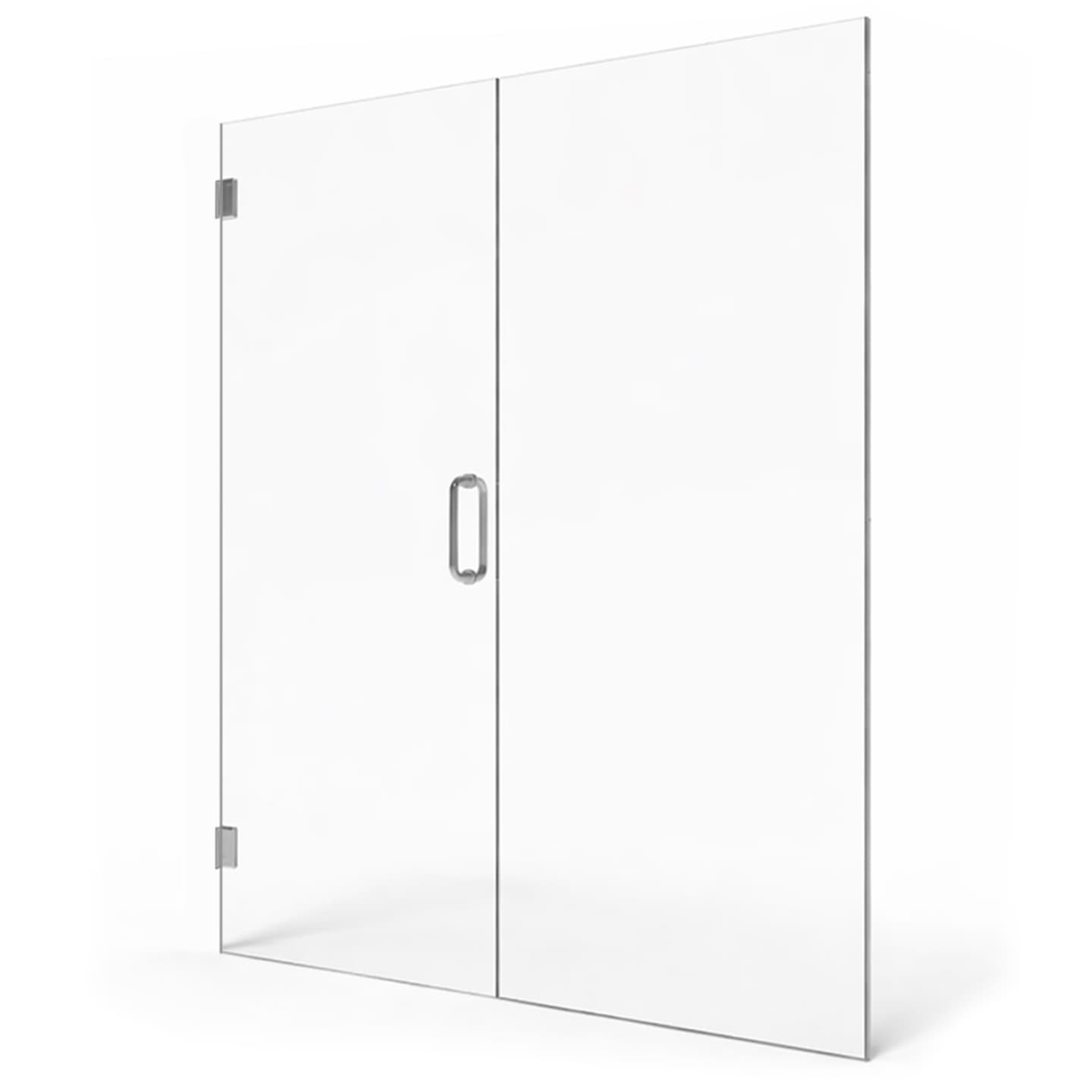
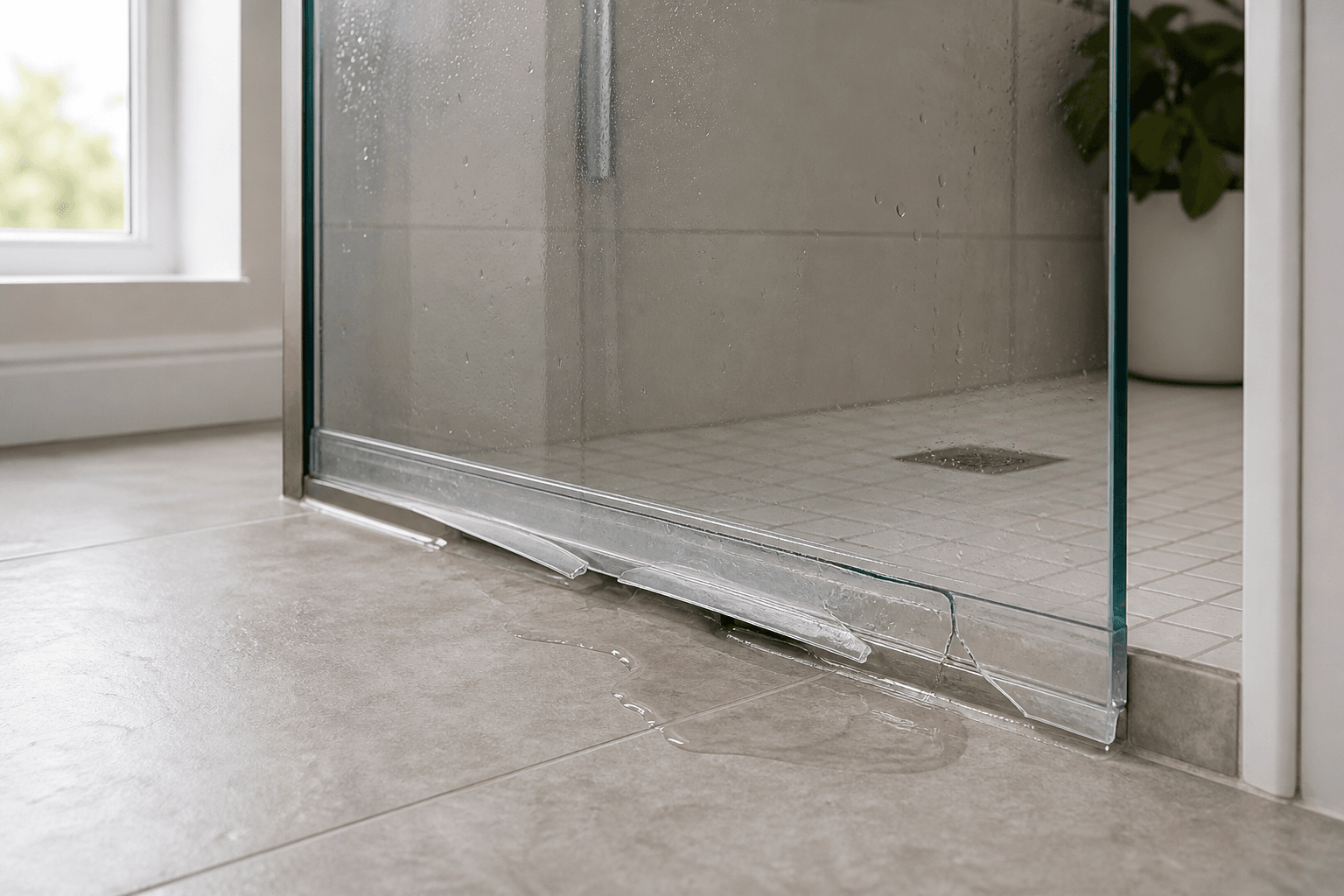
Replace the bottom sweep on a frameless shower door when it is cracked, torn, stiff, flattened, loose, or no longer directing water back into the shower. Persistent leakage along the bottom of the door, excessive dragging, or a sweep that repeatedly slips off also points to replacement. There is no universal replacement schedule: condition and performance matter more than age because cleaning habits, hard water, door alignment, and daily use all affect how quickly a sweep wears.
What does the bottom sweep do?
A bottom sweep is the clear plastic strip attached to the lower edge of many frameless shower doors. Depending on the profile, it may have one or more flexible fins, a small drip rail, or both. The fins help close part of the functional gap beneath the door, while the drip rail directs water running down the glass back toward the shower interior.
The sweep improves water containment, but it does not make a frameless enclosure completely waterproof. Frameless systems require operating gaps around doors and panels. A small amount of water may still escape because of the shower layout, curb design, spray direction, or gaps elsewhere in the enclosure.
What are the signs that a shower door sweep needs replacement?
- Cracks, splits, or missing sections in the flexible fin
- A fin that has become hard, curled, permanently bent, or flattened
- A channel that no longer grips the bottom edge of the glass
- A sweep that slides sideways or falls off during normal use
- New leakage directly beneath the door despite cleaning the sweep
- Heavy dragging, squeaking, or catching as the door opens and closes
- Mineral buildup or staining that cannot be removed without damaging the material
- A drip rail that is broken or angled toward the bathroom instead of the shower
Some discoloration is cosmetic and does not automatically require replacement. However, Florida hard water can leave a rough mineral crust that stiffens the flexible portion or prevents it from sitting correctly. If gentle cleaning restores the shape and performance, the sweep can remain in service. If the material stays distorted or brittle, replacement is the better choice.
Could the leak be coming from somewhere else?
A new sweep will not correct every shower leak. Before replacing it, dry the area and observe where the water escapes during use. Water coming directly under the moving door may indicate a worn or incorrect sweep. Water appearing near a corner, wall, hinge, or stationary panel may have another cause.
- A showerhead or body spray aimed toward the door opening
- A curb or threshold that does not direct water inward
- A door that is out of alignment and has an uneven bottom gap
- A missing or damaged vertical seal between the door and adjacent glass
- Water pooling because of a drainage or floor-slope issue
- A large functional gap required by the enclosure's design
If leakage continues after the correct sweep is installed, the door alignment and surrounding enclosure should be evaluated. Avoid trying to eliminate every gap with extra sealant or an oversized sweep. Added friction can interfere with door movement and put unnecessary stress on the glass and hardware.
How do you choose the correct replacement sweep?
Bottom sweeps are not one-size-fits-all. The replacement must match the glass thickness, door width, bottom clearance, and original profile. Some designs use a straight flexible fin, while others include an angled fin or drip rail. The direction matters: a drip rail intended to send water inward will perform poorly if installed backward.
- The exact thickness of the shower-door glass
- The length of the existing sweep or the width of the door
- The shape and position of the original fins and drip rail
- How much clearance exists between the glass and curb or floor
- Whether the profile is designed for an inward-, outward-, or double-swinging door
Do not assume the thickness based only on appearance. A channel that is too large may slide off, while one that is too tight may be difficult to install and could place pressure on the glass edge. If the old sweep is available, a clear photo of its end profile can help identify the correct style.
Can you replace a frameless shower door sweep yourself?
Many friction-fit bottom sweeps can be replaced by a careful homeowner. Start by photographing the old sweep so you can duplicate its orientation. With the door supported and open, pull the sweep straight off the bottom edge. Do not use a metal screwdriver or pry against the glass. Tempered glass is durable across its broad surfaces, but its exposed edges require careful handling.
- Remove the old sweep without twisting or striking the door
- Clean the bottom glass edge with mild soap and water
- Inspect the exposed edge for chips or other damage
- Cut the new sweep to the required length using the method recommended for that material
- Smooth any sharp cut edge and press the channel evenly onto the glass
- Confirm that the drip rail faces inward and test the full door swing
- Run the shower briefly and check water flow before normal use
The flexible fin should make appropriate contact without folding under itself or forcing the door to drag heavily. Do not hammer the sweep into place, and do not apply adhesive unless the sweep manufacturer's instructions specifically require it. Stop and call a shower-glass professional if you find a chipped glass edge, the door has dropped out of alignment, or the replacement profile must be forced onto the glass.
How can you make a new sweep last longer?
Clean the sweep regularly with mild soap, water, and a soft cloth. Avoid abrasive pads, metal scrapers, and harsh solvents that can scratch or stiffen clear plastic. On Suncoast homes with hard-water buildup, wiping the lower door and sweep after showers helps keep minerals from collecting in the channel and around the flexible fins.
Check the sweep every few months while cleaning the enclosure. Remove trapped hair or soap residue, verify that the strip has not shifted, and make sure the door moves freely. Early cleaning can often restore a sweep that looks cloudy or begins to drag, but damaged or hardened material should be replaced rather than patched.
When should a professional inspect the door?
Professional help is appropriate when a new sweep does not stop the leak, the bottom gap is uneven, the door rubs against the curb, or hinges appear loose. Those symptoms may involve alignment, hardware, or shower geometry rather than the sweep itself. Homeowners in Sarasota, Bradenton, Lakewood Ranch, Venice, and surrounding Suncoast communities can contact Shower Doors of Sarasota or request a free quote at /quote for help with a shower-door issue.
Key Takeaways
- Replace a sweep that is cracked, stiff, loose, distorted, or no longer containing water.
- There is no fixed replacement interval; inspect its condition and performance instead.
- Match the replacement to the exact glass thickness, door width, clearance, and profile.
- Persistent leakage may come from door alignment, spray direction, curb slope, or another seal.
- Use mild cleaners and avoid prying against or striking the exposed glass edge.
Ready to Transform Your Bathroom?
Contact us for a free consultation on custom frameless shower doors, enclosures, and mirrors for your Sarasota home.
Frequently Asked Questions
Related Services
Suncoast Team
Sarasota's Trusted Shower Door Experts