
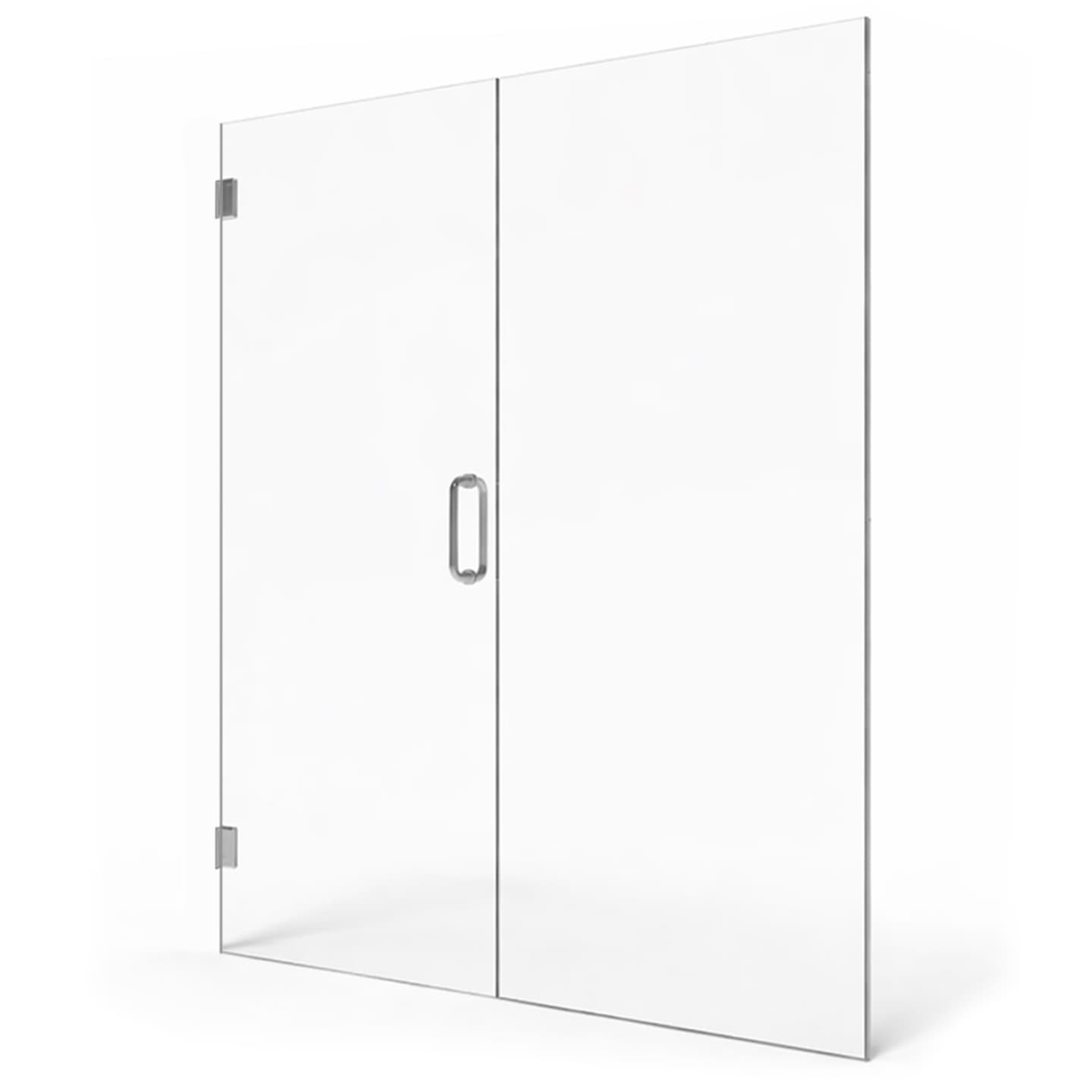
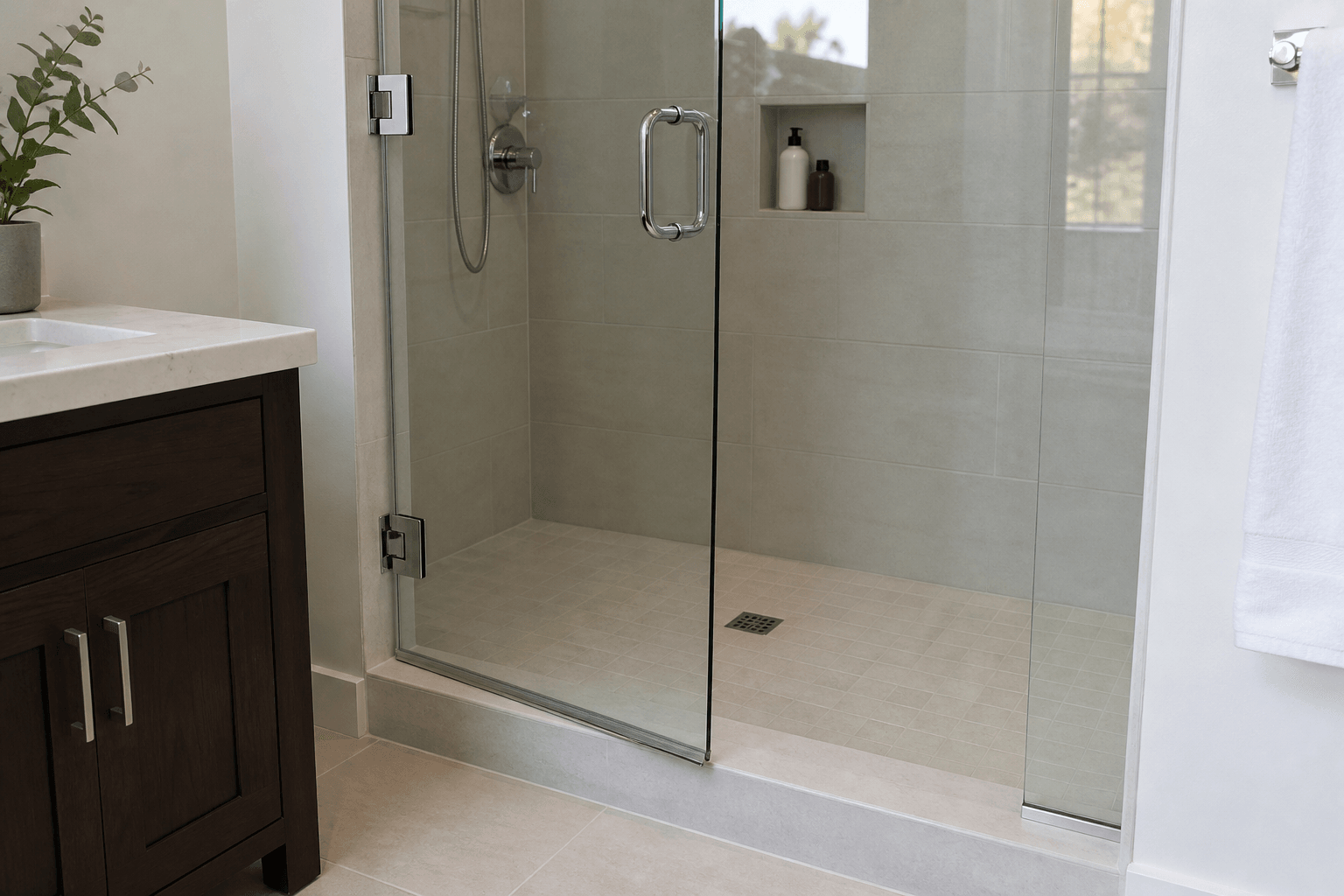
A hinged shower door usually stops staying closed because the door has shifted out of alignment, hinge hardware has loosened or worn, a seal is pushing against the glass, or mineral buildup is interfering with movement. Less commonly, the wall or curb is out of plumb, the enclosure has settled, or a magnetic catch has moved. The right repair depends on the door design, but a glass door that touches tile, the curb, or another panel should not be forced or repeatedly used.
What causes a hinged shower door to drift open?
- Hinge misalignment: Many frameless shower hinges hold the door at a centered or closed position. If a hinge slips or loses its adjustment, the door may stop at the wrong angle or slowly swing open.
- Loose mounting hardware: Hinges may attach through the glass and to a wall, jamb, or fixed panel. Movement at any attachment point can change the door’s position. This needs prompt attention because continued use may place uneven stress on the glass.
- A worn self-centering mechanism: Some shower hinges contain springs, cams, or other internal parts that help bring the door back to its resting position. Wear or damage inside the hinge may prevent it from holding the door closed.
- A damaged sweep or seal: A bottom sweep that has hardened, folded, shifted, or become swollen can push against the curb or threshold. Vertical seals can create similar resistance between the door and an adjacent panel.
- Mineral and soap buildup: Hard-water deposits can collect along the bottom sweep, hinge area, or magnetic closure. Even a thin layer may keep a precisely fitted door from reaching its intended closed position.
- Out-of-plumb conditions: If the hinge wall, curb, or enclosure is not level and plumb, gravity may encourage the door to swing. This is more likely if the problem has existed since installation, although building movement can sometimes cause a later change.
Did the problem appear suddenly or gradually?
The timing provides a useful clue. A door that worked normally and suddenly began drifting open may have slipped at a hinge, developed a damaged seal, or experienced a hardware failure. A gradual change often points to hinge wear, loosening fasteners, accumulating mineral deposits, or a sweep becoming stiff with age. If the door has never stayed closed properly, the original alignment, hinge setup, or surrounding surfaces may need to be evaluated.
What can you inspect safely?
- Close the door slowly and watch the gaps around it. The clearances should look reasonably consistent, without the glass edge approaching the curb, wall, or fixed panel.
- Listen for scraping, clicking, grinding, or popping. These sounds can indicate a damaged sweep, hinge problem, or glass-to-hard-surface contact.
- Look at the bottom sweep. Check for curling, cracks, stiffness, displacement, or heavy mineral buildup.
- Inspect vertical seals and magnetic strips, if present. A shifted strip may prevent the door from fully closing or may fail to hold the mating surfaces together.
- View the hinges from both sides. Look for a hinge plate that appears crooked, a door that has dropped, visible corrosion, or a change in the alignment between hinges.
- Clean accessible seals and glass edges with a nonabrasive cleaner, then test the door again. Do not insert tools into the hinge or apply lubricant unless the hinge manufacturer specifically calls for it.
When should you stop using the shower door?
Tempered safety glass is strong across its broad surface, but its edges and corners require careful protection. Stop operating the door if the glass contacts tile, metal, the curb, or another glass panel. You should also avoid using it if the door visibly drops as it moves, a hinge shifts, or the glass has a chip or crack. Do not lift the door back into position, loosen hinge plates, or tighten fasteners aggressively; incorrect pressure on tempered glass can cause damage or sudden breakage.
- Glass scraping or striking a hard surface
- A widening or uneven gap around the door
- A hinge or wall attachment that moves
- Cracked, chipped, or visibly damaged glass
- Grinding, popping, or sudden changes in door travel
How is a door that will not stay closed repaired?
The repair should address the cause rather than simply adding more pressure to the door. Depending on the enclosure, a glass professional may check whether the door and fixed panels remain level, verify hinge and wall attachments, inspect the hinge’s closing mechanism, and examine seals or magnetic catches. Because shower doors are custom fitted, replacement sweeps, seals, hinges, and other components must be compatible with the glass thickness, hole locations, hardware configuration, and available clearances.
- Realigning the door and resetting compatible adjustable hinges
- Replacing a worn hinge or internal closing component
- Replacing a distorted bottom sweep or vertical seal
- Cleaning or repositioning a compatible magnetic catch
- Addressing movement at a wall, fixed panel, or other attachment point
How can you help prevent the problem from returning?
Keep the glass edges, sweeps, and closure area free of soap residue and mineral deposits. After cleaning, rinse and dry metal hardware rather than leaving strong cleaning products on the finish. This is especially helpful in Suncoast homes where hard water, humidity, and coastal air can be tough on shower surfaces. Operate the door by its handle, avoid hanging towels or other weight from it, and pay attention to small alignment changes before the glass begins making contact.
Getting help with a hinged shower enclosure
A drifting door may need only a seal correction, but it can also be an early sign of hinge movement or wear. If the glass is making contact or the hardware appears loose, leave the door in a safe position and have the enclosure evaluated. Homeowners in Sarasota, Bradenton, Lakewood Ranch, Venice, and surrounding Florida Suncoast communities can request a free quote from Shower Doors of Sarasota at /quote.
Key Takeaways
- Misalignment, worn hinges, damaged seals, and mineral buildup are common causes.
- A door that worked before but suddenly drifts open may have slipped or developed a hardware problem.
- Do not force a shower door that touches tile, metal, the curb, or another glass panel.
- Clean seals safely, but leave hinge adjustments and glass-hardware tightening to a professional.
- Address small alignment changes before they create glass-to-hard-surface contact.
Ready to Transform Your Bathroom?
Contact us for a free consultation on custom frameless shower doors, enclosures, and mirrors for your Sarasota home.
Frequently Asked Questions
Related Services
Suncoast Team
Sarasota's Trusted Shower Door Experts