
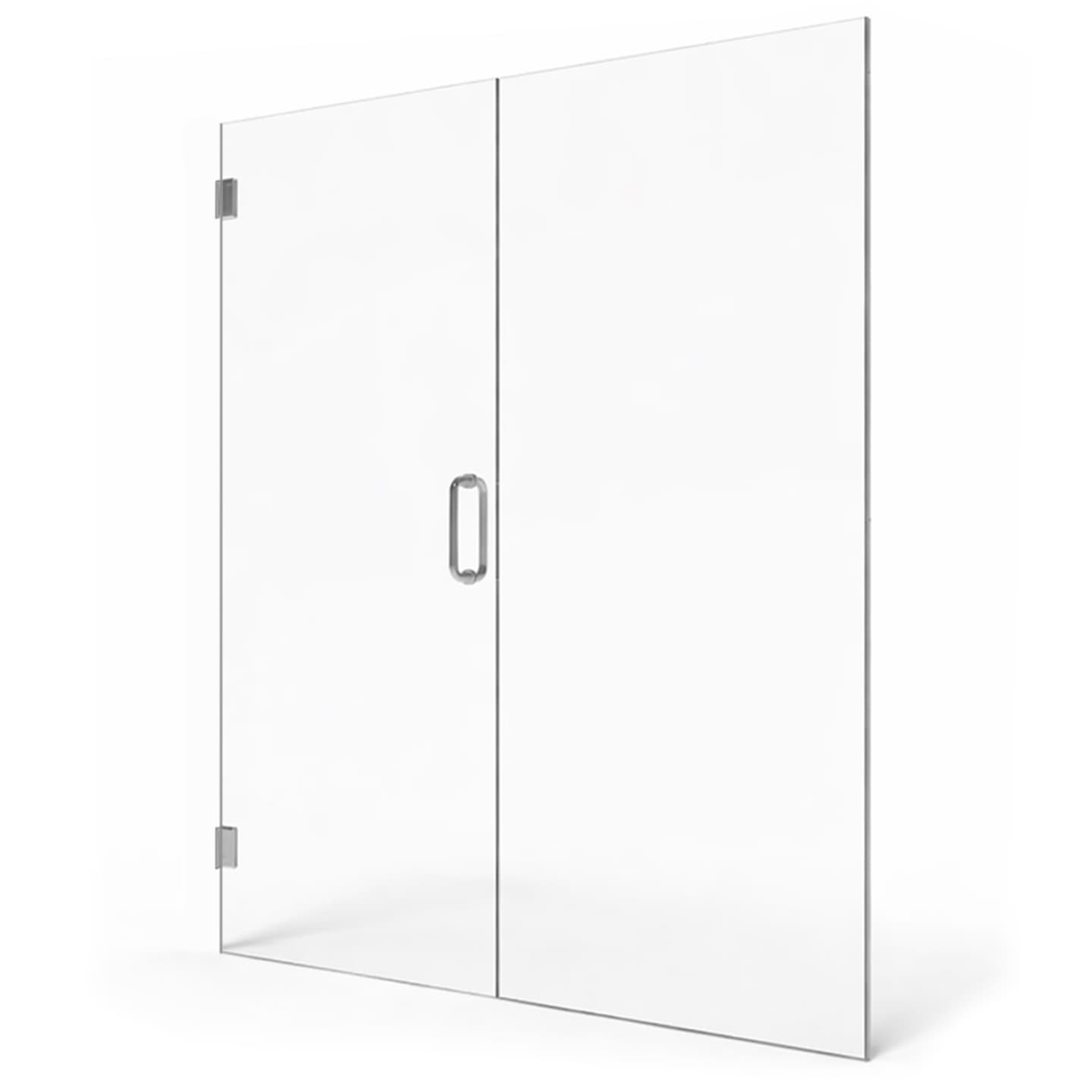
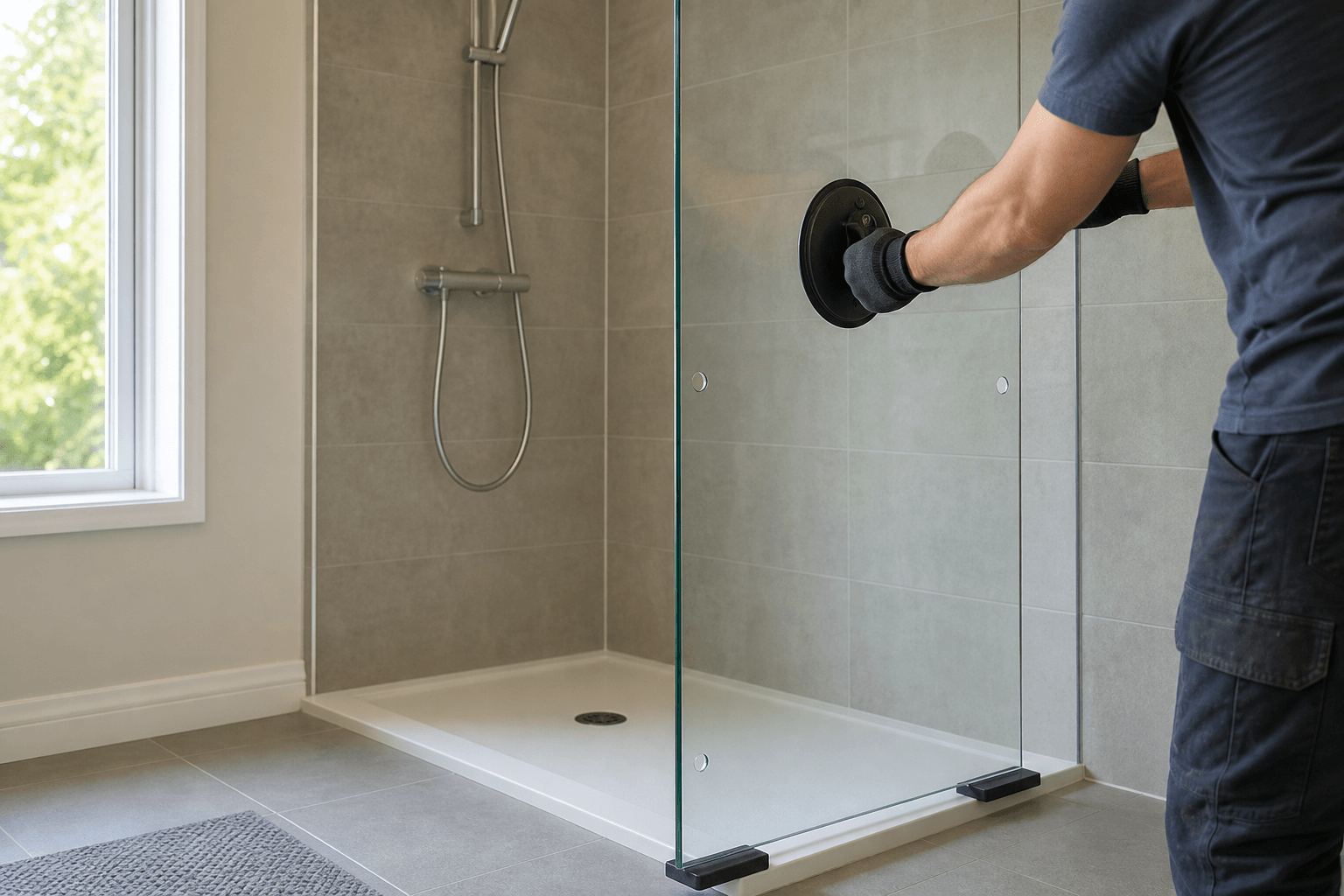
Tempered shower glass cannot be safely cut, drilled, notched, ground down, or resized after fabrication. All dimensions, holes, notches, and finished edges must be completed before the glass goes through tempering. Attempting to alter it afterward will usually cause the entire panel to break into small pieces. If a finished panel does not fit, the safe solution is generally to correct an adjustable installation issue or fabricate a replacement panel.
Why can’t tempered glass be altered afterward?
Tempered glass is manufactured by heating prepared glass and cooling it rapidly. This process creates compression at the surfaces and tension inside the panel, making the finished glass stronger than ordinary annealed glass. It also changes how the glass breaks: if it fails, it breaks into many small pieces rather than large, sharp shards.
Cutting into the surface, drilling a hole, grinding an edge, or deepening a notch disrupts that carefully balanced stress. The panel may shatter as soon as a tool touches it. Even if an attempted alteration does not cause immediate failure, it can damage the glass and make its future performance unpredictable.
- Straight cuts must be completed before tempering.
- Holes for handles and hardware must be drilled before tempering.
- Hinge, clamp, and support-bar notches must be made before tempering.
- Exposed edges must be shaped and polished before tempering.
- Corners and specialty cutouts must be finalized before tempering.
Can a tempered shower panel be trimmed slightly?
No. A small adjustment is not safer than a large one. A panel cannot be shortened by shaving an eighth of an inch from an edge, and an existing hole cannot simply be enlarged with a drill bit. Tempered glass does not behave like wood, tile, or acrylic, where minor field modifications may be possible.
This is especially important with frameless shower glass because the dimensions often follow finished tile, curbs, benches, knee walls, and out-of-plumb conditions. A panel that looks rectangular may actually require precise custom dimensions or edge geometry to fit the opening properly.
Does a poor fit always mean the glass must be replaced?
Not necessarily. Before assuming a panel was made incorrectly, an experienced shower-glass professional should inspect the enclosure. Some fit or operation problems come from hardware alignment rather than glass dimensions. Depending on the system, hinges, rollers, guides, sweeps, or stops may allow limited adjustment without modifying the glass.
- A swinging door that rubs may need hinge or alignment adjustments.
- A sliding door may need its rollers, guides, or stops checked.
- A leaking gap may involve a sweep, seal, door position, or shower layout rather than panel size.
- A loose handle may require compatible hardware or replacement gaskets, not a new hole.
- A significant dimensional error or incorrectly located hole will usually require new glass.
Do not try to force a door into alignment or modify its edge with handheld tools. Glass edges and corners are particularly vulnerable to impact. Stop using an enclosure if a panel is visibly damaged, unstable, contacting tile, or making unexpected cracking sounds, and have it evaluated professionally.
How should shower glass be planned before fabrication?
The best protection against fit problems is to wait until the surfaces that control the glass dimensions are complete. Shower glass should generally be measured after the tile, curb, thresholds, and other finished surfaces affecting the enclosure have been installed. Shower Doors of Sarasota prefers to measure after the tile and waterproofing are fully cured, then fabricate and install the enclosure.
- Finalize tile thickness, trim profiles, curbs, benches, and thresholds before measurement.
- Choose the enclosure style, such as swinging, sliding, or stationary glass, before approving fabrication.
- Confirm the desired handle, hinges, clamps, support bars, and other hardware because some components require specific holes or notches.
- Identify towel bars or back-to-back handles that will pass through the glass.
- Avoid changing finished wall or curb surfaces after the final glass measurement.
- Check that a swinging door has adequate clearance from toilets, vanities, walls, and nearby doors.
What if the bathroom design changes after ordering?
Contact the glass company before moving ahead with changes. Replacing tile, adding stone to a curb, altering a knee wall, or changing hardware can affect the required dimensions and hole locations. If fabrication has not started, revisions may still be possible. Once a panel has been tempered, however, it cannot be recut to match the new layout; a replacement may be necessary.
The same limitation applies when repurposing old shower glass. A panel from a previous enclosure may appear close to the correct size, but its hole pattern, notches, edgework, thickness, and tempering history must suit the new application. It cannot be safely customized after the fact simply because it is already tempered.
Is drilling tile the same as drilling shower glass?
No. Installers may drill finished tile to create attachment points for hinges, clamps, channels, and other hardware, depending on the enclosure and wall construction. Those openings are in the tile and supporting structure—not in the tempered glass. Any required holes in the glass were made before tempering.
Drilled tile attachment points need careful preparation, anchoring, fastening, and sealing because they may be exposed to water. Shower Doors of Sarasota uses the DoubleSil™ method with applicable installations. DoubleSil™ adds protection within the drilled opening as well as at the visible exterior connection, but no installation method can guarantee against every source of water intrusion, and frameless showers are not completely waterproof.
The practical answer for an incorrect panel
If tempered shower glass has the wrong dimensions or hole locations, do not attempt a DIY cut or drill. First determine whether the problem can be corrected through compatible hardware adjustment. If the glass itself must change, it normally needs to be remade with the correct cuts, holes, notches, and edgework completed before tempering. Shower Doors of Sarasota uses glass fabricated and tempered in Sarasota and offers free quotes through the online tool at /quote.
Key Takeaways
- Tempered shower glass cannot be safely cut, drilled, notched, or resized after tempering.
- Even a minor trim or slightly enlarged hole can cause the entire panel to shatter.
- Some door-fit problems can be solved through hardware adjustment rather than glass replacement.
- Final glass measurements should follow completed, fully cured tile and other finished surfaces.
- If the panel itself is incorrect, replacement glass is generally the safe solution.
Ready to Transform Your Bathroom?
Contact us for a free consultation on custom frameless shower doors, enclosures, and mirrors for your Sarasota home.
Frequently Asked Questions
Related Services
Suncoast Team
Sarasota's Trusted Shower Door Experts