
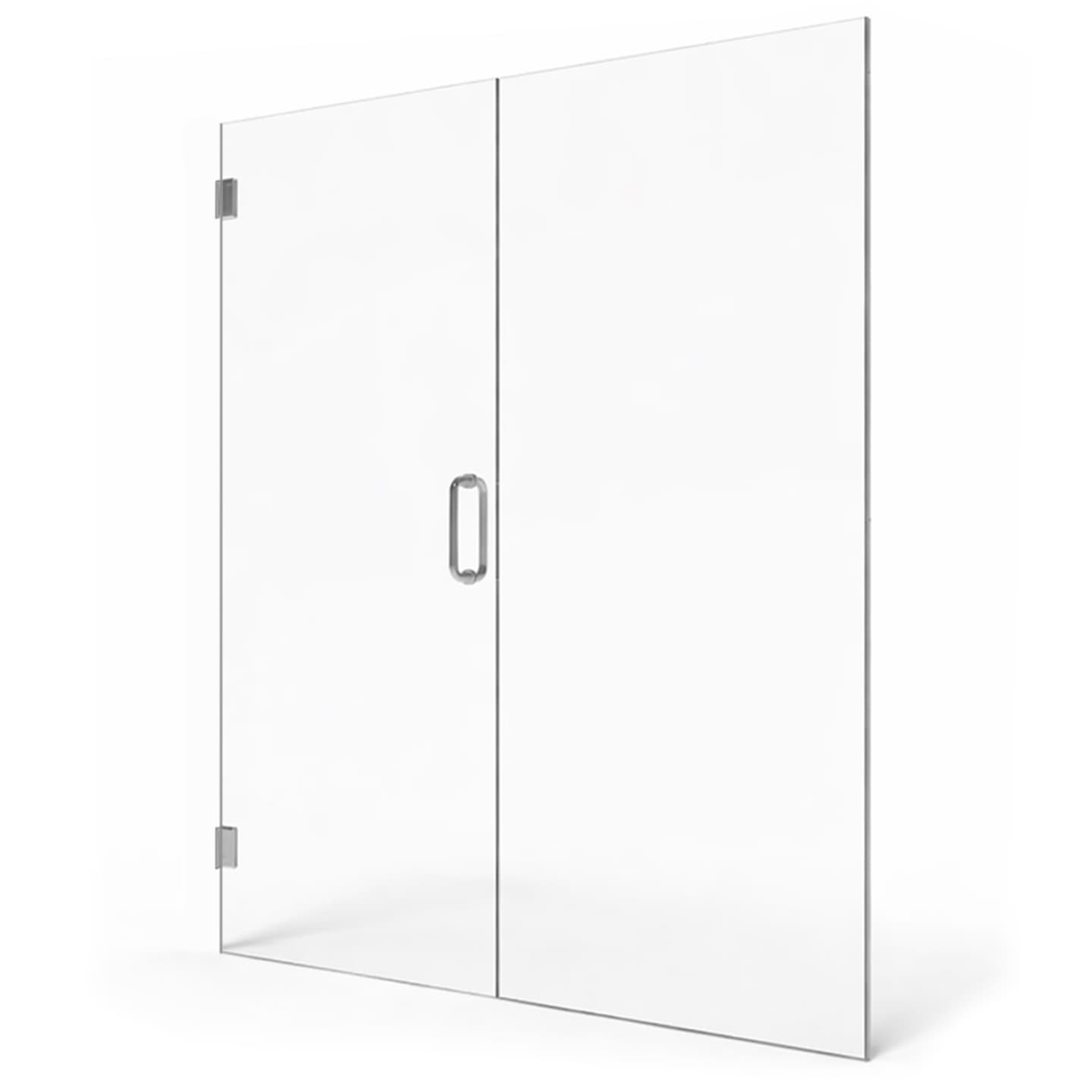
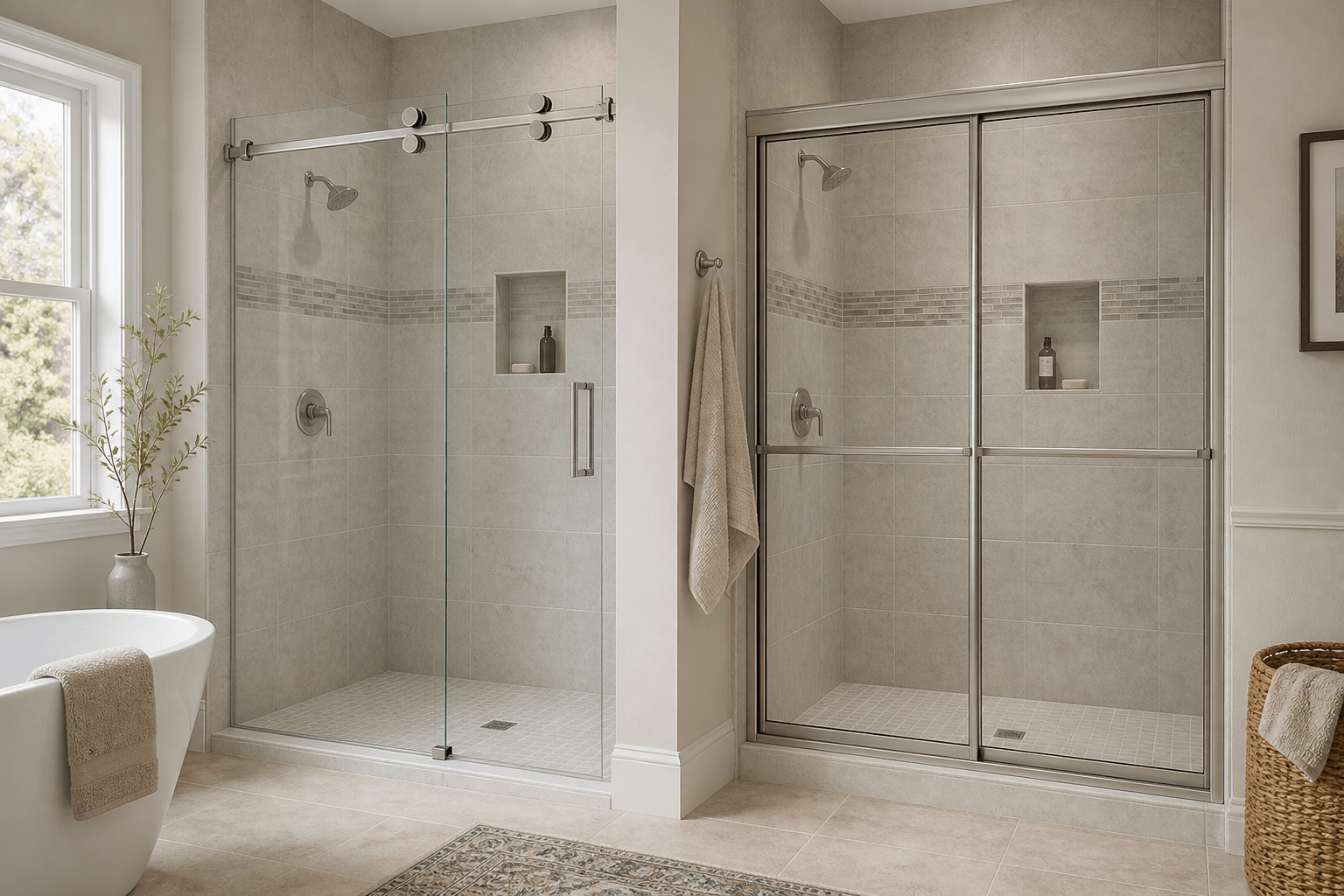
The biggest differences between a frameless sliding shower door and a traditional framed bypass door are the amount of metal around the glass, how the panels move, and what must be cleaned. Frameless sliding systems typically use exposed rollers or streamlined hardware with fewer channels, making glass and threshold areas easier to reach. Traditional framed bypass doors usually have two overlapping sliding panels inside a perimeter frame and bottom track. They can offer flexible entry from either side, but their tracks, corners, and panel overlap require more detailed cleaning. Neither style is maintenance-free or completely waterproof; performance depends heavily on the layout, installation, seals, and direction of the shower spray.
How the two sliding-door designs work
Both designs save bathroom floor space because no door swings outward. That makes sliding doors useful for tub enclosures, wider shower openings, and bathrooms where a toilet, vanity, or towel bar would interfere with a hinged door. The hardware arrangement, however, changes the way each enclosure feels and functions.
- A traditional framed bypass enclosure commonly has two glass panels that slide past each other within a full metal frame. If both panels are movable, the shower may be entered from either side.
- A frameless sliding enclosure may pair one moving door with one fixed panel, although other configurations are available. Entry may be limited to one side, so plumbing fixtures and bathroom traffic should be considered before choosing the layout.
- Framed doors usually ride within defined upper and lower tracks. Frameless models often use rollers and a compact bottom guide rather than a deep continuous track.
- Frameless does not mean hardware-free. Rollers, handles, guides, seals, and support components remain necessary for safe operation and water control.
What changes in everyday use?
A well-installed door of either type should move smoothly, but the experience is different. Frameless sliding doors emphasize the glass and often provide a more open view of the tile. Traditional bypass doors have more visible framing and may feel more enclosed. Practical differences such as entry location and threshold shape often matter more than appearance.
- Entry flexibility: A two-panel bypass system may allow access from either end. A frameless system with a fixed panel only opens on the moving-door side.
- Step-over profile: Framed bottom tracks are generally more noticeable underfoot. Frameless guides can be less visually prominent, but a frameless door is not automatically curbless or barrier-free.
- Door overlap: Both designs need sufficient overlap to help control spray. Handles and towel bars must also be positioned so the panels can pass one another where required.
- No swing clearance: Both styles work well where there is not enough room for a hinged door to open safely.
Which shower door is easier to clean?
A frameless sliding door is generally easier to clean because it has fewer metal channels and tight frame corners. Large, exposed glass surfaces can be squeegeed quickly. Still, the overlap between panels, rollers, bottom guide, seals, and the area behind handles need attention. Traditional framed bypass doors require extra work around the lower track, vertical jambs, and frame joints, where soap residue and mineral deposits can collect.
- Squeegee the interior glass after showering. This is especially helpful in Suncoast homes with hard water, because it removes droplets before minerals dry onto the surface.
- Use a soft microfiber cloth and a nonabrasive cleaner suitable for both the glass and hardware finish. Avoid abrasive pads or powders that can scratch metal finishes or damage coatings.
- Clean framed bottom tracks with a soft brush or cloth, paying attention to corners and drainage openings. Do not block weep or drainage paths with residue or sealant.
- Wipe frameless rollers, guides, sweeps, and panel overlaps rather than cleaning only the broad center of the glass.
- Do not remove sliding panels, loosen rollers, or adjust hardware unless the system's instructions specifically allow it. Large tempered-glass panels should be serviced carefully.
Does frameless glass prevent water from escaping?
No frameless shower enclosure should be considered completely waterproof. Sliding systems have functional gaps where panels overlap and where the moving glass meets guides or seals. A traditional framed bypass door may have a more substantial bottom track, but that does not correct a poorly directed showerhead, an out-of-level curb, blocked drainage openings, or failed sealant.
- Aim fixed showerheads away from door openings and panel overlaps whenever possible.
- Make sure the curb or threshold directs water back toward the shower rather than toward the bathroom floor.
- Choose the door orientation only after considering the showerhead, controls, benches, and body sprays.
- Inspect sweeps and seals periodically. Replace worn components rather than relying on excessive caulk to solve an operating or drainage problem.
- Remember that a lower-profile frameless design may trade some physical containment for a cleaner appearance. The exact balance depends on the selected system.
How should Florida homeowners manage water spots?
Florida humidity does not itself create mineral spots, but frequent shower use and hard water can leave visible deposits as droplets evaporate. Clear frameless glass tends to display those spots more readily because the uninterrupted surface is part of the design. Regular squeegeeing remains the simplest preventive step for either door style.
- Keep a small squeegee inside the shower and use it on the door and stationary panel after the final shower of the day.
- Dry metal tracks and hardware with a soft cloth if water routinely sits on them.
- Check that bathroom ventilation is working properly so glass, grout, and sealant dry between uses.
- Consider a protective glass coating. EnduroShield can be applied to any SDoS glass type and reduces water spots, soap scum, and mineral buildup by up to 90%, but it does not eliminate routine cleaning.
Which style is the better fit for your bathroom?
Choose a frameless sliding door if you value an open appearance, want fewer frame channels to scrub, and have a layout that works with the proposed fixed and moving panels. A traditional framed bypass door may be preferable if two-sided entry is important or you favor a fully framed appearance and track-based water barrier. Do not decide from a showroom photo alone: opening width, curb condition, wall construction, tile layout, plumbing locations, and available access all affect the appropriate system. Shower Doors of Sarasota offers custom sliding shower-door systems for Suncoast homes; homeowners can request a free project-specific quote at /quote.
Key Takeaways
- Frameless sliding doors generally have fewer channels and corners to clean.
- Traditional framed bypass doors commonly provide entry from either side when both panels move.
- Both styles save space because they do not need outward swing clearance.
- Water control depends on layout, overlap, seals, curb slope, and showerhead direction—not simply whether the door is framed.
- Protective coating and regular squeegeeing can reduce hard-water buildup, but no shower glass is maintenance-free.
Ready to Transform Your Bathroom?
Contact us for a free consultation on custom frameless shower doors, enclosures, and mirrors for your Sarasota home.
Frequently Asked Questions
Related Services
Suncoast Team
Sarasota's Trusted Shower Door Experts