
When a shower door is replaced, old mounting holes are typically reused only when they are structurally sound and align correctly with the new hardware. Otherwise, they may be concealed behind new channels or hinges, cleaned and sealed, cosmetically patched, or eliminated by replacing the affected tile or wall panel. The right approach depends on the hole location, wall material, waterproofing condition, and new enclosure design. Old holes should not simply be covered without inspection because they may extend through the finished surface into the wall assembly.
Why are there holes behind the old shower door?
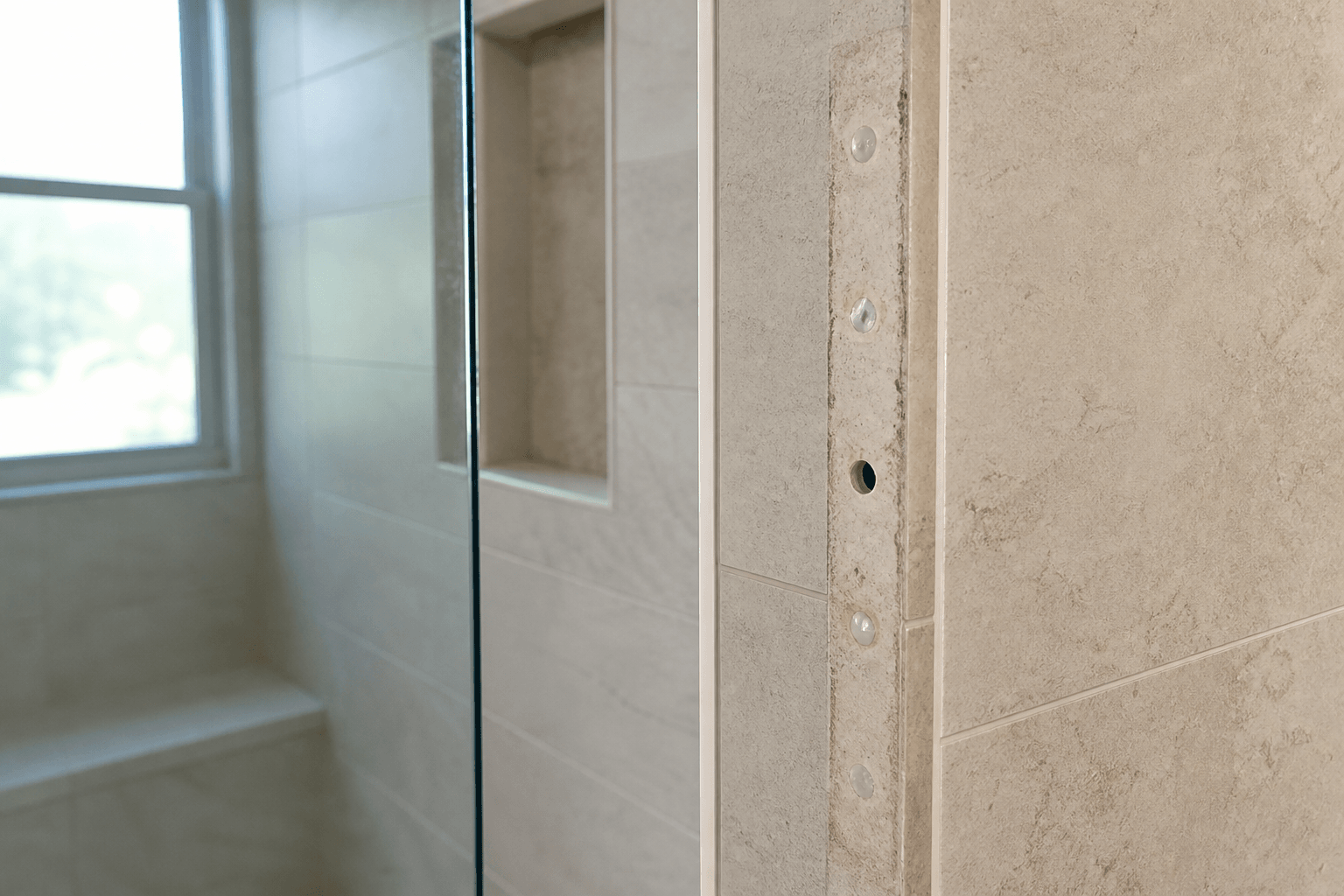
Shower enclosures are commonly attached with screws, anchors, hinges, clamps, wall channels, and other hardware. Removing the enclosure can reveal holes through tile, stone, fiberglass, acrylic, or another finished surface. A framed door may leave a vertical row of small holes where wall channels were installed, while a frameless enclosure may leave fewer but more visible holes near hinges and clamps.
You may also see old silicone outlines, mineral buildup, discoloration, chipped tile edges, or marks where metal hardware contacted the wall. Hard water common in many Florida homes can make these outlines more noticeable because the areas behind the old hardware were protected from years of mineral deposits and cleaning.
Can the existing mounting holes be reused?
Sometimes, but reuse should never be assumed. A hole must match the new hardware’s exact position, fastener size, attachment requirements, and glass layout. It also needs to be intact rather than enlarged, cracked, loose, or surrounded by damaged material. Even a small position difference can affect door alignment, panel support, and proper operation.
- Does the new hardware align precisely with the existing opening?
- Is the hole the correct diameter and depth for the proposed fastener or anchor?
- Is the surrounding tile, stone, or wall panel free from cracks and movement?
- Is there suitable backing or substrate for the required attachment?
- Can the opening be prepared and sealed appropriately for the new installation?
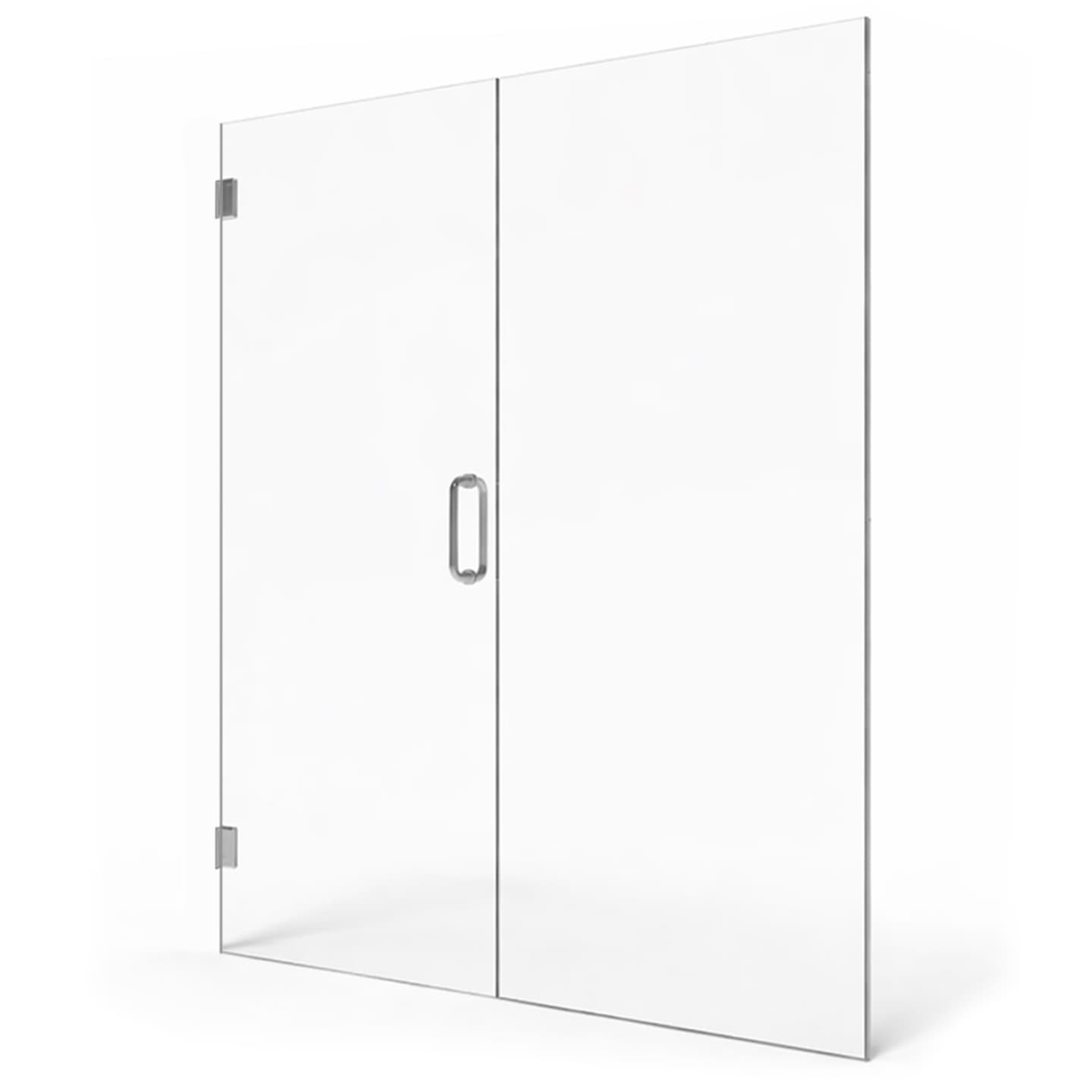
Custom replacement glass may not use the same dimensions or hardware configuration as the original enclosure. Switching from framed to frameless glass, changing the door swing, or adding a larger stationary panel often requires a different attachment layout. An old hole should not dictate the design if it would produce a poor or unsafe hardware location.
What happens when old holes cannot be reused?
If a hole is no longer needed, the installer or repair professional determines whether it can be hidden or needs a visible repair. Holes behind a new wall channel may be concealed, but they still need appropriate preparation; hiding a penetration is not the same as sealing it. Exposed holes usually require a surface-compatible repair intended for a wet environment.
- Concealing the holes behind correctly positioned new hardware or a wall channel
- Cleaning, drying, and filling small abandoned openings with a compatible sealing or repair material
- Using a color-matched cosmetic repair where the finished surface allows it
- Having damaged fiberglass or acrylic repaired by a specialist familiar with that material
- Replacing an affected tile when a highly visible patch would be unacceptable or the tile is cracked
A small patch may remain visible, especially on patterned tile, natural stone, glass tile, or grout with an aged color. Color-matched products can reduce the contrast, but a perfect match is not always possible. Homeowners who want a seamless result may prefer tile replacement, provided matching tile is available.
Does replacing a tile solve the entire problem?
Replacing a drilled or damaged tile can provide the cleanest cosmetic result, but it requires careful work around the wall assembly behind it. Shower tile is a finished surface; the waterproofing system is generally located behind or beneath it. Removing tile without damaging nearby tile or the underlying waterproofing can be difficult, so this work may require a qualified tile professional.
If the old opening shows signs of a larger issue—such as loose tile, wall movement, persistent staining, corrosion, a soft substrate, or a musty odor—the condition should be investigated before new glass is installed. A shower-door replacement should not be used to conceal suspected moisture damage.
How do wall materials affect the repair?
The appropriate repair varies by surface. Porcelain and ceramic tile may accept a small wet-area repair, although the patch can remain visible. Natural stone requires products compatible with that stone to avoid staining or discoloration. Fiberglass and acrylic surrounds can crack or deform if handled incorrectly and may need a specialized surface repair. Large-format panels and slabs may be especially difficult or expensive to replace, making careful enclosure planning important.
The substrate matters as well. A fastener attached through tile into framing or suitable backing is different from one relying on an anchor in another wall construction. That is why the condition of the visible hole alone does not determine whether it is suitable for new hardware.
Will the new holes be protected from moisture?
Drilled attachment points need careful preparation because they may be exposed to water. No frameless enclosure is completely waterproof; functional gaps remain around doors and panels, and no installation method can guarantee against every possible source of water intrusion.
For applicable shower-door installations, Shower Doors of Sarasota includes DoubleSil, a layered sealing and anchoring process at drilled hardware attachment points. It incorporates protection within the drilled opening before the anchor and fastener are fully installed, in addition to the visible exterior seal. DoubleSil applies to applicable new attachment points; the treatment of abandoned holes still depends on their location, surface, and condition.
What should homeowners discuss before replacement?
Ask how the new enclosure will align with the old hardware locations and whether any exposed holes are expected. It is also helpful to decide whether a small visible patch is acceptable or whether you would prefer tile replacement for a cleaner result. If you are retiling the shower, complete the tile, curb, thresholds, and other finished surfaces affecting the glass dimensions before final measurement. Shower Doors of Sarasota generally measures after tile and waterproofing are fully cured, then fabricates and installs the enclosure.
- Which existing holes can safely be reused, if any
- Which holes will be hidden and how they will be prepared
- Where visible patches may remain
- Whether damaged tile or wall material needs separate repair
- Where the new hinges, clamps, channels, or other attachments will be located
Homeowners in Sarasota, Bradenton, Lakewood Ranch, Venice, and surrounding Suncoast communities can request a free quote from Shower Doors of Sarasota at /quote. Photos of the existing enclosure and mounting areas can help begin the conversation, although final attachment decisions depend on accurate measurement and an evaluation of the shower.
Key Takeaways
- Old mounting holes may be reused, concealed, sealed, patched, or removed through tile replacement.
- A hole should be reused only if it aligns with the new hardware and remains structurally suitable.
- Hidden holes still require proper evaluation and preparation.
- Visible patches may not match tile, stone, grout, fiberglass, or acrylic perfectly.
- Signs of moisture or substrate damage should be investigated before new glass is installed.
- No frameless shower enclosure should be described as completely waterproof.
Ready to Transform Your Bathroom?
Contact us for a free consultation on custom frameless shower doors, enclosures, and mirrors for your Sarasota home.
Frequently Asked Questions
Related Services
Suncoast Team
Sarasota's Trusted Shower Door Experts