
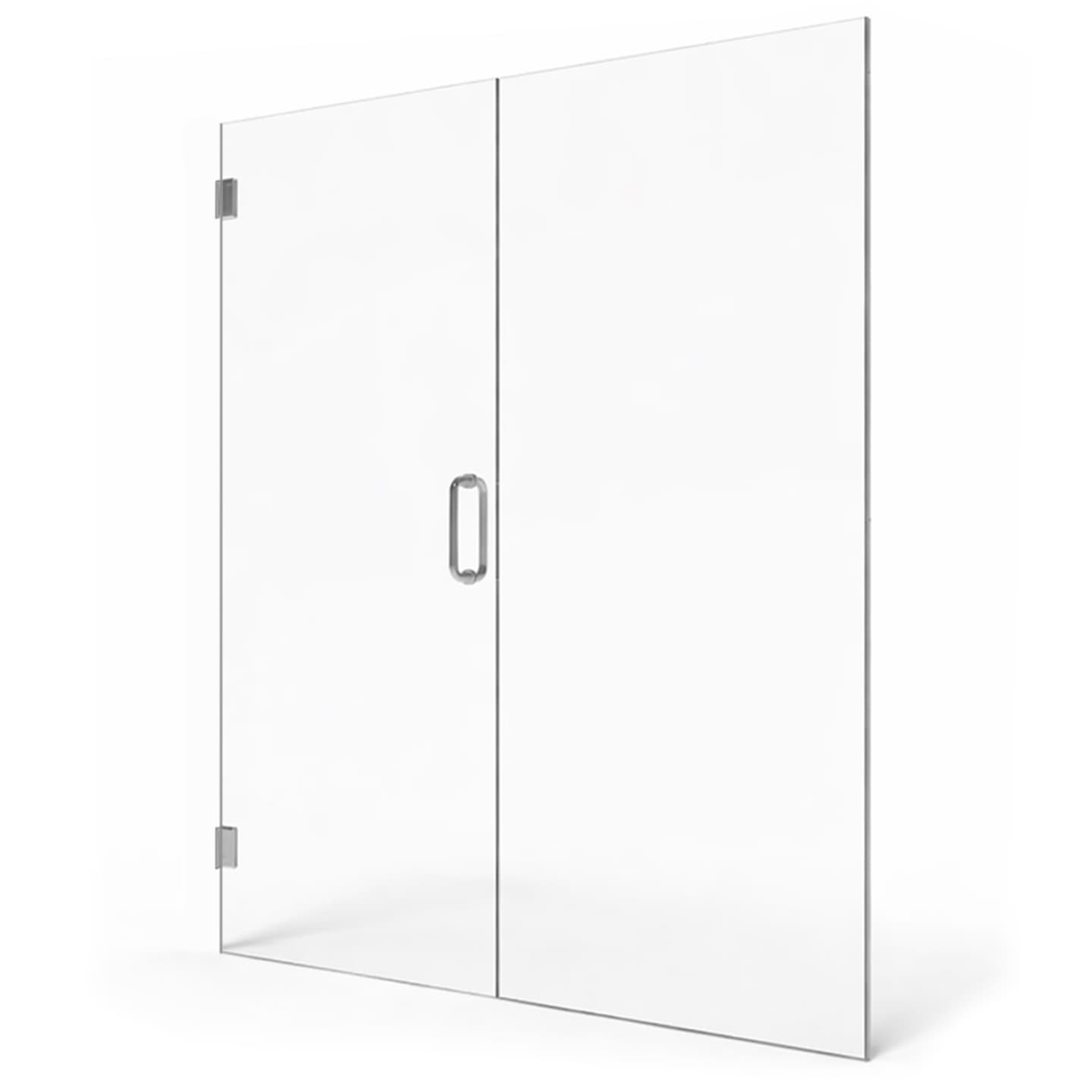
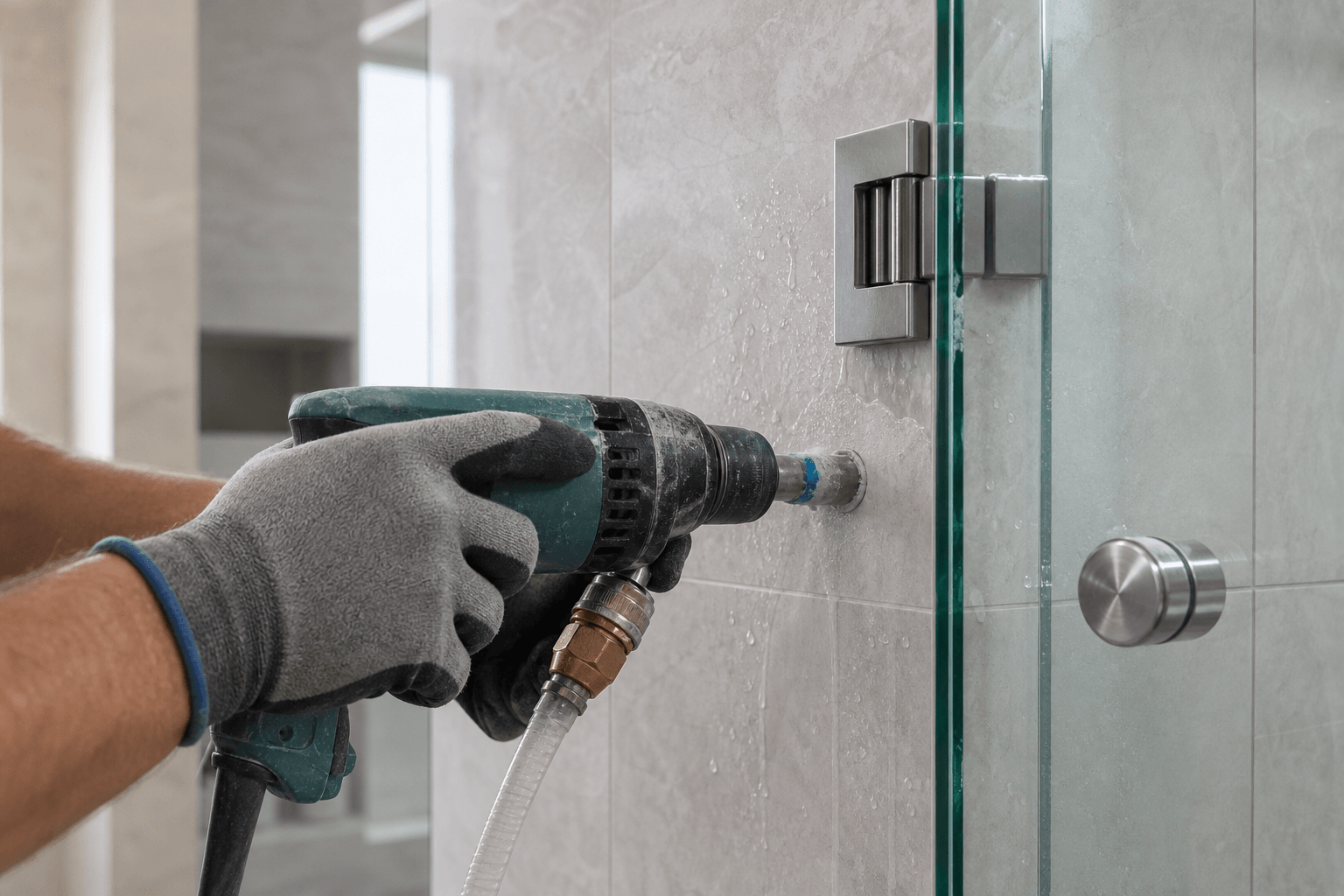
Tile material changes the tools, drilling speed, cooling method, hole placement, and sealant compatibility required for shower-glass hardware. Dense porcelain generally needs diamond tooling and patient drilling; ceramic drills more easily but its glaze can chip; glass tile requires especially controlled, non-impact drilling; and natural stone must be evaluated for hardness, veins, fissures, and staining risk. Regardless of the surface, the hardware must connect to an appropriate anchoring structure, and each applicable penetration should be prepared and sealed—not merely covered around the outside.
The plan starts behind the tile
Tile is the visible finish, but it should not be treated as the primary structural support for a heavy shower door or panel. Before drilling, the installer needs to consider the wall construction, available blocking or other approved anchoring location, waterproofing system, and possible plumbing or electrical lines. Hardware locations are also influenced by glass dimensions, hinge geometry, panel alignment, and manufacturer requirements. Moving a hole slightly may help avoid a tile edge or stone vein, but only if the revised position still works structurally and mechanically.
- Tile, curb, thresholds, and other surfaces affecting the glass dimensions are finished.
- Tile setting materials, grout, and waterproofing have fully cured.
- The type and thickness of tile are known.
- The installer knows where suitable anchoring and concealed utilities may be located.
How do porcelain and ceramic tile differ?
Porcelain is generally denser and harder than standard ceramic tile. That durability is useful in a shower, but it can make drilling slower and increase heat at the bit. Diamond tooling, controlled pressure, and adequate cooling are commonly used to create a clean opening without overheating the tool or tile. Trying to force the bit can cause wandering, surface damage, or cracking. Ceramic tile is usually easier to penetrate because its body is softer, but the glazed face remains vulnerable to scratching and chipping as the hole is started.
- Porcelain may require more drilling time and closer heat control.
- Ceramic needs a stable start to protect the glazed surface.
- Impact or hammer action is generally avoided on finished shower tile.
- Hole placement should provide reasonable distance from tile edges and corners whenever the hardware layout allows.
What makes glass tile especially sensitive?
Glass tile is hard but brittle, so drilling must be slow, stable, and carefully cooled. Percussion or hammer action can crack the tile, while excessive heat can create thermal stress. Painted, mirrored, or foil-backed glass tile adds another concern: drilling may damage the decorative backing and leave a visible defect around clear or translucent material. Small mosaics can also be difficult because a hardware hole may approach an edge or cross a grout joint.
- Whether the tile manufacturer permits drilled hardware penetrations.
- The tile's size, thickness, backing, and installation method.
- Whether the planned hole is too close to an edge or grout joint.
- How the opening can be finished without exposing or damaging a decorative backing.
How should natural-stone tile be approached?
Natural stone cannot be treated as one uniform material. Granite is typically hard, while marble and limestone may drill more readily but can chip, bruise, or contain weak veins. Travertine may have filled voids, and any stone can include natural fissures that are not obvious until closely inspected. The installer should examine every proposed hole location rather than relying only on the stone's general name. Sealant must also be compatible with the specific stone because some products can darken, stain, or create a visible halo around porous material.
- Avoiding prominent veins, filled voids, cracks, and fragile edges.
- Selecting tooling appropriate for the stone's actual hardness.
- Using a non-staining, manufacturer-compatible sealant.
- Testing products on spare stone when appearance or compatibility is uncertain.
Is sealing the tile the same as sealing the hole?
No. A penetrating sealer applied to grout or natural stone is a maintenance product; it does not replace proper treatment of a drilled hardware opening. Likewise, glazed ceramic and porcelain surfaces may resist water without protecting the penetration through the tile and into the wall assembly. Exterior silicone around a hinge, clamp, or channel helps finish the visible connection, but protection within the drilled opening provides an additional layer at the point where the fastener passes through the finished surface.
- Anchoring: securing the hardware to an appropriate supporting material.
- Internal protection: preparing and sealing the drilled opening as applicable before final fastening.
- Exterior finishing: sealing the visible hardware-to-tile connection with a compatible product.
How does Shower Doors of Sarasota handle drilled points?
Shower Doors of Sarasota uses the DoubleSil method at applicable drilled shower-glass hardware attachment points. DoubleSil incorporates protection within the drilled opening before the anchor and fastener are fully installed, in addition to the visible exterior seal. It is included with applicable SDoS shower-door installations. This added precaution does not make a frameless enclosure completely waterproof, and no installation method can guarantee protection from every possible source of water intrusion.
- Keep spare tile available in case a finished piece is damaged or reveals a hidden defect.
- Provide the tile brand and product information if you have it, especially for glass or natural stone.
- Wait until the tile, waterproofing, curb, and thresholds are finished and fully cured before final glass measurement.
- Use the free quote tool at /quote to discuss a project in Sarasota, Bradenton, Lakewood Ranch, Venice, or the surrounding Suncoast.
Key Takeaways
- Porcelain usually requires slower drilling and careful heat control.
- Ceramic is easier to drill, but its glazed surface can chip.
- Glass tile requires non-impact drilling and close attention to edges and decorative backings.
- Natural stone must be checked for veins, voids, hardness, and sealant compatibility.
- Tile or grout sealer does not replace sealing a drilled hardware penetration.
- No frameless shower enclosure should be described as completely waterproof.
Ready to Transform Your Bathroom?
Contact us for a free consultation on custom frameless shower doors, enclosures, and mirrors for your Sarasota home.
Frequently Asked Questions
Related Services
Suncoast Team
Sarasota's Trusted Shower Door Experts