
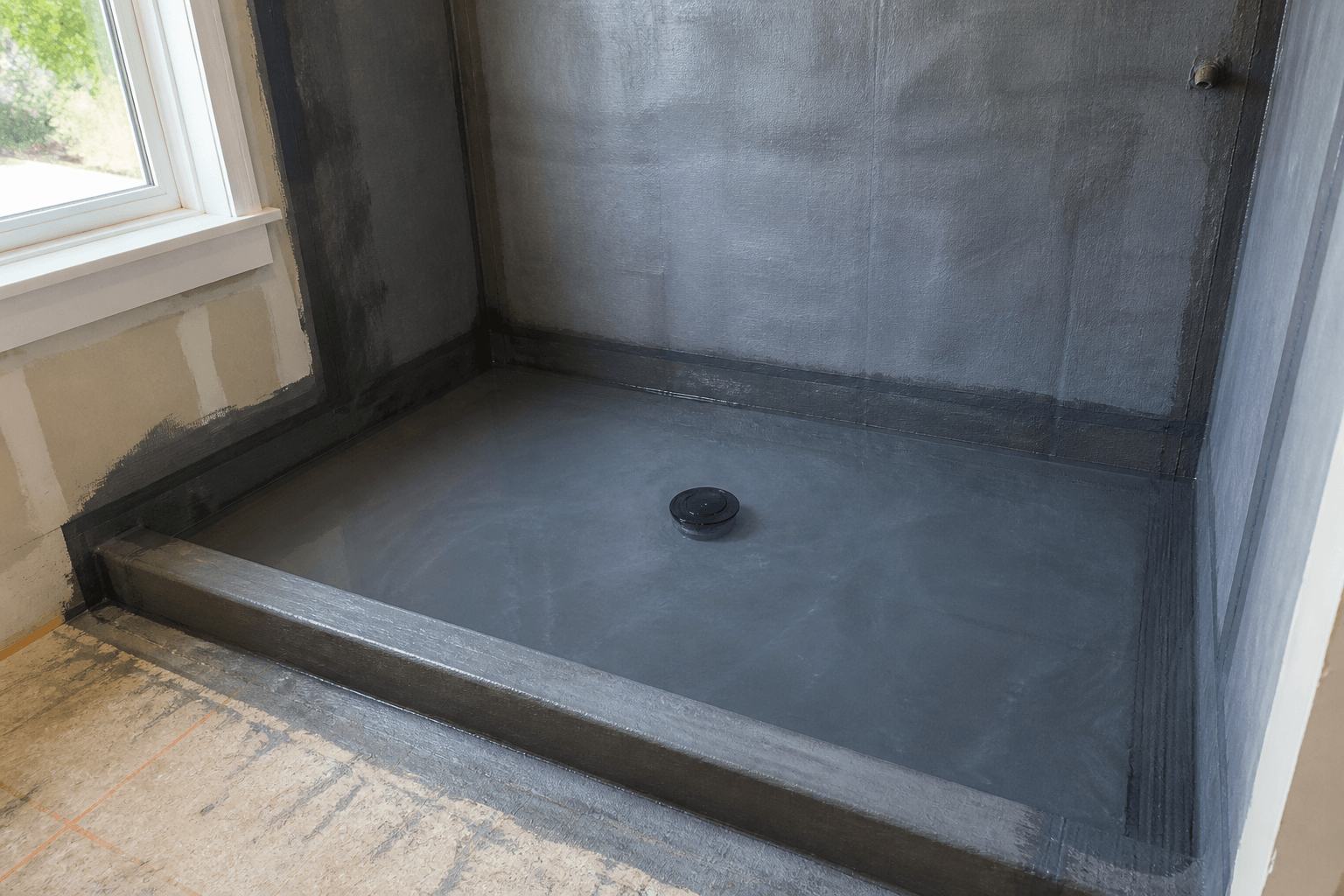
Yes. A new shower pan should generally be flood-tested after its waterproofing system is complete and properly cured, but before floor tile and shower glass are installed. The test temporarily holds water in the shower base to reveal leaks at the membrane, seams, corners, penetrations, or drain connection while those areas are still accessible. The exact procedure and test duration must follow the waterproofing manufacturer’s instructions and any applicable plumbing or inspection requirements.
What does a shower-pan flood test check?
A flood test evaluates the shower’s water-holding layer—not the decorative tile surface. In a properly built shower, tile and grout provide a durable finish, but the membrane or pan liner underneath is responsible for directing water to the drain and protecting the surrounding structure.
During the test, the drain is temporarily plugged in the correct location and the pan is filled to the required level. The starting water level is marked and monitored. A falling level may indicate a problem, although evaporation and an improperly sealed test plug should be ruled out before concluding that the pan has failed.
- An incomplete or poorly bonded membrane seam
- A pinhole, cut, or puncture in the waterproofing
- A leak where the membrane connects to the drain
- Weak waterproofing at corners or curb transitions
- Water escaping around a test plug that was installed incorrectly
Why should the test happen before tile is installed?
Testing before tile keeps the waterproofing visible and repairable. If a leak is discovered after the shower floor has been tiled, diagnosing it may require removing tile, mortar, and other finished materials. That adds cost and makes it harder to identify the original defect without causing additional damage.
A successful test also creates a clear checkpoint between waterproofing and finish work. Once the test is complete and any required inspection has passed, the installer can move forward with tile while taking care not to puncture or damage the tested membrane.
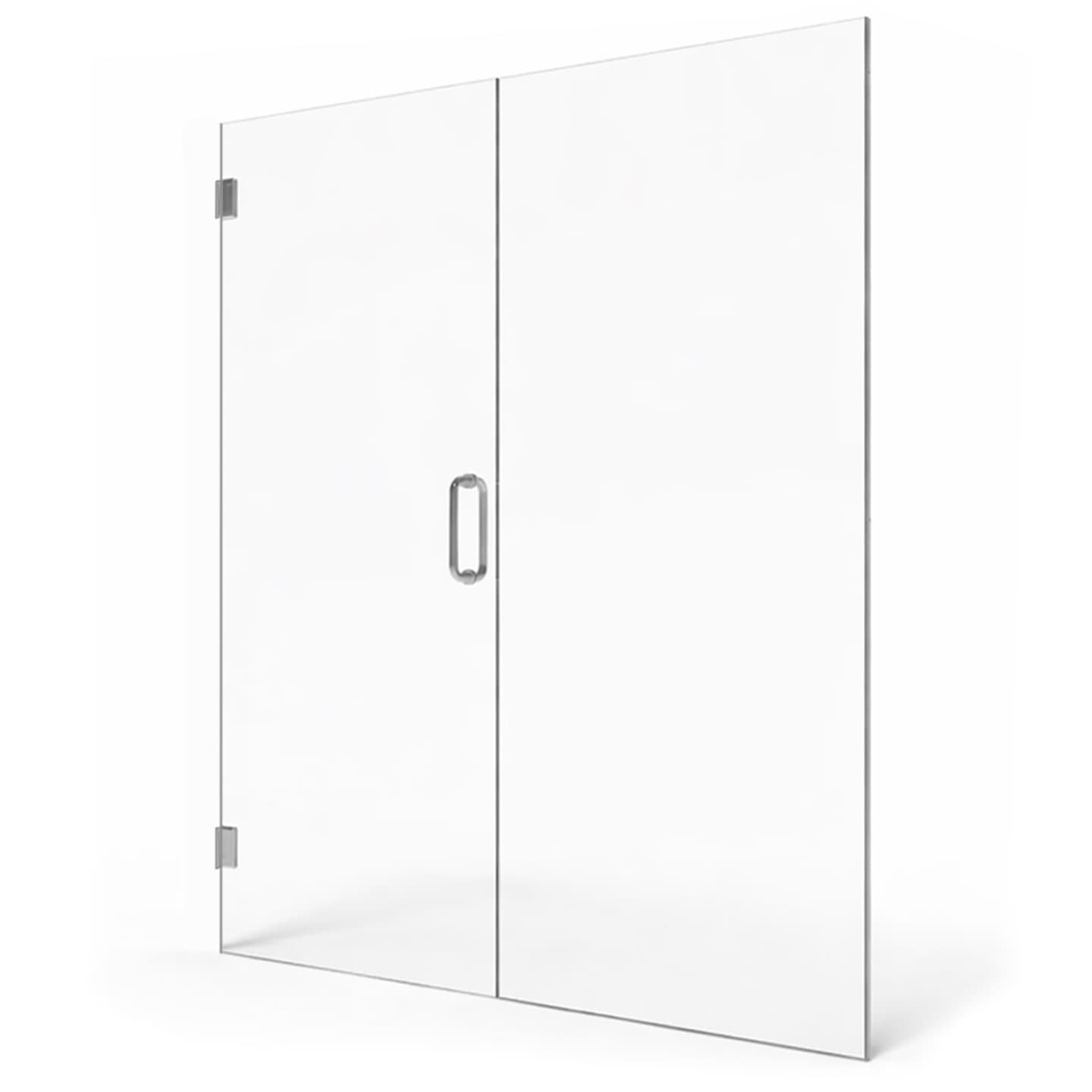
Shower glass should come later still. Final glass dimensions depend on the completed tile, curb, threshold, wall surfaces, and opening. Shower Doors of Sarasota generally measures after the tile, curb, thresholds, and other surfaces affecting the glass dimensions are complete, with the tile and waterproofing fully cured. Measuring too early can produce inaccurate dimensions because custom glass must match the finished opening rather than the framing or unfinished waterproofing.
When is the pan ready to be flood-tested?
The answer depends on the type of shower-pan system. Liquid-applied membranes, sheet membranes, conventional liners, and prefabricated components have different curing times, drain details, and testing instructions. A membrane that looks dry may not yet be ready to remain submerged.
- The complete pan waterproofing system has been installed
- Seams, corners, curbs, and transitions are finished
- The drain connection is complete
- Sealants, adhesives, or liquid membranes have cured for the required time
- The correct test plug and placement have been identified
- Any required inspection has been scheduled before tile work begins
Many flood tests are conducted for 24 hours, but that should not be treated as a universal rule. Product instructions and local inspection requirements control. Filling a membrane too early or testing it in a way the manufacturer does not permit can damage the assembly or make the result unreliable.
How is a flood test performed?
The installer or plumber first blocks the drain with a suitable test plug. Plug placement matters: depending on the drain assembly, the plug may need to sit below certain drain openings so the connection itself is included in the test. An incorrectly positioned plug can allow water to escape into the drain and mimic a membrane leak—or bypass a connection that should have been tested.
The pan is then filled carefully to the level required by the waterproofing instructions or inspector. The waterline is marked at a stable reference point. For a curbless shower, a temporary watertight dam may be needed at the entrance. The water level is checked after the required period, and accessible areas below or around the shower should also be inspected for moisture.
Evaporation can complicate small changes in water level, especially in warm Florida homes or during active construction. A separate container of water placed nearby can provide a rough evaporation comparison, but it does not replace the required test procedure. Significant water loss, visible moisture, or staining around the shower should be investigated rather than dismissed.
What should happen if the water level drops?
Do not install tile or glass until the cause is identified. First verify that the test plug is holding and compare any expected evaporation. If the waterproofing has leaked, the affected area should be repaired according to the system manufacturer’s instructions and allowed to cure. The pan should then be tested again rather than assuming the repair worked.
- Stop finish work over the shower pan
- Drain the test water without damaging the membrane
- Check the plug, drain connection, seams, corners, and penetrations
- Complete an approved repair or replacement
- Observe the required curing period
- Repeat the flood test and any required inspection
Does passing a flood test guarantee the shower will never leak?
No. A passing test confirms that the tested portion held water under the conditions and duration of that test. It does not verify wall waterproofing above the waterline, plumbing supply connections, future penetrations, door-gap containment, or workmanship completed after the test. The membrane can also be damaged later by dropped tools, fasteners, or careless tile installation.
A flood test is therefore one important quality-control step, not a lifetime guarantee. Good shower construction also requires correct wall waterproofing, proper slope and drainage, compatible materials, careful tile work, and well-planned glass installation. Frameless glass systems have functional gaps and should not be described as completely waterproof.
Plan the glass after the waterproofing and tile are complete
The best sequence is to complete and cure the waterproofing, flood-test the pan, obtain any required inspection, install and finish the tile, and then measure for custom shower glass. This order gives the waterproofing team a chance to correct hidden problems and gives the glass fabricator accurate finished dimensions. Sarasota and Florida Suncoast homeowners can request a free custom shower-glass quote from Shower Doors of Sarasota at /quote once the shower surfaces are ready for measurement.
Key Takeaways
- Flood-test the completed, cured shower-pan waterproofing before installing tile.
- Follow the membrane manufacturer’s instructions and local inspection requirements.
- Do not proceed if the water level drops until plug issues, evaporation, and possible leaks are evaluated.
- A passed test checks the pan under test conditions; it does not guarantee the entire shower will never leak.
- Measure custom shower glass after tile, curbs, thresholds, and other finished surfaces are complete and cured.
Ready to Transform Your Bathroom?
Contact us for a free consultation on custom frameless shower doors, enclosures, and mirrors for your Sarasota home.
Frequently Asked Questions
Related Services
Suncoast Team
Sarasota's Trusted Shower Door Experts