
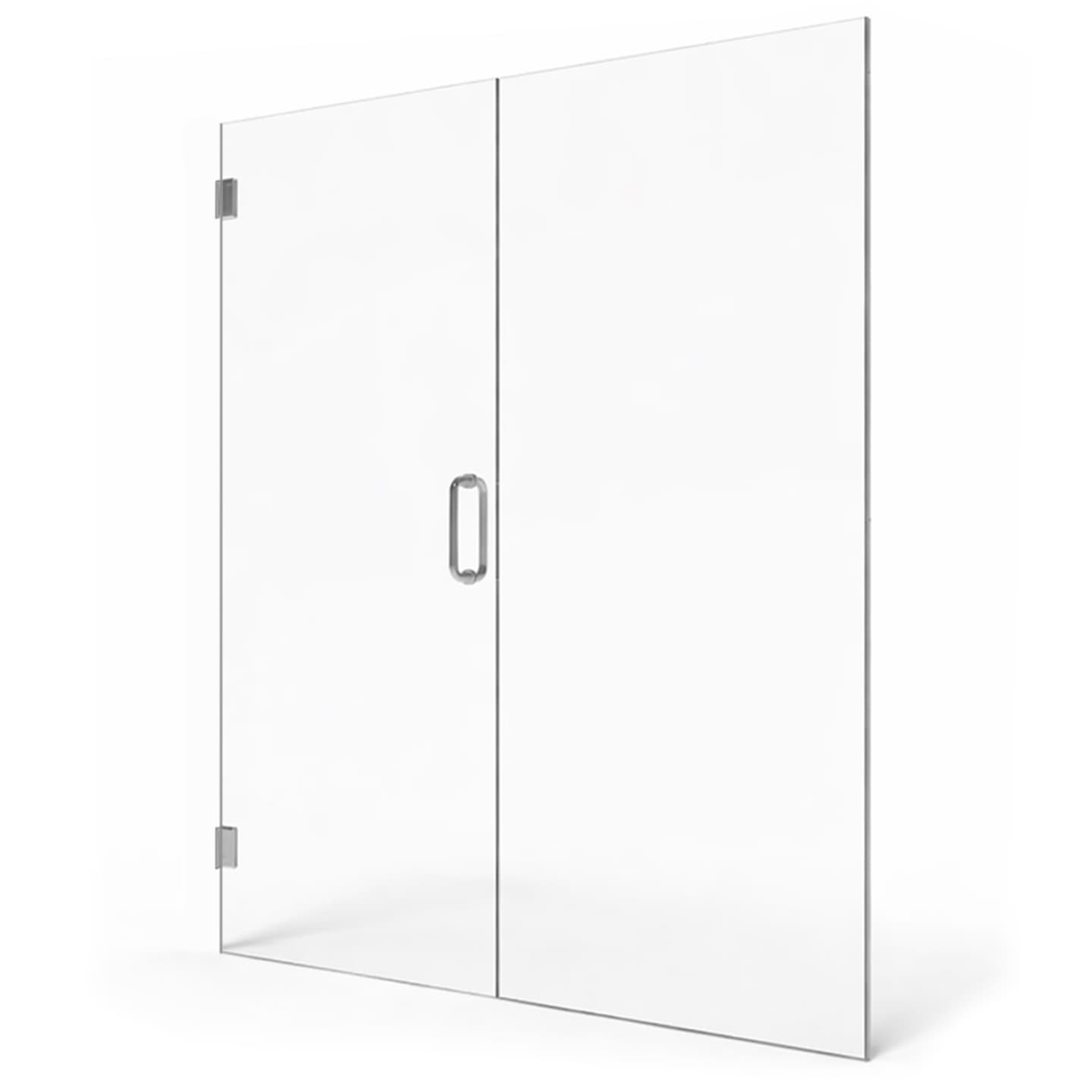
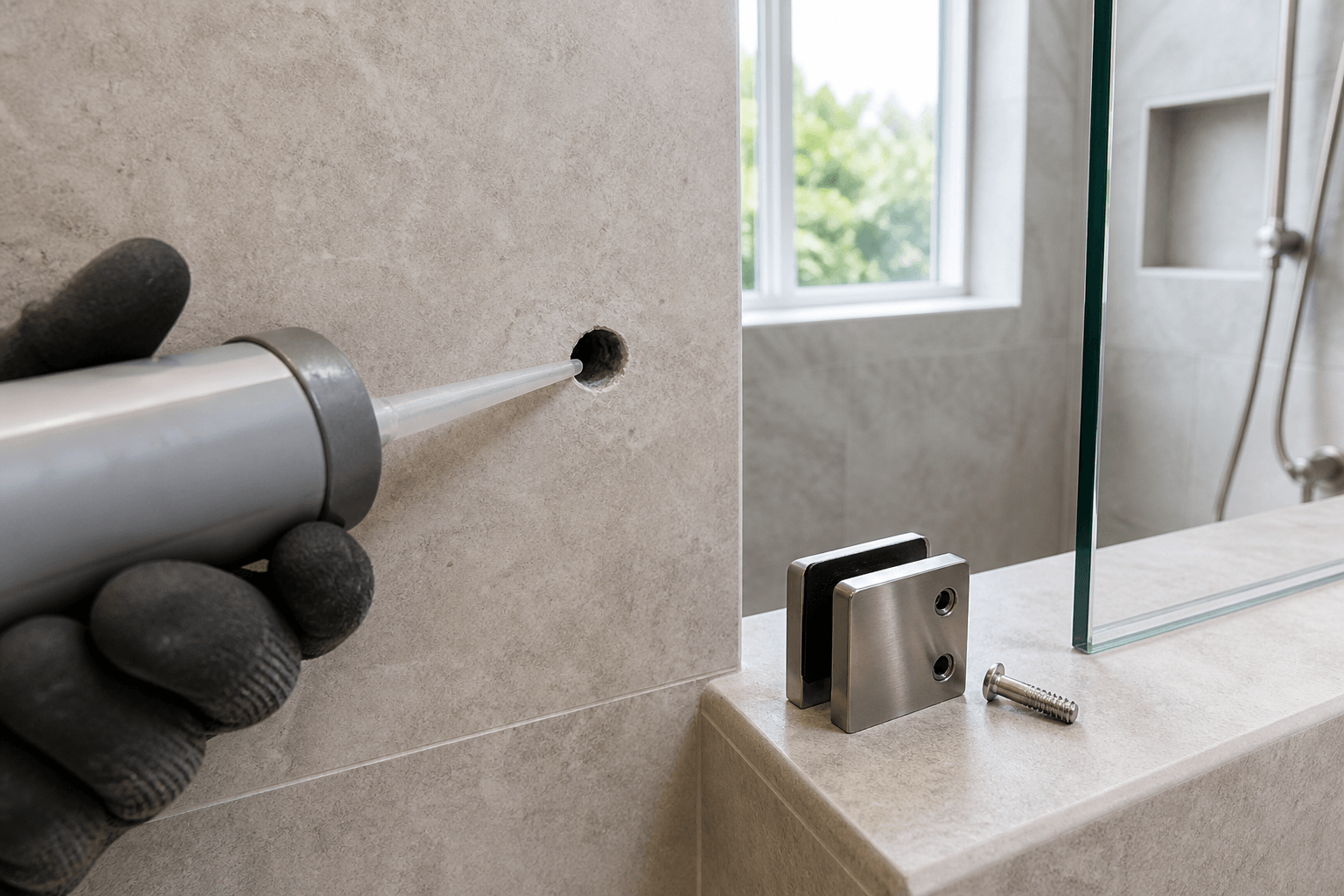
Ask your shower-glass installer whether applicable drilled openings are sealed inside before the anchors and fasteners are fully installed—not just around the visible exterior hardware afterward. Also ask how the opening is prepared, what sealing material is used, how the attachment method fits the wall or curb construction, and whether exterior sealant is applied as a separate finishing step. A careful installer should explain the sequence clearly without claiming that the enclosure will be completely waterproof or that sealing attachment holes eliminates every possible source of water intrusion.
Why do drilled attachment holes need special attention?
Shower-glass hinges, clamps, channels, and other hardware may require holes through finished tile. Those openings create secure attachment points, but they can also be exposed to water during normal shower use. Careful layout, drilling, anchoring, fastening, and sealing all matter. A neat bead of sealant around the outside of the hardware may look finished, but appearance alone does not tell you whether the installer also treated the inside of the drilled opening before placing the anchor and fastener.
- Wall-mounted hinges for a swinging glass door
- Clamps securing stationary glass panels
- Channels used to support or align glass
- Brackets, headers, and other system-specific hardware
Do you seal inside the hole before installing the anchor?
This is the most important question to ask. You are trying to determine whether the installation process includes protection within the drilled opening or relies only on exterior finishing sealant. Ask the installer to describe the order of operations: drilling, cleaning or preparing the opening, applying the internal seal, placing the anchor, installing the fastener, and finishing around the hardware. Methods can vary with the glass system and wall construction, but the explanation should be specific enough for you to understand what happens before the hardware covers the hole.
- Is sealing material placed within each applicable drilled opening?
- Is the opening prepared or cleaned before the sealant is applied?
- Does the seal surround the anchor or fastener inside the opening?
- Is exterior sealant also applied where the hardware meets the tile?
- Is the sealant compatible with the tile, hardware, and shower environment?
- How long should the sealant cure before the shower is used?
How will you choose and locate the attachment points?
Sealing is only one part of a sound attachment. The installer should also consider the enclosure layout, hardware requirements, wall construction, tile condition, and available support behind the finished surface. Ask which pieces of hardware require drilling and where the holes will be located. If you have construction photos showing framing, plumbing, or waterproofing before the tile was installed, make them available. They may help the installer understand what is behind the finished wall, although the installer must still evaluate the actual site conditions.
- Which hinges, clamps, or channels will require drilled attachments?
- What type of anchor or fastening method is planned?
- Does the selected door or panel layout affect the drilling locations?
- Are any holes proposed near tile edges, grout joints, plumbing, or transitions?
- Will the curb or threshold require drilling? If so, how will that penetration be addressed?
- Could another suitable glass or hardware layout reduce unnecessary penetrations?
What should you ask about drilling through a shower curb?
Curb and threshold attachments deserve a direct conversation because these horizontal surfaces receive frequent water exposure. Some glass systems may require an attachment there, while other layouts may use different support methods. Do not assume that every curb attachment is improper or that every system can avoid it. Instead, ask why the attachment is needed, what lies beneath the finished surface, and how the drilled opening will be prepared and sealed. The installer should be able to connect the drilling decision to the selected glass system rather than treating the location as an afterthought.
Does interior sealing make the shower waterproof?
No. A frameless shower enclosure has functional gaps around doors and panels, so it should not be described as completely waterproof. Water containment also depends on the shower layout, curb or floor slope, showerhead direction, door placement, and the condition of the tile and waterproofing assembly. Sealing inside applicable hardware holes is a focused installation precaution. It is designed to help reduce the risk of moisture entering behind the tile at those attachment points, but it cannot prevent every possible source of leakage or water damage.
What answers should make you cautious?
Be cautious if an installer dismisses questions about internal sealing, cannot explain whether the hole is treated before the anchor goes in, or says that an exterior bead alone makes the installation waterproof. Absolute promises are another warning sign. A responsible explanation should distinguish between improving protection at drilled attachment points and guaranteeing the performance of the entire shower. You should also receive clear instructions about sealant curing and when the enclosure can be used after installation.
How does Shower Doors of Sarasota address drilled holes?
Shower Doors of Sarasota uses DoubleSil with applicable shower-door installations. DoubleSil is a layered sealing and anchoring process performed at drilled shower-glass hardware attachment points. It incorporates protection within the drilled opening before the anchor and fastener are fully installed, in addition to the visible exterior seal. DoubleSil is included where applicable rather than offered as an optional upgrade. It is an added precaution, not a guarantee against every source of water intrusion, and it does not make a frameless enclosure completely waterproof.
The bottom line
The best question is not simply, “Do you use silicone?” Ask where the sealant goes, when it is applied, how the anchor and fastener are installed, and how the exterior hardware connection is finished. That conversation will tell you much more about the installer’s process. Sarasota, Bradenton, Lakewood Ranch, Venice, and other Florida Suncoast homeowners can request a free Shower Doors of Sarasota quote through the online tool at /quote.
Key Takeaways
- Ask whether applicable holes are sealed internally before anchors and fasteners are fully installed.
- Exterior sealant is not the same as sealing within a drilled opening.
- Discuss drilling locations, wall construction, hardware, and curb attachments during planning.
- No frameless shower enclosure is completely waterproof.
- DoubleSil is included with applicable SDoS shower-door installations.
Ready to Transform Your Bathroom?
Contact us for a free consultation on custom frameless shower doors, enclosures, and mirrors for your Sarasota home.
Frequently Asked Questions
Related Services
Suncoast Team
Sarasota's Trusted Shower Door Experts