
Guides & Advice
Expert tips, design inspiration, and everything you need to know about frameless shower doors and glass.
All Articles
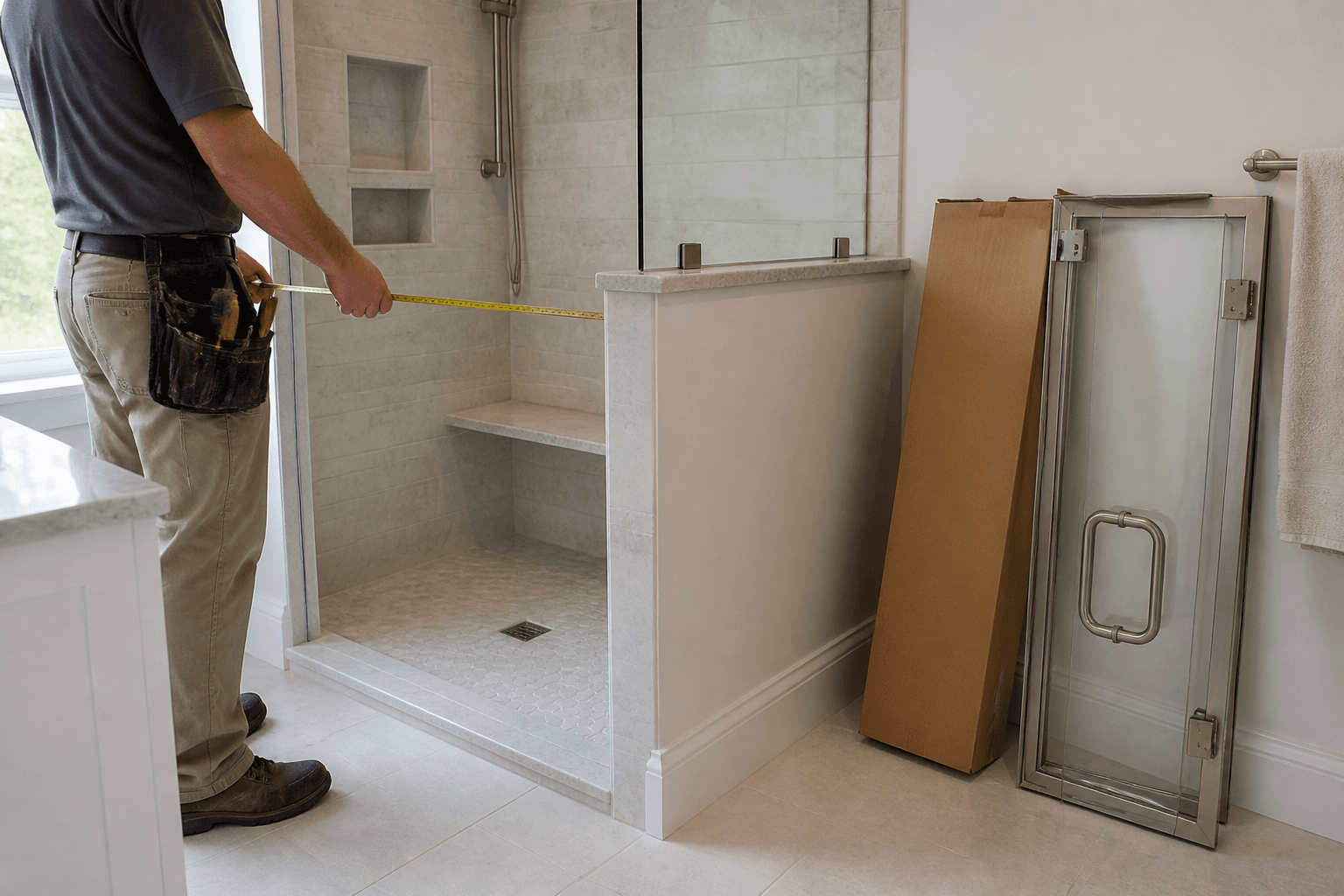
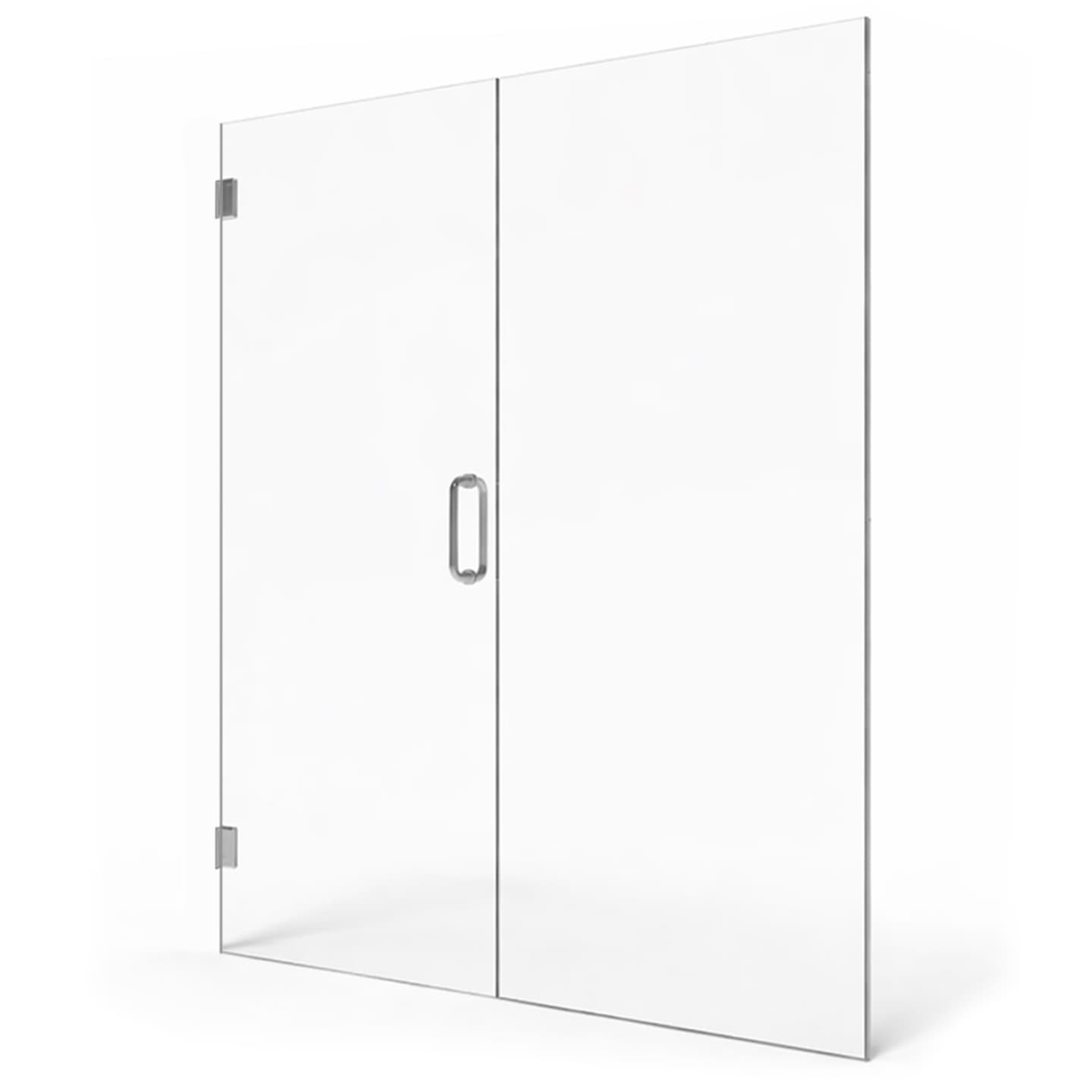
Custom Shower Glass vs. Stock Kits: What Fits Best?
Stock shower door kits can work well for standard openings and budget-focused projects, while custom glass offers a more precise fit and greater design flexibility. The right choice depends on your finished opening, layout, installation needs, and priorities.
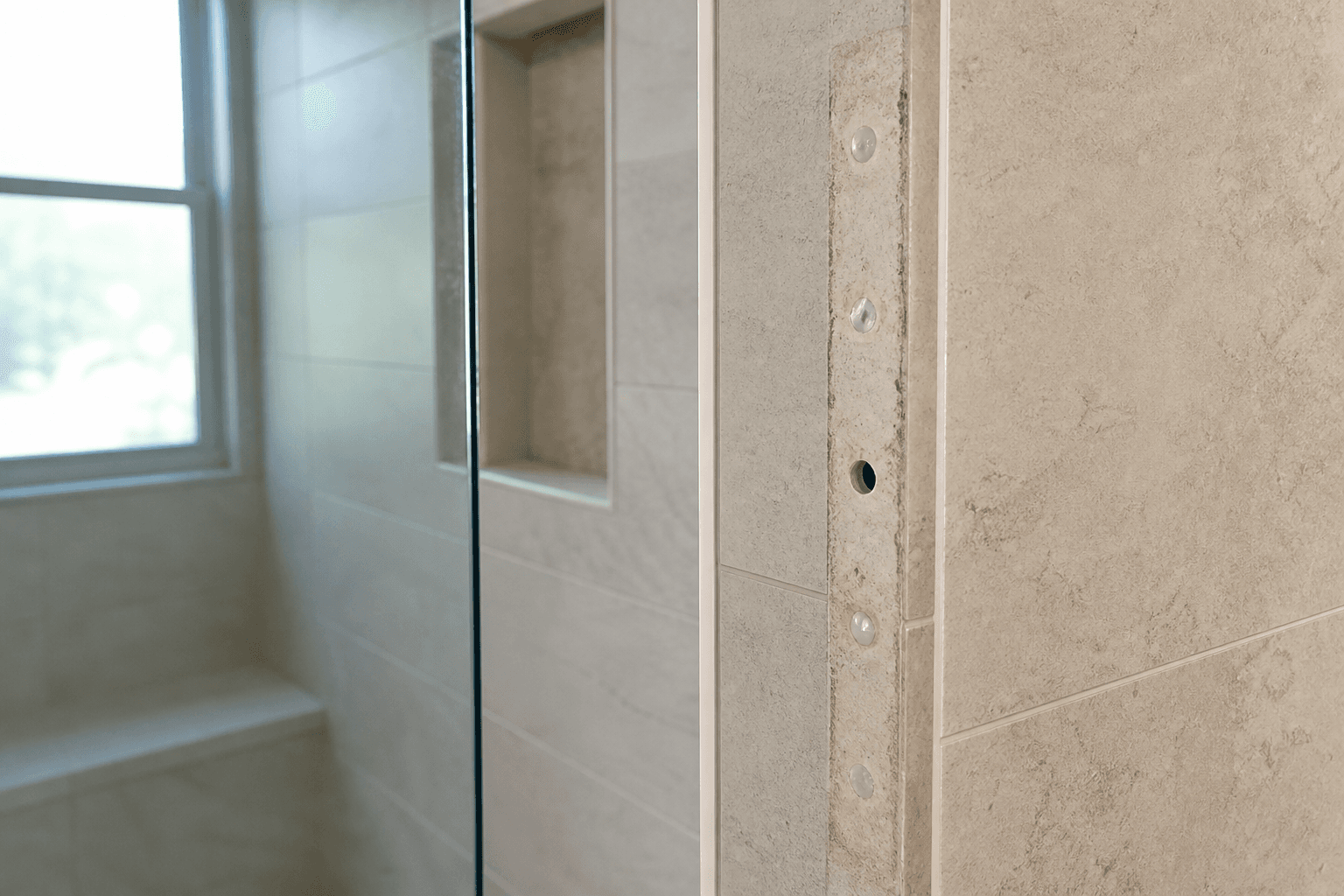
What Happens to Old Shower Door Mounting Holes?
Old mounting holes do not automatically prevent a shower-door replacement, but they must be evaluated rather than ignored. Their treatment depends on the new enclosure layout, the wall material, the holes’ condition, and whether they can be safely concealed or reused.
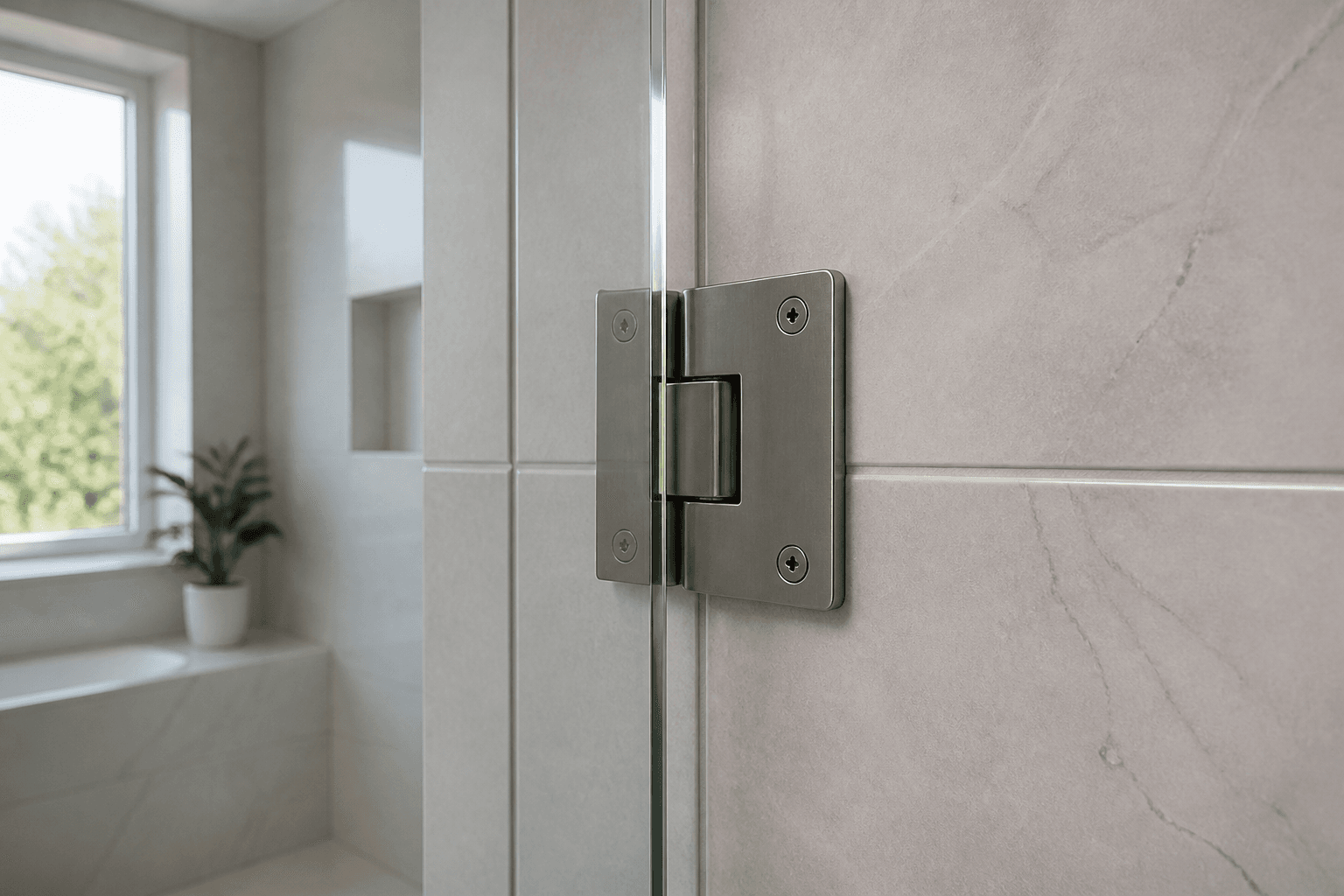
Tile or Grout: Where Should Shower Hardware Be Drilled?
A grout joint is not automatically the safest place to drill shower-glass hardware. The correct location depends on the enclosure design, hardware requirements, backing, tile condition, and waterproofing details.
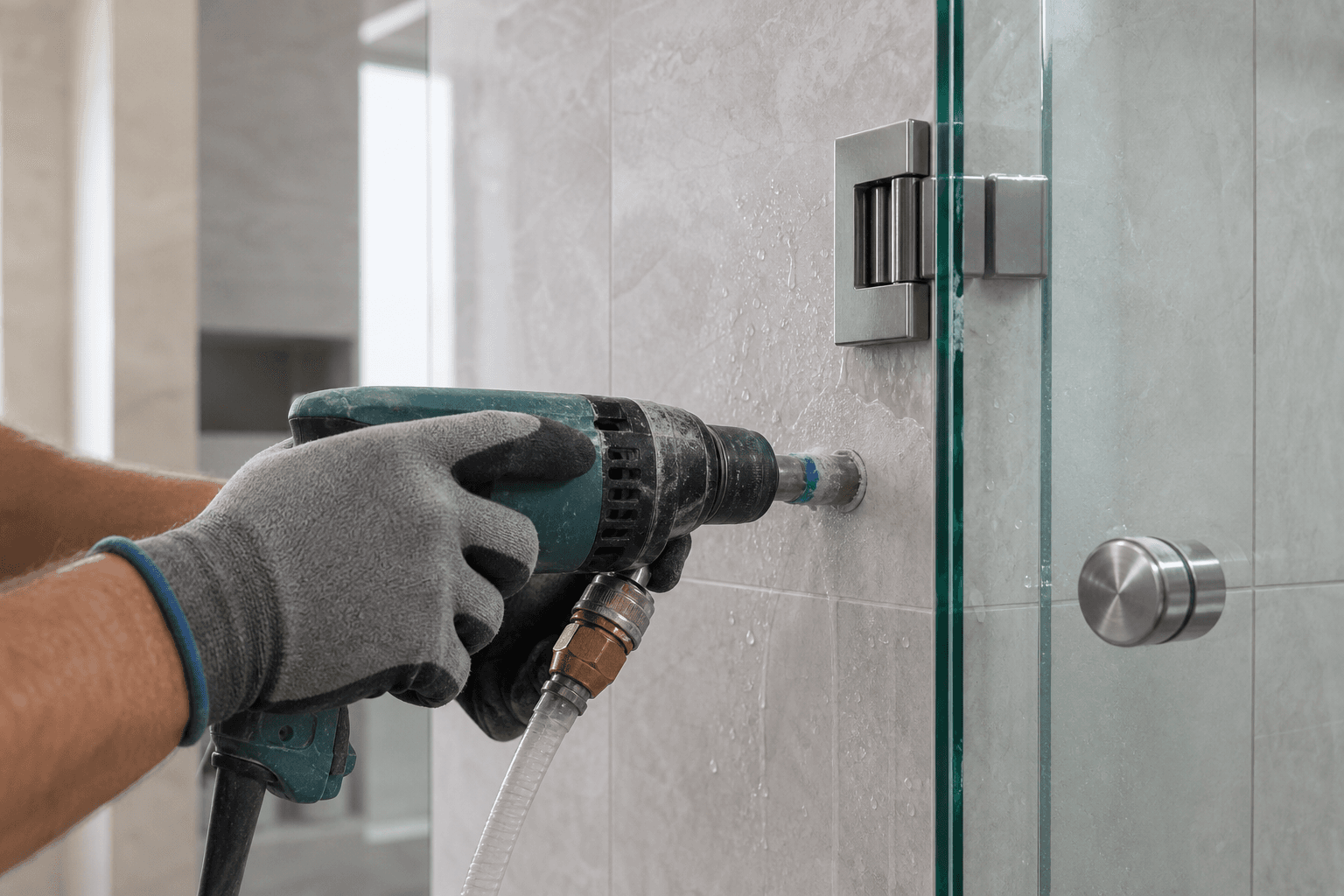
How Tile Material Changes Shower-Glass Installation
Porcelain, ceramic, glass, and natural-stone tile each require a different drilling approach when installing shower-glass hardware. The material also affects hole placement, sealant selection, and the precautions needed to protect the finished shower.
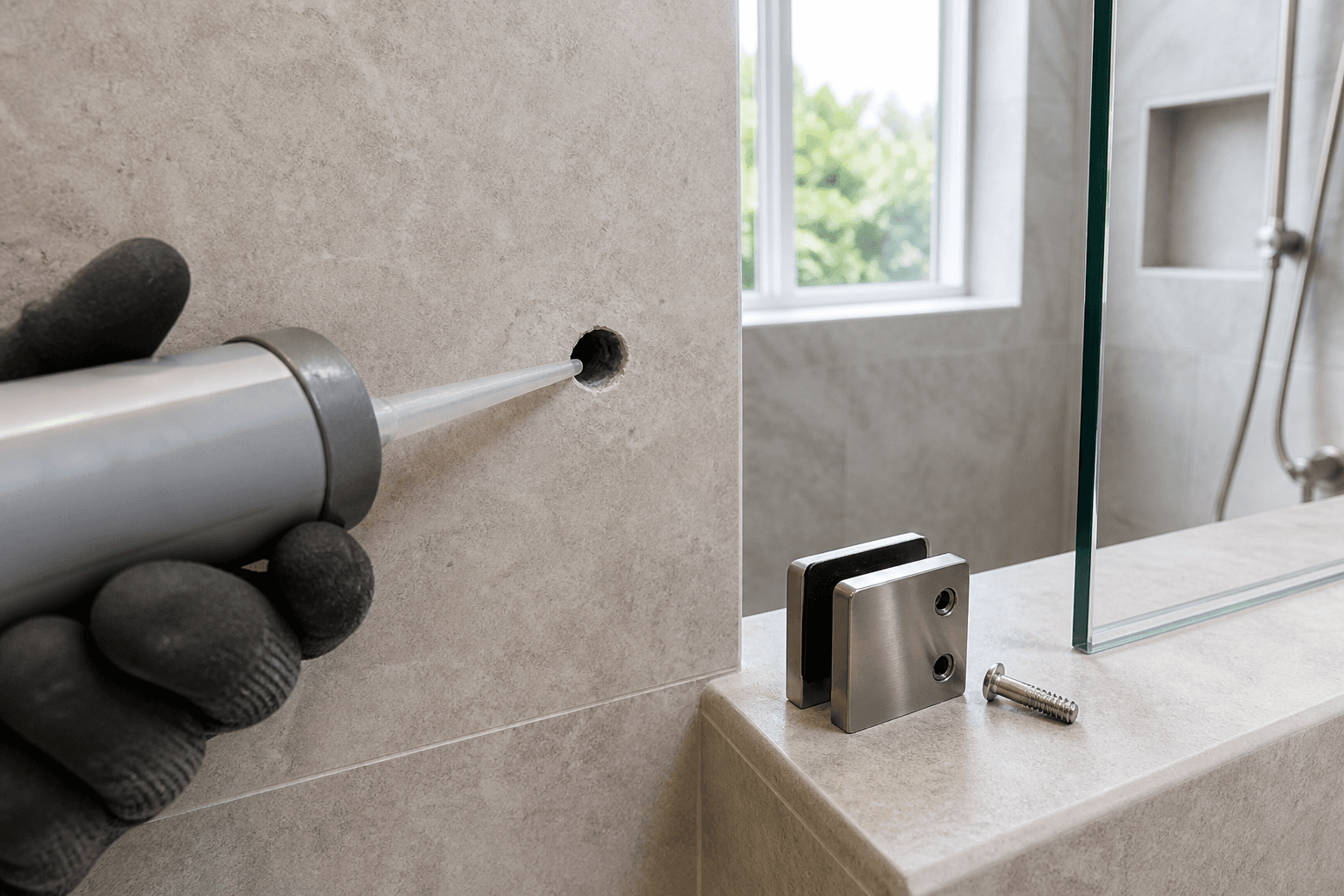
What to Ask About Sealing Shower-Glass Drill Holes
Drilled attachment holes deserve careful sealing because they may be exposed to water after the shower is installed. Learn which questions reveal whether an installer uses a layered process rather than relying only on visible exterior sealant.
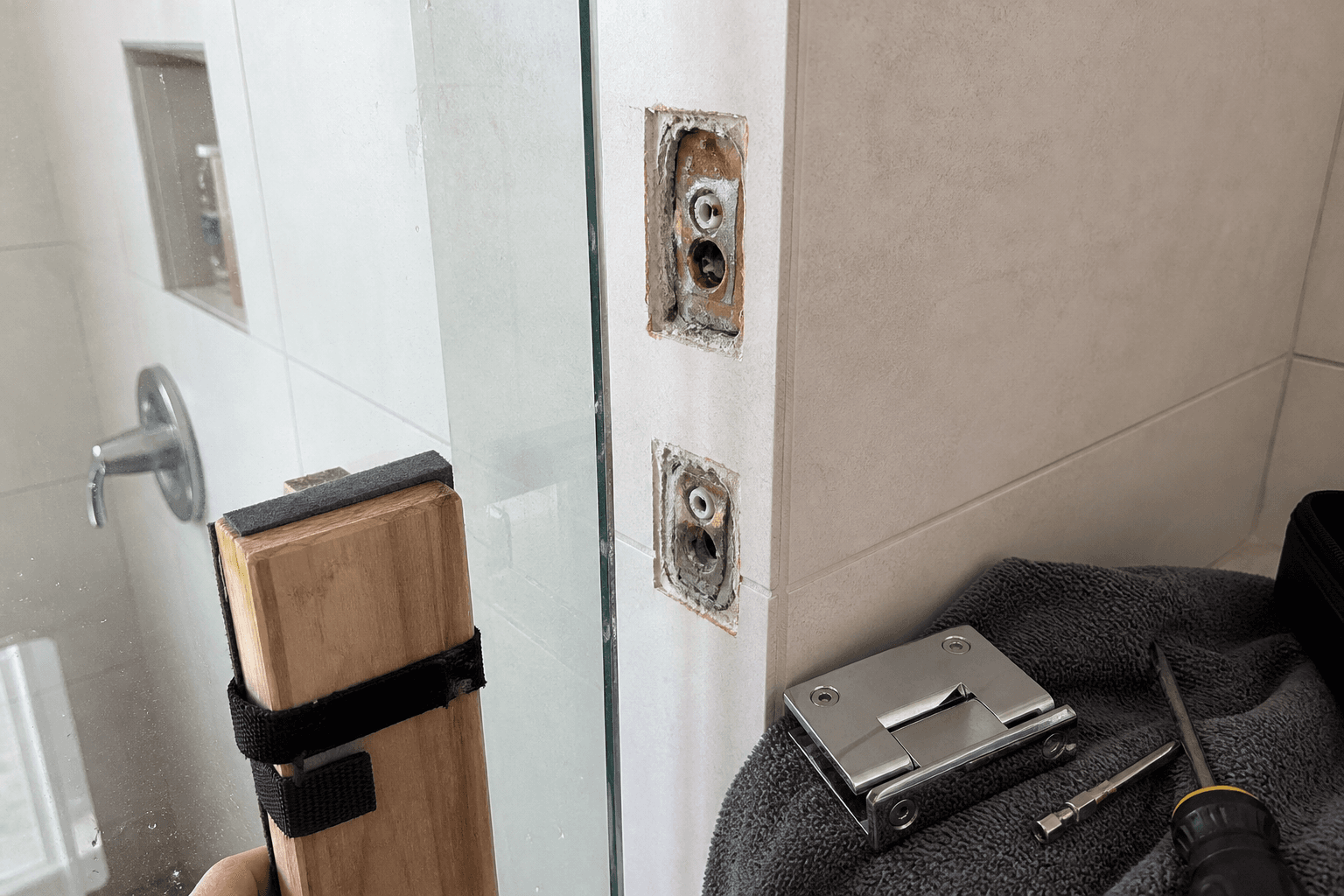
What Happens to DoubleSil When Hardware Is Replaced?
Removing shower hardware can disturb the exterior seal, anchor, and protection within a DoubleSil-treated attachment point. Before installing replacement hardware, each drilled location should be evaluated and properly rebuilt rather than assumed to remain protected.
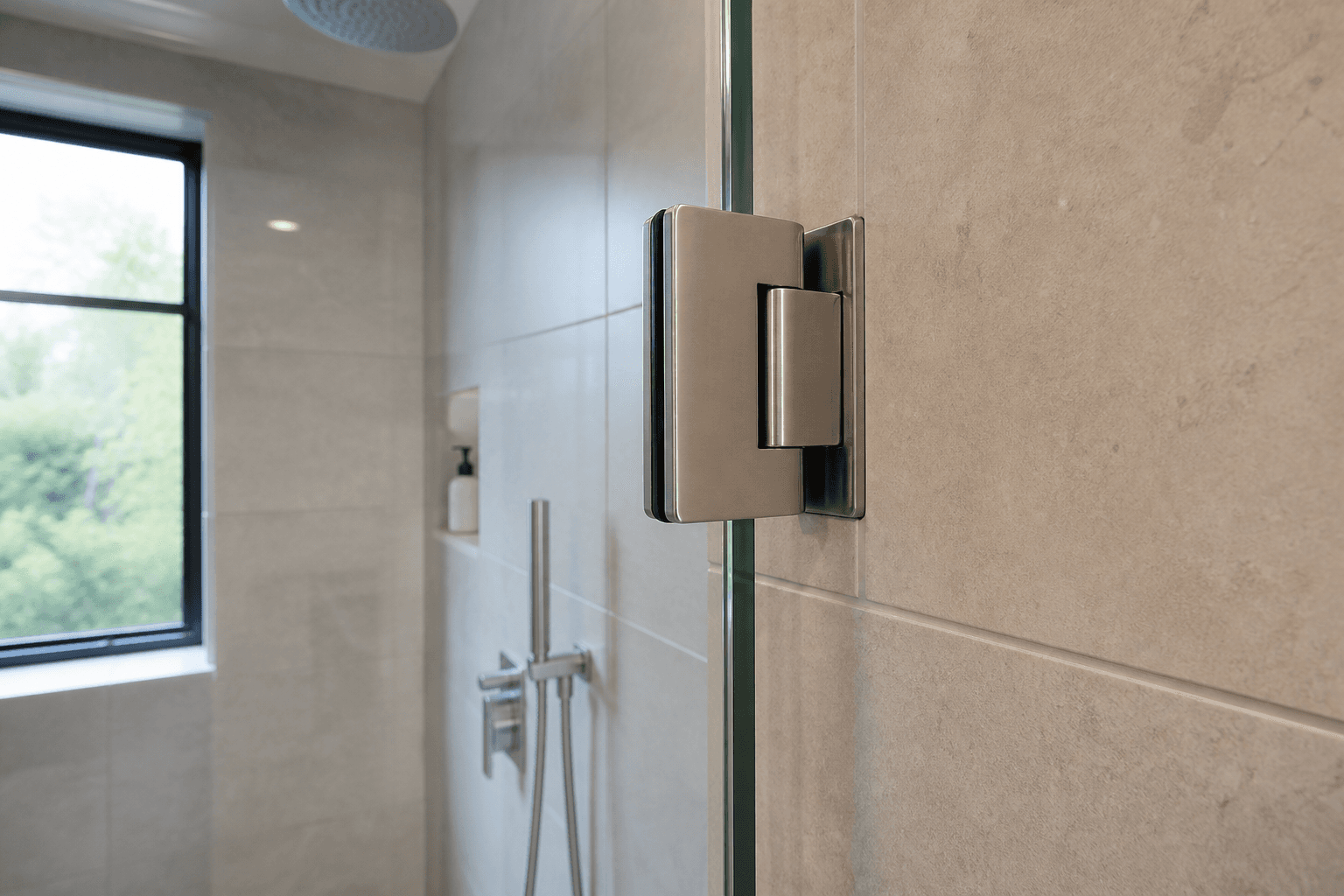
Will DoubleSil Change the Look of Shower Hardware?
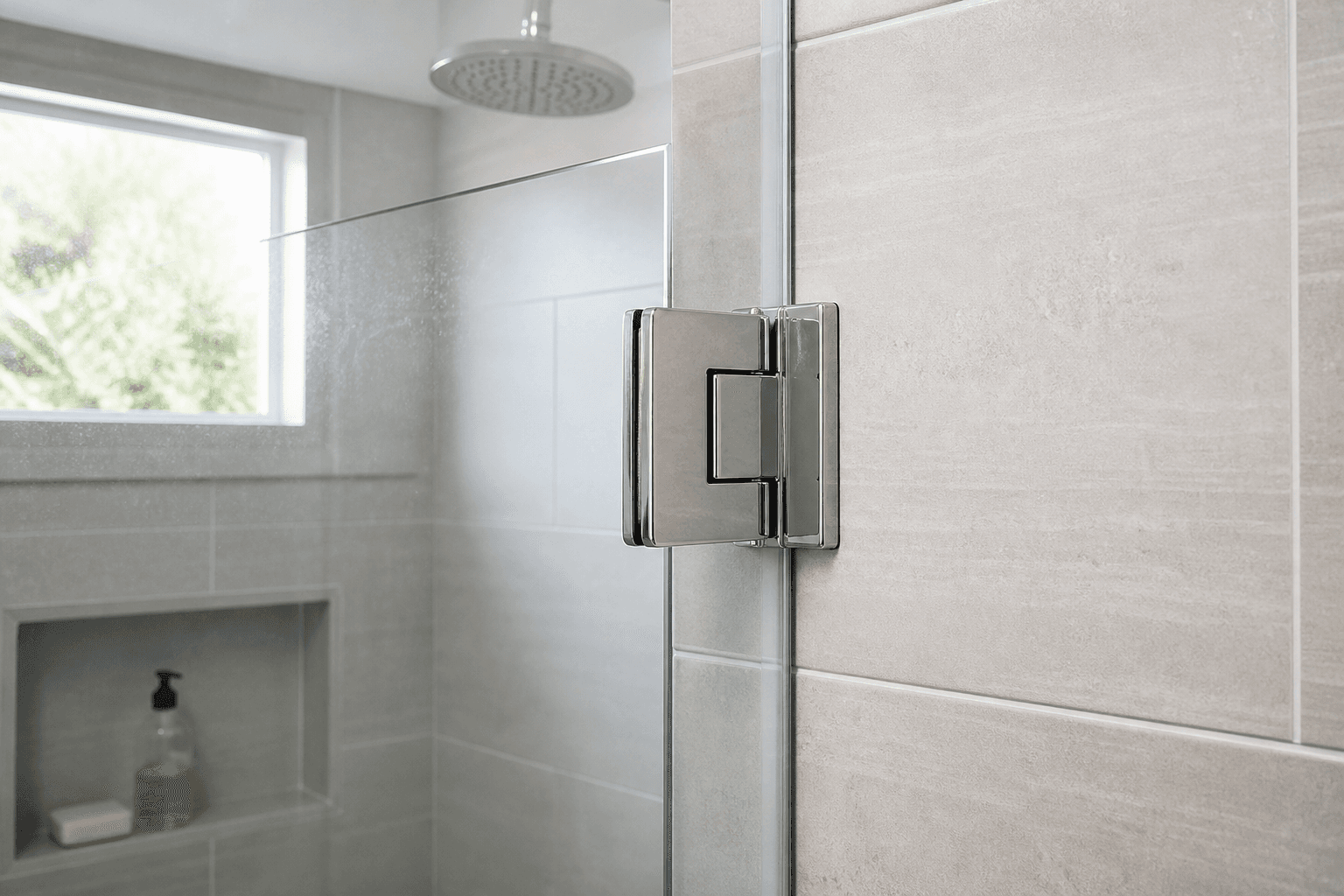
DoubleSil protects applicable drilled hardware attachment points without materially changing the intended appearance of a shower enclosure. Most of the process occurs inside the drilled opening, while only the normal exterior hardware-to-tile seal may be visible.
Does DoubleSil Need Maintenance After Installation?
DoubleSil’s internal protection does not require routine homeowner servicing after installation. Homeowners should still clean the enclosure, inspect visible seals and hardware, and respond to signs of movement or moisture.
Can DoubleSil Be Added to an Existing Shower?
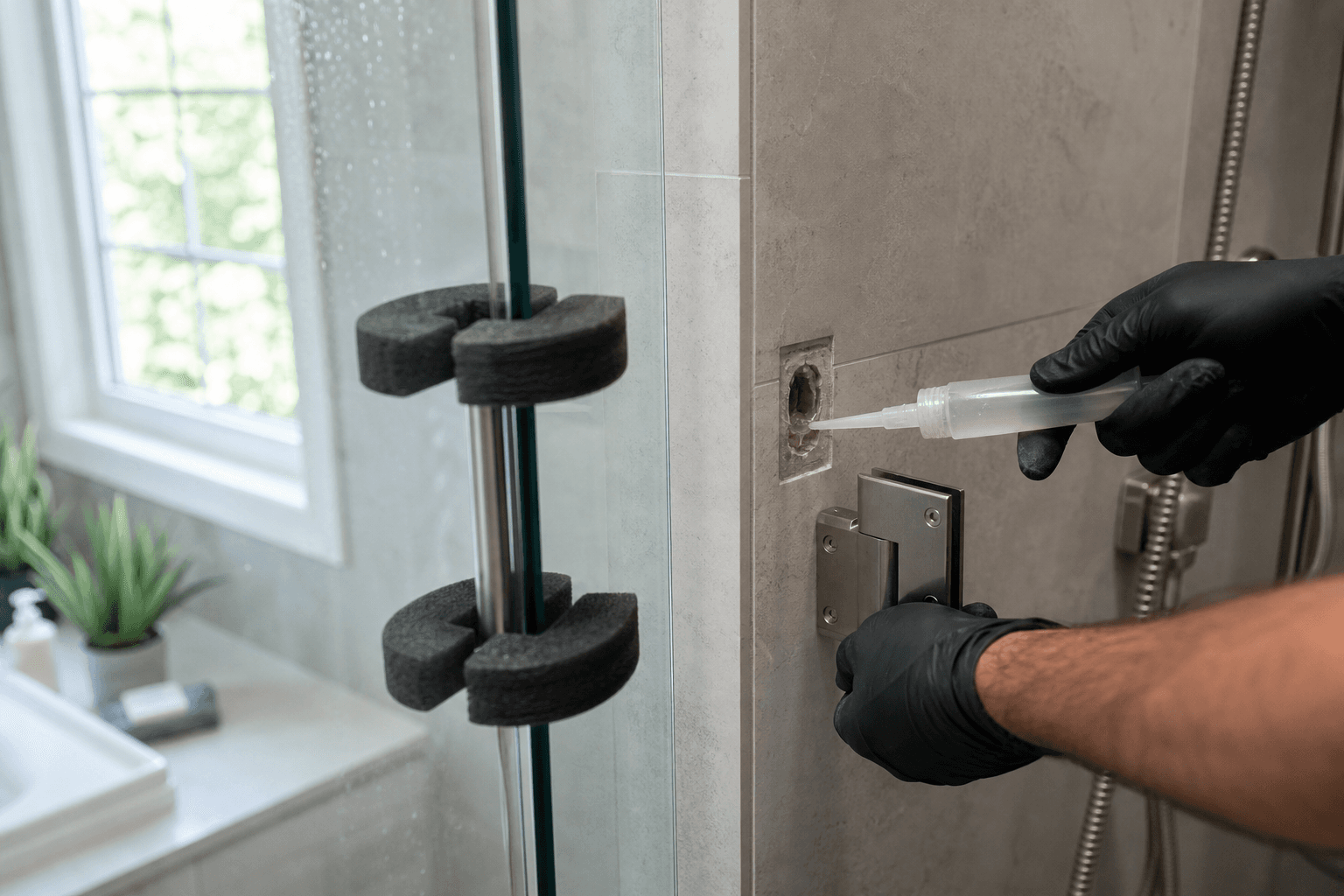
DoubleSil is primarily an installation-stage method because it protects drilled attachment points before anchors and fasteners are fully installed. Treating an existing enclosure may require hardware removal and a professional evaluation—not simply applying new exterior sealant.
Can Metal Tile Trim Affect Shower-Glass Hardware?
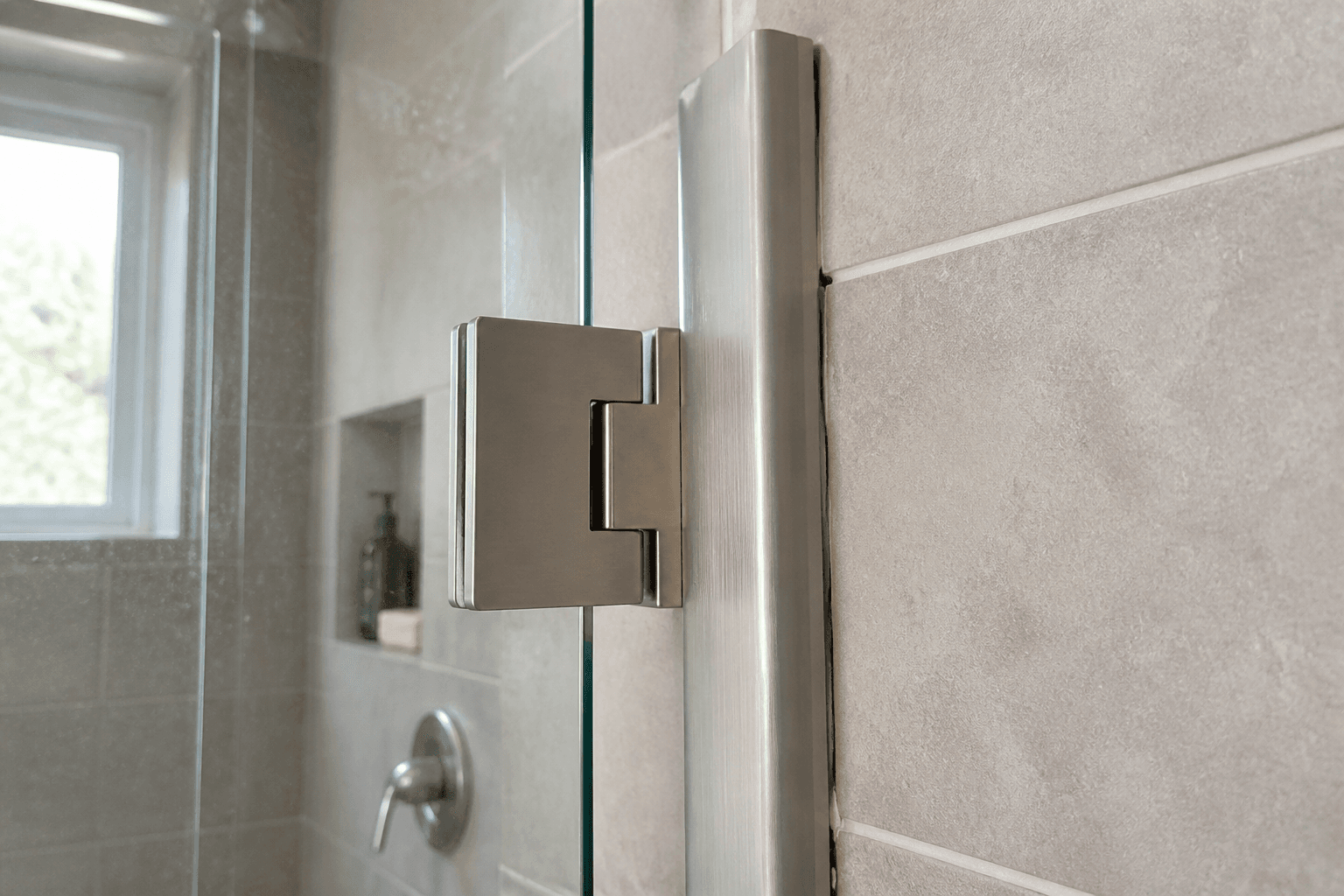
Metal tile edge trim is compatible with many shower-glass systems, but its position can create problems for hinges, clamps, and channels. Good coordination before tile installation helps hardware sit flat and keeps drilled attachment points away from awkward transitions.
Changing a Shower Layout After Glass Measurement
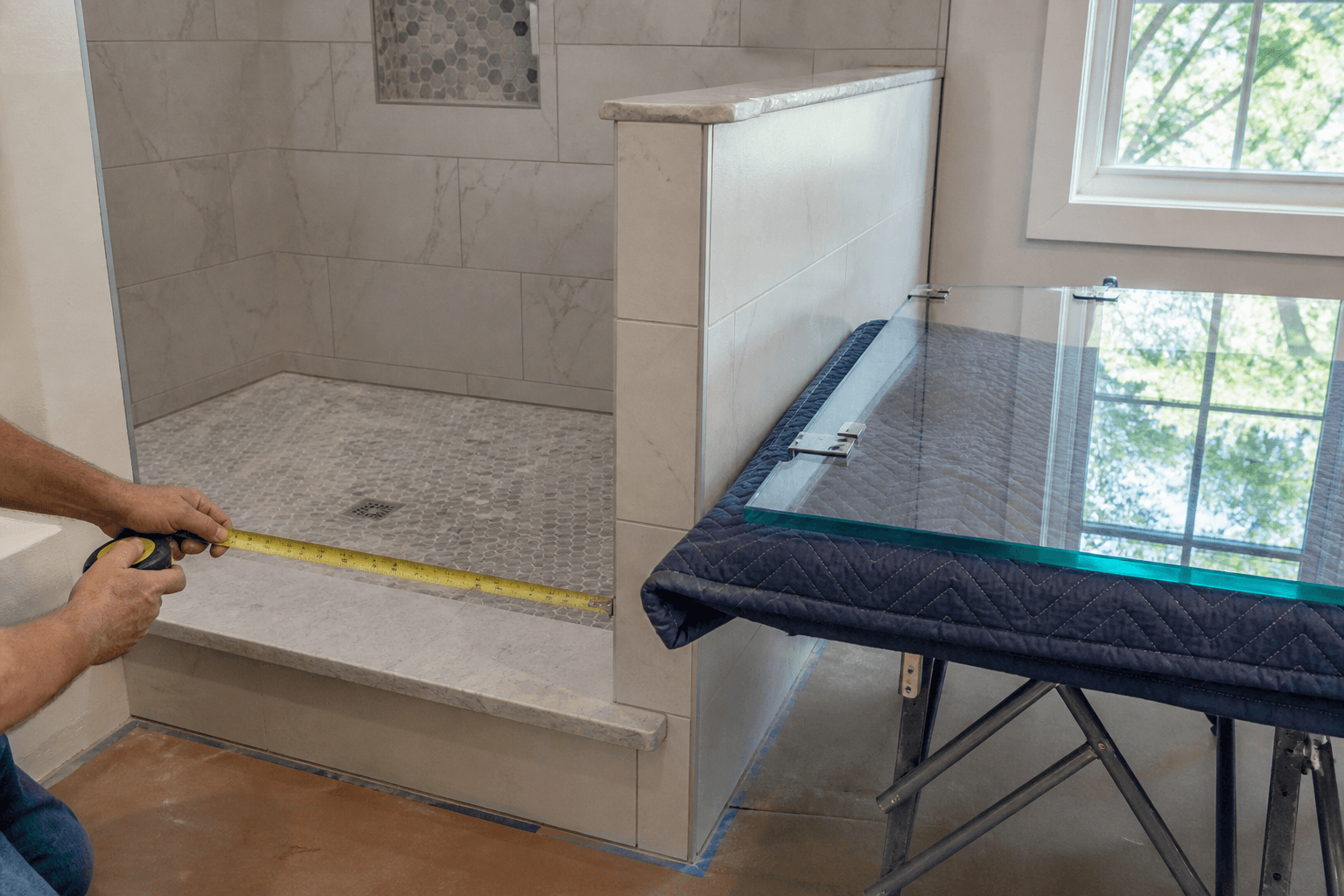
Changes made after shower glass is measured can affect panel dimensions, door clearance, hardware placement, and water containment. Here is what homeowners should do—and why even a small layout adjustment may require new measurements or replacement glass.
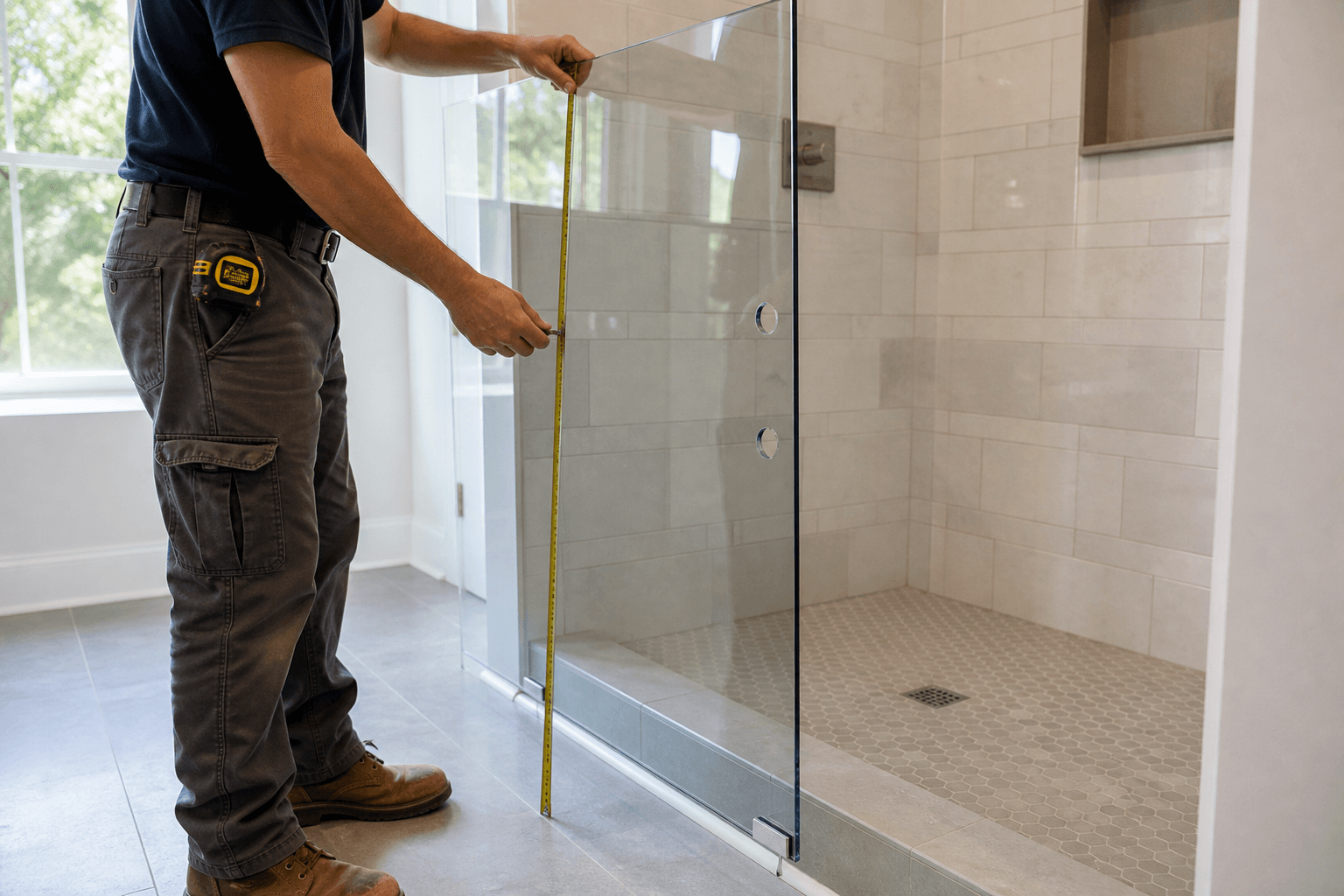
Can Shower Glass Be Reused After a Bathroom Remodel?
Existing shower glass can sometimes be reused, but only when the remodeled opening matches its exact dimensions and hardware locations. Tempered glass cannot be trimmed or drilled later, so reuse must be planned before tile work begins.
Ready to start your project?
Get a free quote on custom frameless shower doors, enclosures, and mirrors for your Sarasota home.
Get a Quote